


CCL: https://bit.ly/40Y7Yx7
We hope that each of you, our readers, will enjoy and appreciate this article we present to you about these 3 Amazing Butterflies of Algeria. It was our very great pleasure to compile the various information for you. May it serve to provide you with both education and increased awareness.
Certainly, these few species listed within this article represent only a portion of the similar marvels in this region. It’s our belief, though, that they nonetheless serve as excellent representations of the wonders that exist. Check out some of our many other numerous articles for similar marvels.
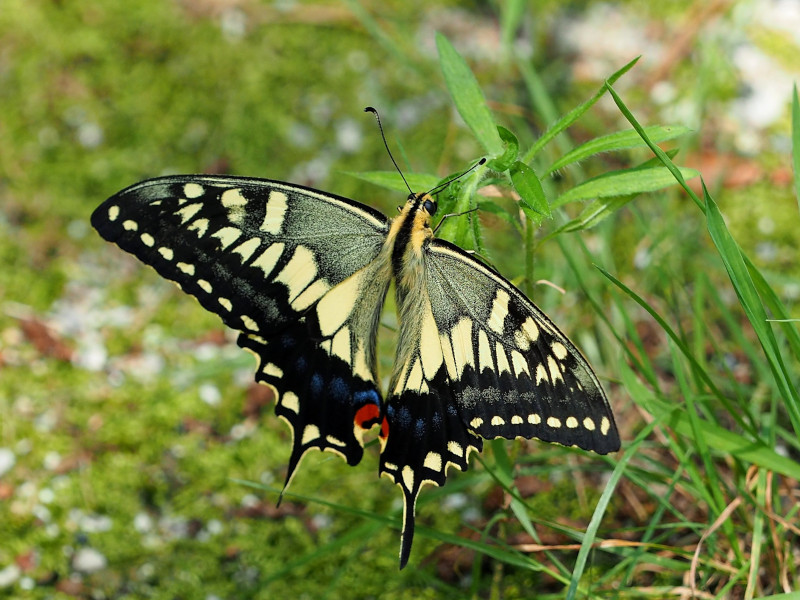
Old World Swallowtail
CCL: https://tinyurl.com/2s4apsss
Old World Swallowtail Facts
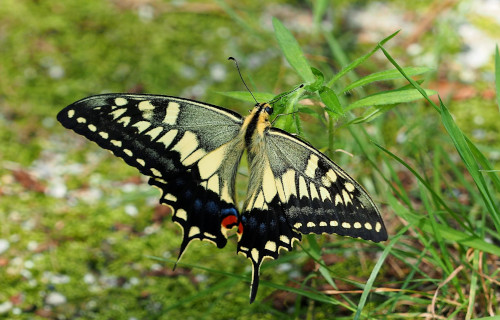
- Starting off this article about these 3 Amazing Butterflies of Algeria we give you the winged wonder best known as the Old World Swallowtail.
- The most often employed common name for this gorgeous creation of Nature and evolution is the informative term we’re using herein. The stunning invertebrate does have other alternate titles, though. These include the similar epithet common yellow swallowtail.
- Within most scientific circles, however, the delicate creature’s likely much better known by its technical label. Thankfully, that’s a relatively simple term for the layperson to pronounce. That’s because the truly lovely Lepidoptera holds the official moniker of Papilio machaon.
- The Arthropod received that scientific designation due to the efforts of Carl Linnaeus himself. The eminent Swedish zoologist accomplished the first recognition of the animal as a separate and distinct species. That scientifically noteworthy deed occurred in the year 1758.
- It’s fully notable for far more than just its great beauty, though. That’s due to an particularly impressive statistic the insect holds. That’s true since, to date, entomologists recognize an extraordinary total of 41 separate subspecies of this intriguing butterfly still in existence.
- Fortunately, the amazing Old World Swallowtail appears to be maintaining a population base that’s both sufficient and stable. This pleasant state of affairs further seems to hold true across the entirety of its range. The IUCN therefore currently lists it as Least Concern on its Red List.
- The magnificent insect nonetheless must be considered as facing the same potential threats to its existence as all other species, at least. Most of these perils stem from the actions of mankind. They include such varied dangers as habitat loss and ongoing climate change.
CCL: https://tinyurl.com/bdes27an
Old World Swallowtail Physical Description
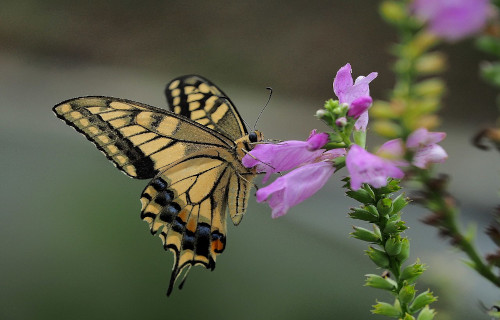
The truly breathtaking Old World Swallowtail typically captivates those individuals fortunate enough to encounter the marvel. Pure physical size isn’t generally one of those, though. That’s because, regardless of its eye-catching appeal, it’s a roughly average-sized member of its Order.
It distingishes itself in this regard in one very specific manner, however. That’s true given that fact that, unlike most of its kindred, it displays no noticeable degree of the physiological characteristic of sexual dimorphism. This makes identifying the genders difficult for many of its observers.
The body of the caterpillar stage of both sexes of the wonder attains an average length equaling approximately 1.8 in (4.6 cm). That of the mature adult retains roughly the same measurement. Though mostly showing black above, with yellow trim, the underside mainly presents as yellow.
It’s the captivating wings of the visually stunning Old World Swallowtail that generally garner the most attention, however. These appendages often vary significantly in wingspan, regardless of gender. On average, this equals between 2.6 – 3.4 in (6.5 – 8.6 cm). Few exceed this by much.
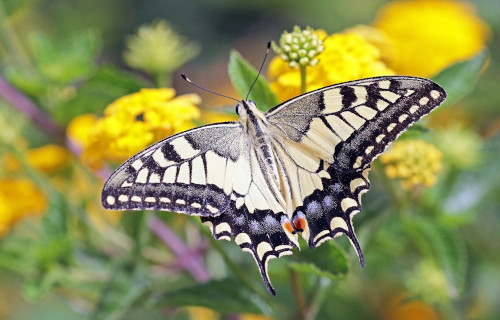
On the upperside of both hindwings, a distinctive feature usually appears. That’s the existence of a relatively large eyespot located near the tail of the remarkable invertebrate. This itself shows a reddish-orange shade, with the presence of a black border near the edge of the hindwing.
Further enhancing this is the presence of 6 small, blue eye-spots located on the same wing. Yet Nature isn’t done with this wonder of evolution yet. These same hindwings also possess a pair of sharply protruding tail-like structures. These provide a resemblance to the bird of the same name.
- Kingdom: Animalia
- Phylum: Arthropoda
- Class: Insecta
- Order: Lepidoptera
- Family: Papilionidae
- Genus: Papilio
- Species: P. machaon
CCL: https://tinyurl.com/33psz7af
Old World Swallowtail Distribution, Habitat, and Ecology
The intensely beautiful Old World Swallowtail apparently evolved as native to an extremely wide expanse of the surface of the earth. The precise location of that zone of habitation, though, probably won’t surprise many people, though. It’s clearly intimated by the very name of the Arthropod.
The mesmerizing insect developed as partly endemic to what’s known as the Old World region of the earth. Yet the invertebrate also evolved as native to an even greater range. That includes the entirety of both Europe and Asia, and even extends to portions of the northern sections of Africa.
The intrepid animal also demonstrates a decidedly flexible approach to its preferences regarding its choice of habitat. The butterfly therefore inhabits a moderately broad range of ecosystems. These typically consist of such regions as areas of meadows, hilltops, and even areas of tundra.
It further displays an amazing adaptability to an extensive range of altitudes across its native range. In some regions, the invertebrate lives near sea level. In other sections, though, like the Kashmir Valley, individuals sometimes appear at heights of up to as great as 16,000 ft (4,877 m).
Like its countless living relatives, the Old World Swallowtail developed as entirely herbivorous in nature. Adults of this particular species primarily feed on the flower nectar of plants from a single Family. In its case, this consists of members of what’s commonly known as the celery Family.
After concluding the mating process, females lay eggs individually, usually on the underside of a food plant. The caterpillar form feeds on a wider variety of sources than the adults. The males of the beautiful butterfly frequently congregates in numbers to compete for approaching females.
Monarch Butterfly
CCL: https://bit.ly/40Y7Yx7
Monarch Butterfly Facts
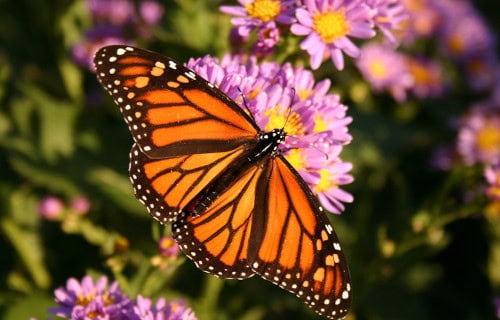
- Our next choice for inclusion in this compilation of 3 Amazing Butterflies of Algeria is the always stunning Monarch Butterfly.
- This truly breathtaking creation of Nature and evolution most frequently goes by the well deserved name across its entire range. The wonder has several other less often used titles, though. These include such terms as common tiger, wanderer, and black-veined brown.
- Inside of scientific communities, however, it’s possibly better known by its purely official moniker. Fortunately for the layperson, that’s a comparatively simple title, as such things go. That’s because this marvelous Lepidoptera bears the official name of Danaus plexippus.
- The invertebrate received that name due to the efforts of the esteemed Swedish zoologist, Carl Linnaeus himself. He recorded the first recognition of the creature as a separate and distinct species. The researcher accomplished this scientifically noteworthy feat in the year 1758.
- Interestingly, a total of three species actually bear the same general appellation. The specific creature referred to in this article, though, remains by far the best known and most commonly referred to. A total of six acknowledged subspecies of the insect also exist across the globe.
- The gorgeous Monarch Butterfly inhabits a moderately large territorial range. It also engages in impressive seasonal migrations. Sadly, the amazing beauty now finds itself in danger. Accordingly, the IUCN thus lists it as Endangered on its Red List of Threatened Species.
- It now faces many threats to its continued existence as a species. That’s true in both short and long term. Most of these, though, stem from human activities. Human herbicide use has killed much of its food source. It also now faces the same threat of climate change as we all do.
Monarch Butterfly Physical Description
The captivating Monarch Butterfly fully merits appreciation by those individuals fortunate enough to encounter it. Unlike some of its many relatives, though, it does so for several reasons. Its sheer beauty certainly qualifies as one factor. Yet it also boasts some impressive statistics in terms of size.
This gorgeous animal does follow one pattern that’s common among its kind, as well. That’s due to the fact that the insect displays a degree of sexual dimorphism. In its case, this physiological trait manifests itself in terms of both size and appearance. As the very name implies, its quite regal.
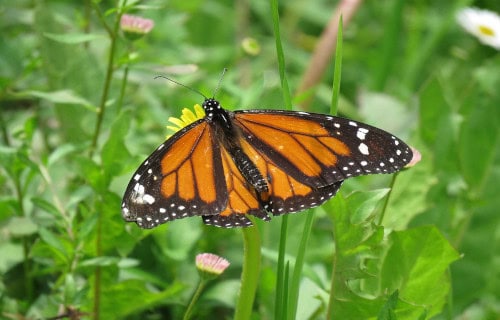
Physically, males of the species attain a slightly greater average wingspan than their female counterparts. But this specific gender also displays a noted difference in terms of its appearance. It’s a very minor one, though. On one vein on each hindwing of the males, a tiny black spot displays.
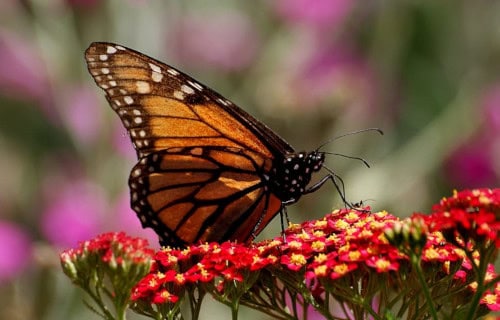
Otherwise, the two genders of the magnificent Arthropod present an extremely similar structure. The wings of both sexes reach an average width of approximately 3.5 – 4 in (8.9 – 10.2 cm). The body, meanwhile, develops as elongated, mostly black, except for a few white spots on the head.
It’s the wings of the aptly-named Monarch Butterfly that typically garner the most attention, however. The uppersides of these appendages typically show a tawny orange hue. The veins of the wings also show black, along with the margins. Two series of small white spots also line those edges.
The forewings additionally evolved to manifest small orange spots near the tips. The underside usually displays very similar, but not completely identical patterns. Their hindwings are yellowish brown, with large white spots. Its forewings also manifest the same coloring pattern on the tips.
- Kingdom: Animalia
- Phylum: Arhropoda
- Class: Insecta
- Order: Lepidoptera
- Family: Nymphalidae
- Genus: Danaua
- Species: D. plexippus
Monarch Butterfly Distribution, Habitat, and Ecology
The stunning Monarch Butterly evolved as native to a relatively broad swathe of the surface of our world. The sheer scope of that zone of habitation might surprise some people, though. That’s true since this insect marvel appears in parts of both the Northern and Southern Hemispheres.
Part of that extends all the way from southern Canada, in North America, to southern South America. It’s also found in Hawaii, Bermuda, the Cook Islands, and other islands in the Caribbean. From there, the insect also appears from Australia to the Philippines, and as far as Morocco.
This wonder of Nature and evolution developed as mainly present in several specific habitat types. Yet it nonetheless displays some degree of versatility and adaptability. Most examples, however, make their home in regions consisting of meadows, grasslands, praries, and along roadsides.
Most examples of the wonder further display a strong preference for the presence of other determining factors. These include such things as proximity to smaller streams, and areas of sufficient sunlight. The awesome creature also prefers the presence of sufficient roosting plant life.
The magnificent Monarch Butterfly also remains world famous for its massive seasonal migrations. A majority of the population migrates to a singly location in Mexico for the winter. Following this, the female lays her eggs during the return trip. These she places on the underside of leaves.
Those eggs most commonly appear on the foliage of milkweed plant. Despite their extreme toxicity to most species, the larvae of this butterfly consume them vorcaciously. Adults typically live 2 -5 weeks. During that time, they too consume vast quantities of nectar from a wide variety of flora.
African Monarch
CCL: https://bit.ly/3GM4wut
African Monarch Facts
- Closing out this listing of these 3 Amazing Butterflies of Algeria we give you the aptly-named beauty best known as the African Monarch.
- This magnificent Lepidoptera most frequently goes by the descriptive, as well as somewhat informative, common name for very good reasons. Yet, it also has several alternate names it’s known by as well. These include the African queen, and, surprisingly, the plain tiger.
- Scientific professionals, however, such as researchers, typically refer to the invertebrate by its purely official name. That term’s somewhat difficult to pronounce, though, for the majority of non-professionals. That’s because it bears the technical moniker of Danaus chrysippus.
- The natural wonder further received that name due to the efforts of the renowned Swedish researcher, Carl Linnaeus. He accomplished the first formal recognition of the insect as a separate and distinct species. This scientifically noteworthy event occurred in the year 1758.
- Regardless of the term one chooses to use when referring to it, though, it nonetheless remains a remarkable beauty. A total of three known subspecies also exist. Intriguingly, these versions share the same range of habitation. It’s truly a marvelous work of Nature and evolution.
- The stunning African Monarch also stands out for yet another reason. That’s because, unlike many species on earth today, it appears to be maintaining a population base that’s both sizeable and stable. This trend further seems to hold true throughout the entirety of its range.
- The IUCN, therefore, presently lists the Arthropod as Least Concern on its Red List of Threatened Species. The creature nevertheless faces potential threats to its existence. Habitat loss due to human expansion qualifies as one. Its greatest danger, though, is climate change.
African Monarch Physical Description
The remarkable African Monarch impresses those individuals who encounter it with its many attributes. Sheer physical size, however, isn’t among the qualities on that particular list. That’s due to the fact that, regardless of its other notable aspects, it ranks as a medium-sized butterfly.
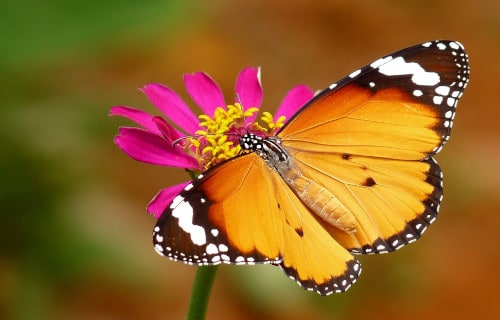
Mature adults attain an average wingspan measuring between 2.8 – 3.1 in (7 – 8 cm). Like many Arthropods, it also displays a slight degree of the physiological characteristic of sexual dimorphism. In its particular case, though, this natural trait does not manifest in terms of sheer size.
Males of this insect develop pronounced scent glands, which the female of the species lacks entirely. With the exception of this physical structure, the genders appear virtually indistinguishable to the anked eye. The bodies of both genders also display a basic black shade, with white spots.
The difference in overall appearance is further augmented, though, by the exact patterns of color the invertebrate displays. That’s due to the fact that precise combinations vary between individuals, sometimes quite significantly. Certain basic patterns of coloration do remain, however.
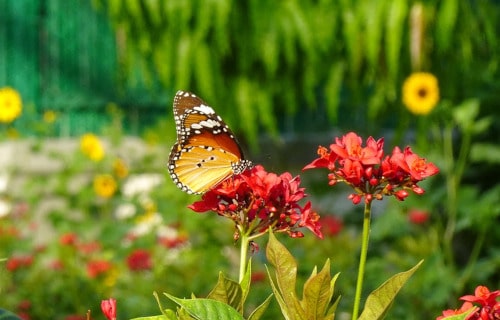
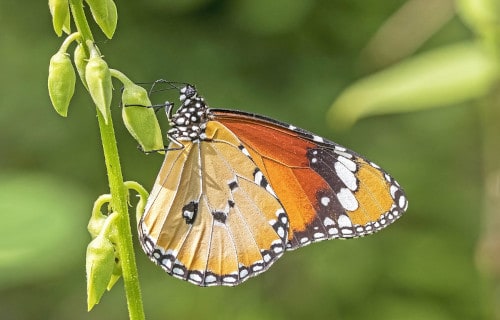
Both the upper and lower wings of the mesmerizingly beautiful African Monarch display a predominantly bright orange hue. On the upperside, however, the tips of the forewing have a black border. White spots also appear there. The hindwing displays the black border, but without spots.
The underside of the wings also presents a principally orange shade. Here, though, it’s a somewhat lighter hue on most specimens. The same black border appears, but both wings also have white spots showing there. The hindwing also presents three small black spots around a central wing cell.
- Kingdom: Animalia
- Phylum: Arthropoda
- Class: Insecta
- Order: Lepidoptera
- Family: Nymphalidae
- Genus: Danaus
- Species: D. chrysippus
CCL: https://bit.ly/3Bfs6i5
African Monarch Distribution, Habitat, and Ecology
Fortunately, for those who appreciate Nature, the dazzling African Monarch apparently evolved as native to a relatively broad swathe of the surface of the globe. As the common name itself clearly indicates, this zone of habitation includes virtually all of the entire continent of Africa.
Its presence doesn’t remain restricted solely to that one region of the world, however. That’s because it also appears in an impressive array of other areas. This includes much of Asia, including all of the Indian subcontinent. The insect also appears in Australia, and some Pacific islands!
It further enhances its survival capability by displaying an impressive degree of adaptability in regards to its precise choice of habitat. It does nonetheless demonstrate a preference for one specific type of habitat. The intrepid insect demonstrates a strong fondness for arid, open areas.
Yet, due to its flexibility in terms of where it lives, it also frequently makes appearances in a wide varity of habitats. These include such diverse areas as mountains, deciduous forests, and even deserts and gardens. It seems comfortable at altitudes ranging from sea level to 4,900 ft (1,494 m).
As quite often happens in Nature, the delicate beauty of the African Monarch conceals a rather surprising secret. Despite its general physical fragility, it possesses very few natural predators. That’s due to the fact that its tiny body contains high levels of toxic compounds, called cardenolides.
These protective chemicals originate with its diet. The adults consume nectar from various local flowering plants. The larval form, however, feeds mainly on several plants, primarily Milkweed. The toxins then accumulate in its body, making it extremely unpalatable to most predators.
CCL: https://tinyurl.com/bdes27an
3 Amazing Butterflies of Algeria
We sincerely hope that each of you thoroughly enjoyed reading, and hopefully learning from, this article we’ve written about these 3 Amazing Butterflies of Algeria. It’s also our hope that doing so has left you with either a new or renewed appreciation for such remarkable wonders of Nature.
Unfortunately, however, many of their kindred around the world now find themselves facing strong threats to their continued existence as a species. Many of those dangers, in fact, stem from the ongoing actions of mankind. We must do all we can to protect and preserve them all.
Check out our other articles on 4 Fabulous Geological Features of Texas, Wonderful Wild Cats of the World, 5 Lively North American Lizards, Earth’s Amazingly Abundant Avians