


We hope that each of you, our readers, will thoroughly enjoy and appreciate this article we present about these 3 Remarkable North American Rodents. It was our great pleasure to gather the information for you. May it provide you with both education and increased awareness.
Certainly, these few species listed herein represent only a tiny portion of the similar marvels to be found in this region. It’s our sincere belief, though, that they serve as excellent representations of the wonders that exist here. Check out some of our other articles for similar marvels.
Eastern Gray Squirrel
Eastern Gray Squirrel Facts
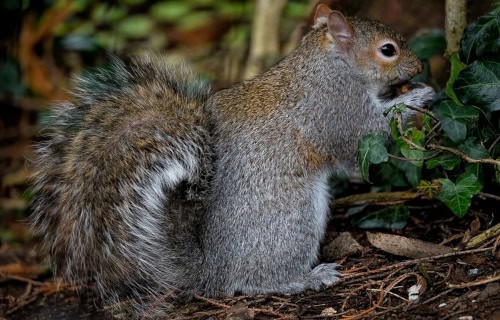
- Leading off the compilation of these 3 Remarkable North American Rodents we present the precious product of evolution known as the Eastern Gray Squirrel.
- The informative term applied to the animal herein serves as the most frequently used common name for this beautiful product of evolution. The adorable mammal does have another, very similar title, though. That’s the shorter term of the gray squirrel.
- Among scientific professionals, however, it’s generally referred to by its formal title. Unfortunately, that technical moniker remains somewhat difficult for the layperson to pronounce. That’s because it bears the official name of the Sciurus carolinensis.
- The rodent received that tongue-twisting appellation due to the efforts of the German naturalist, Johann Friedrich Gmelin. He accomplished the first acknowledgement of the animal as a separate and distinct species. He managed that deed in 1788.
- No matter which of these monikers one chooses to use, though, it remains an interesting fauna. Despite its small stature, it plays a pivotal role in its region. In fact, the creature represents perhaps the most important regenerator of forests in its range.
- It’s therefore fortunate that the Eastern Gray Squirrel seems to be maintaining a population base that’s both stable and sufficient. That pleasant situation also appears to hold true throughout its territory. Accordingly, the IUCN lists it as Least Concern.
- The marvel of Nature faces potential threats to its continued existence as a species. Most of those, though, mirror the situation of many species. It faces the possible dangers of habitat degradation and loss, and, of course, that of climate change.
Eastern Gray Squirrel Physical Description
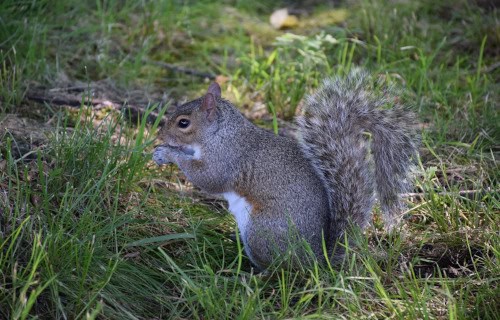
The remarkable Eastern Gray Squirrel generally captures the attention and appreciation of those who encounter it. The animal does so for various reasons, of course. Sheer physical measurements, however, rarely factor into the general respect it’s usually accorded.
In that regard, it follows the pattern established by the majority of its kin around the world. That’s true since it displays no noticeable degree of the phsyiological characteristic of sexual dimorphism. The genders, therefore, can be hard for the layperson to distinguish simply.
Individuals of both sexes of the animal attain a body length that averages between 9.1 – 11.8 in (23 – 30 cm). The tail, however, grows comparatively long in relation to body size. This appendage typically reaches lengths equaling between 7.5 – 9.8 in (19 – 25 cm).
Weights remain surprisingly light, again among both genders. Mature adults usually reach a mass of between 14 – 21 oz (0.4 – 0.6 kg). Exceptional specimens do occur, of course. These, though, rarely exceed either of these categories by more than a minor amount.
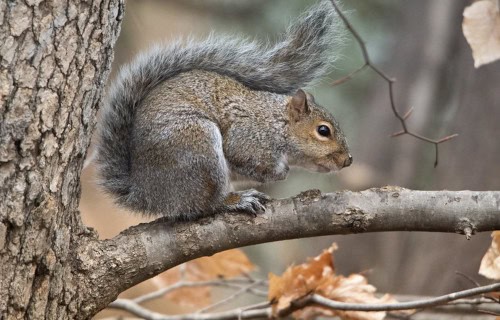
In overall appearance, likewise, both genders of the Eastern Gray Squirrel present the same overall patterns. Like all known squirrels, it develops four toes on its front feet, but five on the hind feet. Intriguingly, its teeth commonly grow throughout the life of the rodent.
It’s the coloring of the gorgeous creature that stands out the most, though. The fur usually presents a predominantly light gray shade. Some, however, present a light brown. Its underside shows an off-white hue. Also gray, the tail typically possesses a dense, fluffy coat.
- Kingdom: Animalia
- Phylum: Chordata
- Class: Mammalia
- Order: Rodentia
- Family: Sciuridae
- Genus: Sciurius
- Species: S. carolenensis
CCL: https://bit.ly/3Aduh60
Eastern Gray Squirrel Distribution, Habitat, and Ecology
The distinctive Eastern Gray Squirrel evolved as native to a moderate portion of the globe. The precise location of that zone of habitation likely won’t surprise many people, though. That’s true since it developed as endemic to a section of the continent of North America.
Its very name provides a clue into which portion of that greater area it lives in, too. As that indicates, the beautiful mammal mainly lives in the general eastern part. Some do live in the midwest, however. It lives from southeast Canada, to Florida and Texas, in the United States.
Though quite adaptible, the impressive animal does show decided preferences in its choice of habitat. The great majority of specimens prefer to make their home in large areas of dense, mature woodland ecosystems. These usually comprise mostly deciduous trees.
Although it does adapt, it nonetheless shows another strong preference for certain varieties of trees. The forests where it makes its home generally contain a large percentage of hickory and oak trees. These regions, can, though, sometimes include larger parks and yards.
Like its relatives, the Eastern Gray Squirrel evolved as herbivorous in nature. Its diet covers a wide range of food sources. These include such things as flowers, tree buds and bark, berries, and seeds. It does show a strong preference for various nuts, which it often saves for later.
It developed as a primarily solitary species. The creature builds its nest in the forks of trees, and the male and female generally only share a nest during breeding season or exceptionally cold periods. It will also make use of dens in trees vacated by former occupants.
North American Beaver
CCL: http://bit.ly/2xLZ0ap
North American Beaver Facts
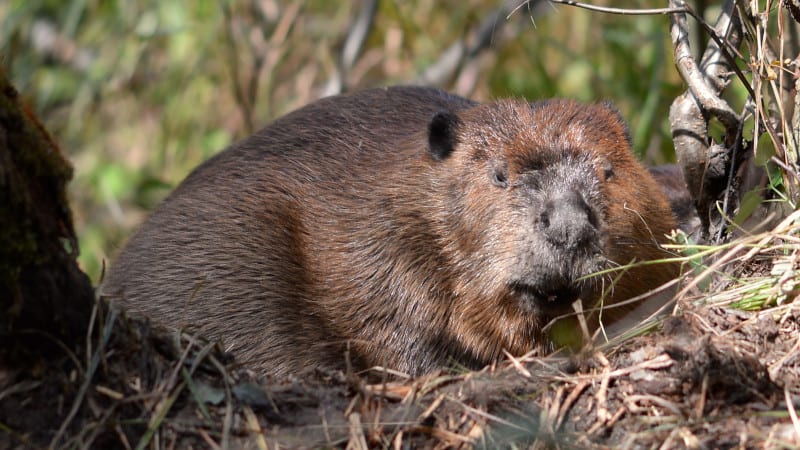
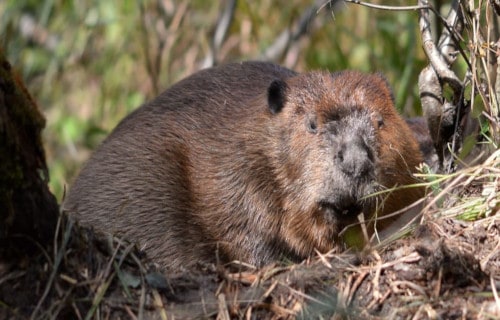
- Next up in this article about 3 Remarkable North American Rodents comes the incredibly versatile creature named the North American Beaver.
- This highly distinctive creation of Nature and evolution most often goes by the informative and perfectly apt common name we’re using. Yet, it also has other, equally telling titles. These include American beaver, Canadian beaver, and common beaver.
- Within the scientific community, however, it’s perhaps better known by its technical designation. Thankfully, that’s a relatively simple one for the layperson to pronouce, as such tags go. That’s because it holds the formal epithet Castor canadensis.
- The unusual mammal received that moniker due to the efforts of Heinrich Kuhl. The respected German zoologist accomplished the first recognition of it as a separate and distinct species. He achieved that scientifically noteworthy feat in 1820.
- This marvel represents one of only two extant species of beaver in the world. Confusion sometimes occurs, however, due to the existence of a distantly related rodent. That creature’s often called the “mountain beaver,” thus creating the confusion.
- It’s also the largest rodent on its continent, and competes with its relative in another region of the world for the status of third-largest on earth. The other grows slightly bigger on average, but individuals of this one have greater known maximum sizes.
- Fortunately, the North American Beaver appears to be maintaining a population base that’s both stable and sufficient. That pleasant state also seems to hold across its entire range. The IUCN therfore presently lists the animal as Least Concern.
- It nevertheless should be considered as facing several potential threats to its continued existence as a species. Like all forms of life on earth today, most of these stem from the actions of man. Chief among these stands habitat loss and climate change.
CCL: https://bit.ly/1xMszCg
North American Beaver Physical Description
The captivating North American Beaver typically garners a great deal of attention from those fortunate enough to encounter one in the wild. It does so for a variety of reasons, though. That’s true since it’s both visually impressive and of reasonably impressive stature.
Regarding its physical characteristics, however, it differs from a pattern common to most mammals. That’s due to the fact that it displays virtually no noticeable degree of the physiological trait of sexual dimorphism. The two genders thus appear virtually identical.
Mature adults of both sexes of this animal attain weights ranging from roughly 35 – 60 lb (16 – 27 kg). Exceptional specimens, though, occasionally exceed this significantly. These remarkable individuals sometimes attain masses totaling an amazing 90 lb (41 kg).
The length of the body itself also reaches eye-ctching proportions accordingly. Depending on the specimen, this usually ranges from 2.5 – 3 ft (0.75 – 0.9 m). It has short front limbs, with clawed hands, as well as longer hind limbs, equipped with webbed feet.
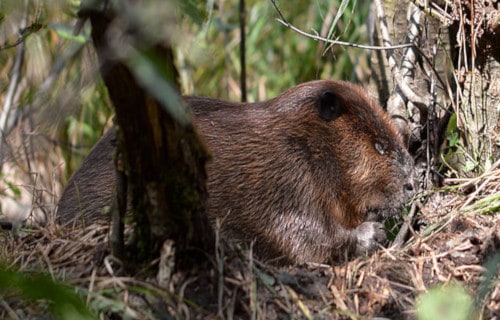
It also has relatively small eyes and ears, well adapted for life in and around water. These have a transparent third eyelid, called a nictitating membrane, that provides protection and allows it to see underwater. The ears and nose also close tightly underwater.
The North American Beaver further has dense, waterproof fur that’s generally dark brown to reddish-brown in color. That’s composed of a soft, insulating undercoat and longer, coarse guard hairs. Long, sensitive whiskers also appear on the face of the animal.
Yet, it’s likely the aforementioned tail that most people consider its defining feature. This appendage evolved as broad, flat, and scaly. The short tail, though, adds a small amount to this. It usually measures about 10 – 18 in (25 – 45 cm) in length, and 6 in (15 cm) wide.
- Kingdom: Animalia
- Phylum: Chordata
- Class: Mammalia
- Order: Rodentia
- Family: Castoridae
- Genus: Castor
- Species: C. canadensis
CCL: https://bit.ly/3jAmoPn
North American Beaver Distribution, Habitat, and Ecology
The remarkable North American Beaver evolved as native to a considerably large portion of the earth’s surface. Given its name, though, the location of that zone of habitation isn’t going to surprise anyone. It’s native to many portions of the continent of North America.
Across that greater area, it lives within the great majority of the landmass. To the north, it appears in all provinces and territories of Canada. From there, it lives throughout the contiguous United States, from coast to coast. Its range also extends into northern Mexico.
It displays a high degree of adaptability regarding its choice of habitat. It’s therefore found in a wide range of habitats across its extensive distribution. Its choices show a close link to the availability of water and suitable building materials for dam and lodge construction.
It lives in various freshwater environments, including rivers, streams, ponds, lakes, and wetlands. It thrives in areas with slow-moving or still water where it can easily build dams and lodges. Wetlands also form ideal habitats, due to the abundant water and vegetation.
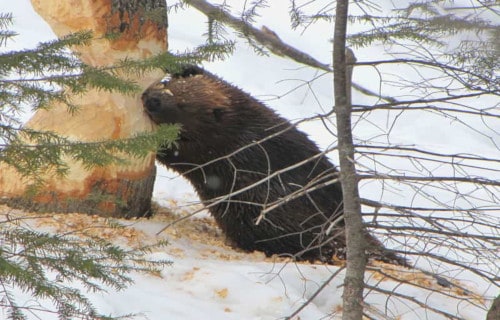
The rodent also prefers areas near forests with supplies of trees and woody plants. It favors deciduous trees like willows, poplars, and birches, which it uses for food and building materials. But, it also appears in mixed forests, including deciduous and coniferous trees.
The areas adjacent to rivers and streams, known as riparian zones, naturally remain particularly important for the amazing animal. These areas both access to water and a variety of vegetation types, making them prime locations for dam-building and lodge construction.
The beautiful North American Beaver evolves as herbivorous nature. Throughout the warmer months of the year, its diet primarily consists of bark, leaves, and aquatic plants. In winter, however, the fabulous mammal mainly relies on food caches stored underwater.
It builds dams using sticks, mud, and rocks to create ponds. These ponds provide deep water where it builds its lodges and escapes from predators. It also makes these dome-shaped structures with the same materials, and with underwater entrances for protection.
The breeding season occurs in late winter, from January to March. Mating takes place in the water, and the pair often remains together throughout the year, maintaining their territory and raising the young. A typical litter consists of 1 – 6 kits, with the average being 3 – 4.
The intriguing creature takes such intricate precautions for its safety because it faces predation from a wide variety of foes. It commonly faces this from wolves, coyotes, bears, and large birds of prey. Younger individuals remain especially vulnerable in this regard.
Northern Flying Squirrel
CCL: https://bit.ly/3lqDfW6
Northern Flying Squirrel Facts
- Closing out this compendium of these 3 Remarkable North American Rodents comes the mind-blowing wonder named the Northern Flying Squirrel.
- This small mammal most frequently goes by this descriptive, yet somewhat misleading, common name for the obvious reasons . It also represents one of only three members of its genus, Glaucomys, to make its home in what’s now known as the New World.
- The intriguing creature does have another name by which it’s known, though. That’s because, like all species, it also holds a technical name. Fortunately, this one’s relatively simple to pronounce, as such things go. It’s formally named the Glaucomys sabrinus.
- It received that unique moniker due to the efforts of the respected English zoologist and botanist, George Kearsley Shaw. He accomplished the first official recognition of it as a separate and distinct species. This scientifically noteworthy action occured in 1801.
- The surprising animal also remains noteworthy for another, astonishing fact. That’s due to the fact that researchers presently recognize a total of 24 subspecies of this small marvel of Nature! This fact alone distinguishes it from the other members of its Order.
- For the moment, the Northern Flying Squirrel appears to be maintaining a population base that’s both sizable and stable. This fact also seems to hold true throughout the entirety of its range. The IUCN, therefore, now lists it as Least Concern on its Red List.
- The remarkable animal nevertheless does face some potential threats to its existence. These, however, consist of the same one’s that most species presently face. These include habitat degradation and outright loss, and, of course, climate change.
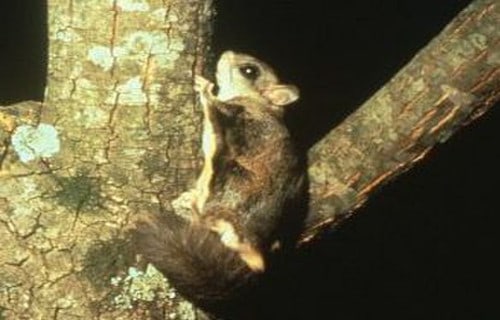
Northern Flying Squirrel Physical Description
The remarkable Northern Flying Squirrel easily impresses those fortunate to encounter one. It does so, however, for reasons other than sheer size. Although it’s certainly a lovely animal, it’s not just its appearance that distinguishes it. That’s due to other characteristics.
Unlike many animals, yet in keeping with the pattern established by other squirrels, this creature displays no noticeable degree of sexual dimorphism. Distinguishing the genders of specific individuals encountered therefore remains quite difficult for the casual observor.
In terms of physical size, though, it’s somewhat smaller than many of its genetic cousins. Individuals attain an average overall length of 9.8 – 14.6 in (25 – 37 cm). That, however, includes the tail as well. This part of the body often comprises roughly half its length.
The body of the rodent develops as slim and elongated. Most specimens reach an average body weight of only 2.6 – 4.9 oz (75 – 140 gms). Exceptional specimens occur, of course. Even these, though, rarely exceed these measurements by more than a small fraction.
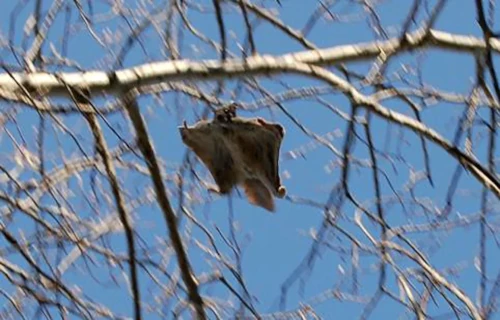
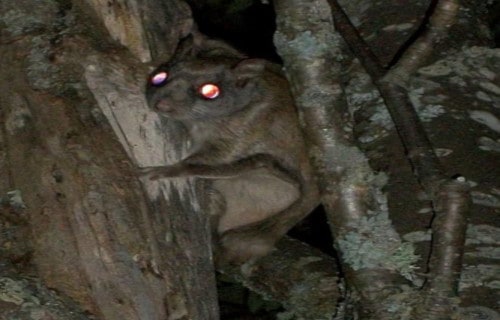
It also displays several adaptations useful for its lifestyle. This includes comparatively large, black eyes. It also has the ability to rotate its hind feet, allowing it to climb down trees head first. Its fleshy membrane, however, remains its most noticeable physical feature.
In coloring, the Northern Flying Squirrel presents a pattern of shades of light brown on the upper body. Yet, it also presents as gray on the flanks of its body. The underside, though, typically manifests a whitish shade. Its tail develops as fluffy, yet somewhat flattened.
- Kingdom: Animalia
- Phylum: Chordata
- Class: Mammalia
- Order: Rodentia
- Family: Sciuridae
- Genus: Glaucomys
- Species: G. sabrinus
CCL: https://bit.ly/3NnKH0f
Northern Flying Squirrel Distribution, Habitat, and Ecology
The fabulous Northern Flying Squirrel evolved as native to a part of the globe well known for its abundance of wildlife. That’s due to the fact that the amazing rodent lives on the continent of North America. There, though, its population remains somewhat disjointed.
As its name implies, the majority of its numbers appear in the northern part of the continent. More specifically, most of its population lives in Canada. It also appears as far north as the state of Alaska, though. The small wonder of Nature also appears in the United States.
In that country, it’s scattered, though. To the west, it’s seen in California and Colorado. From there, it’s also seen to the northeast in Ohio, Wisconsin, and Michigan. In the east, the animal also lives in regions of Tennessee and North Carolina, in the Appalachian Mountains.
In each of these regions, however, it displays identical habitat preferences. Populations most often appear in areas dominated by conifers. Some do, though, make their homes in regions of deciduous or mixed forests. It also prefers dense concentrations of trees, as well.
The Northern Flying Squirrel evolved as a nocturnal animal. It’s also primarily arboreal in nature. On the ground, it’s relatively clumsy. Among the trees, though, it glides from limb to limb gracefully. Its main predators include hawks, owls, martens, and coyotes, among others.
Its diet remains typical of its kind. As a herbivore, it consumes a wide variety of locally available food. This typically includes such staples as nuts, fungi, acorns, lichens, fruits, buds, and tree sap. It does, however, occasionally supplement this with insects and bird eggs.
CCL: https://bit.ly/3jAmoPn
3 Remarkable North American Rodents
We hope that each of you deeply enjoyed reading, and hopefully learning something from, this article we’ve written about these 5 Magnificent Mammals of Greenland. It’s also our hope that doing so has left each of you with either a new or renewed appreciation for such wonders of Nature.
Unfortunately, however, many of their kindred around the world now find themselves facing strong threats to their continued existence as a species. Many of those dangers, in fact, stem from the actions of mankind. We must continue to do all we can to protect and preserve them all.
Check out our other articles on 5 Remarkable Bolivian Herbaceous Plants, Earth’s Amazingly Abundant Avians, 4 Awesome Australian Butterflies, The Mighty Tornado