

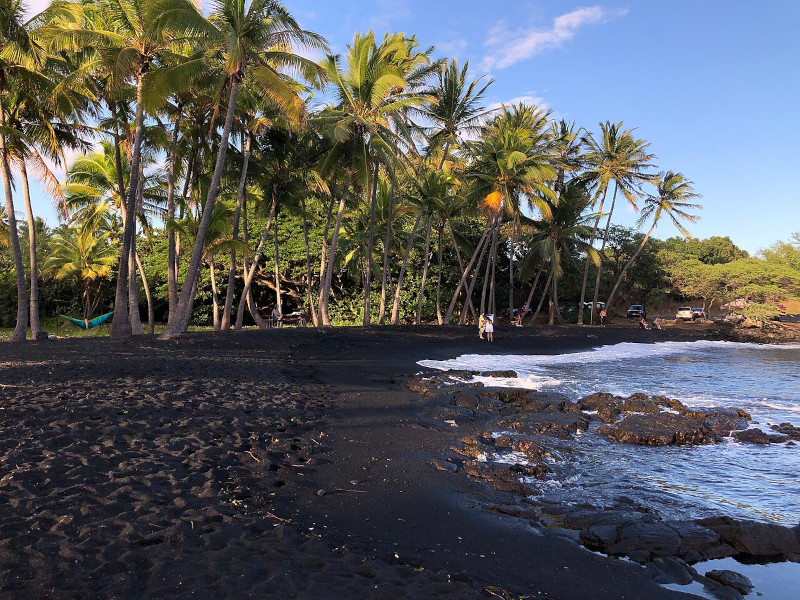
Punaluʻu Beach Facts
- The single term of Punaluʻu Beach represents one of the most frequently used common names for this breathtaking formation of Nature. The formation does have at least one other general title, though. That’s the perfectly descriptive and fitting appellation of Black Sand Beach.
- The first moniker, still in broad use today, represents the epithet for the stunning feature in the local tongue of the Indigenous Peoples native to the region. The latter, meanwhile, clearly forms the name for the gorgeous geological structure in the modern english language.
- It continues to remain unclear precisely when the earliest ancestors of the first inhabitants of the region arrived and sighted this awesome wonder of Nature. Archaeological evidence, though, places this important event at sometime between roughly 1,500 – 2,000 years ago.
- The identity of the first European explorer to discover this marvel likewise isn’t known to historians with full certainty. However, the first such formally documented individual was British explorer Captain James Cook. His expeditions brought him to the location in 1778.
- Today, the magnificent Punaluʻu Beach stands out for numerous reasons. The highly distinctive appearance of the site draws tourists, despite the rugged conditions. Though swimming remains possible, the area’s extremely rocky, thus relatively dangerous at times.
- Far more importantly, though, the stunning site also holds an ongoing place of significance in the culture of the native people still inhabiting the beautiful region. Numerous cultural activities and events still frequently take place there to honor their cultural heritage.
Related Articles
Punaluʻu Beach Physical Description
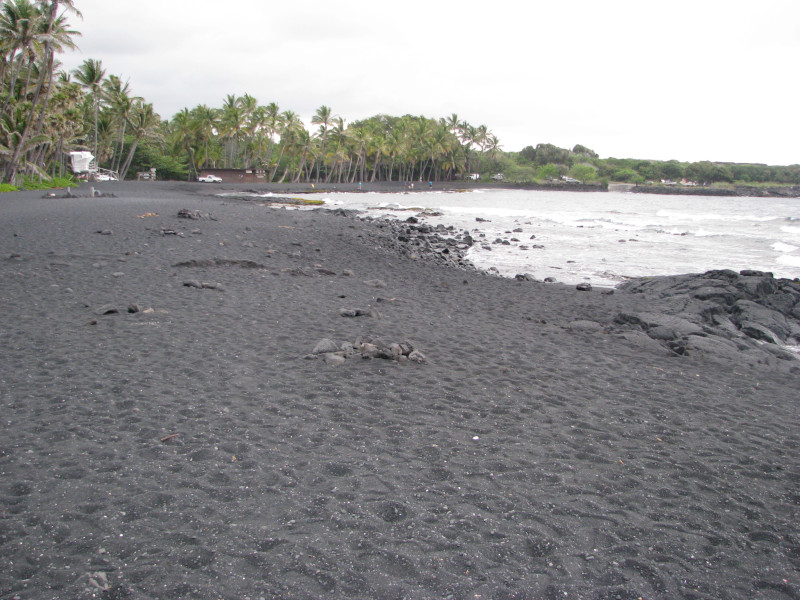
The magical Punaluʻu Beach captivates and enthralls most of those individuals fortunate enough to visit its mesmerizing sands. The marvel of geology typically does so for a variety of reasons, like most such locations. Unlike some of them, though, sheer size isn’t among those factors.
That’s because, compared to many other beaches around the globe, it’s somewhat smaller in dimensions. In terms of expanse, its length measures approximately 1,800 ft (550 m). Its width varies, of course, but also remains small, only averaging around 60 – 70 ft (18 – 21 m).
Yet, Nature doesn’t rely solely on sheer physical dimensions to make this site either visually impressive or remarkable. It’s also comprised of numerous other natural attributes that contribute to this. High among these stands its outlying edges, well nestled between multiple rocky cliffs.
A prodigious number of lava formations also dot the mesmerizing beach itself, as well as the immediately surrounding area. These include such features as lava tubes, tide pools, and volcanic rock outcrops of varying shapes and sizes, which add to the beach’s truly dramatic landscape.
Likely the most notable feature of Punaluʻu Beach, though, also serves as the source of its common name. That’s the extraordinarily distinctive black-colored sand of the beauiful beach itself. That’s formed from the erosion of volcanic rock, primarily basalt, from nearby volcanic activity.
Further adding to this incredible geological construction, however, comes even more natural splendor of still a different kind. At many places along its margins, the beach appears dotted with coconut palms and other tropical vegetation, providing shade and adding to the beauty of the area.
Punaluʻu Beach Location, Formation, and Ecology
The awe-inspiring Punaluʻu Beach formed in a moderately remote region of the globe. Yet, that area’s also a zone of the earth’s surface well known for its great abundance of natural wonders. That’s true since its origins placed it within the broad confines of the North Pacific Ocean.
More specifically, this unquestioned masterpiece of natural geological design also forms part of one of the Hawaiian Islands, an island state of the United States. It also lies roughly located between Pāhala and Nāʻālehu on the Big Island, itself, located on the southeastern Kau coast.
The haunting color of this amazing site owes its existence to the nature of the formation of the island themselves. The black sand’s composed mainly of the mineral basalt. Its creation’s attributed to such activity, specifically the interaction between lava flows and the waters of the ocean.
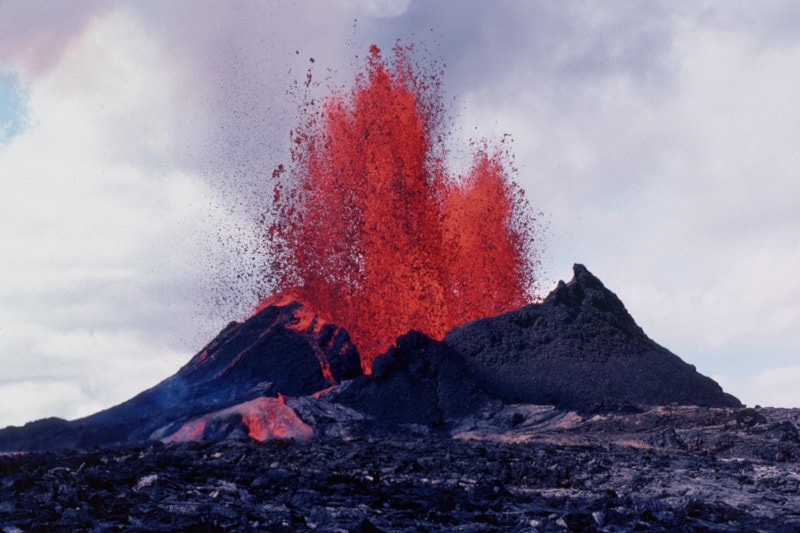
The island on which the beach is located still remains characterized by its highly active volcanoes, including Mauna Loa and others. Over time, lava from these highly active volcanoes has flowed into the ocean, where it cools rapidly due to the lower temperature of the same ocean water.
When hot lava meets the cold water, the flow solidifies almost instantly, usually forming volcanic glass and basalt fragments. These then break down further via the action of waves, wind, and erosion, resulting in the fine black sand that gives the site its highly distinctive appearance.
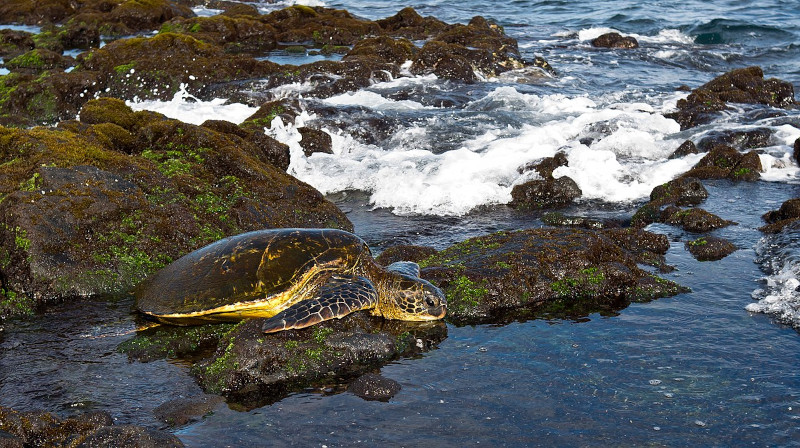
Much to the continued delight of its many visitors, Punaluʻu Beach also boasts a highly unique and diverse ecology, shaped by its volcanic origins and the surrounding marine environment. Perhaps most famously, this includes Hawaiian green sea turtles, also known as honu in Hawaiian.
Despite the extremely rugged volcanic terrain, the beach also supports a broad variety of coastal vegetation. Salt-tolerant plants such as naupaka and heliotrope can be found growing in the sand dunes and along the shoreline, providing habitat and stabilizing the beach ecosystem.
The waters just offshore serve as home to a diverse array of marine life. There, snorkelers meet colorful reef fish, octopuses, and other invertebrates in the rocky areas. The beach also serves as a feeding area for seabirds such as Hawaiian geese, called the nēnē and various terns and gulls.

Features Sharing Its Region
Check out our other articles on 5 Remarkable West Virginia Invertebrates, Giant Otter, Millaa Millaa Falls, Cauliflower Jellyfish, Blood Iris, Achemon Sphinx Moth, Jelly Ear, Mangrove Monitor