

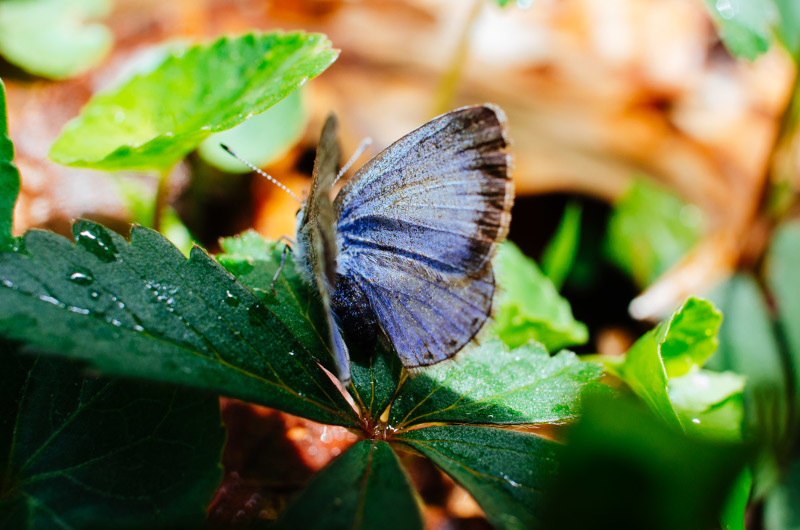
Spring Azure Facts
- This beautiful creation of Nature and evolution most frequently goes by the charming common name of Spring Azure across its native range. Yet, it does have a few other general titles that it’s also known by. These include such terms as Northern Azure, Spring Blue, and Echo Blue.
- Inside the hallowed halls of science, however, it’s perhaps much better known by its purely technical designation. Thankfully, that one’s simpler for the layperson to pronounce than most such tags. That’s because the stunning Lepiodtera bears the official moniker Celastrina ladon.
- The lovely insect received that particular epithet due to the efforts of Pieter Cramer. That highly respected Dutch entomologist recorded the first formal acknowledgement of it as a separate and distinct species. He achieved that scientifically noteworthy deed in the year 1780.
- Along with its undeniable appeal, the beautiful invertebrate also currently represents a source of some debate among taxonomic authorities. That’s due to a disagreement between members. Some consider it a subspecies of another insect, while others consider it a full species.
- Fortunately, the remarkable Spring Azure appears to be maintaining a population base that’s both stable and sufficient. That pleasant state also seems to hold true throughout the entirety of its known range. The IUCN therefore does not yet show it on its published Red List.
- It nevertheless should be considered as facing several potential threats to its continued existence as a species, at least. In this regard, it’s endangered by the same perils as all forms of life on earth. Most of these hazards stem from the actions of man, including climate change.
Related Articles
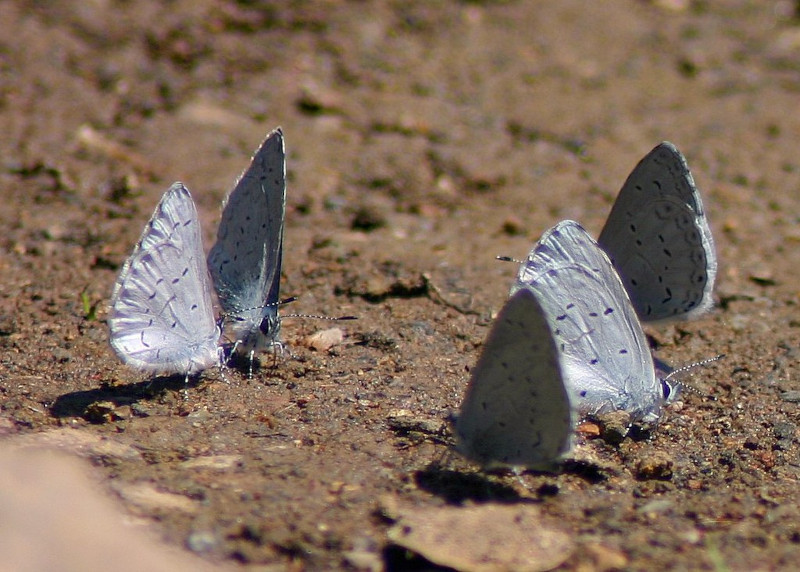
Spring Azure Physical Description
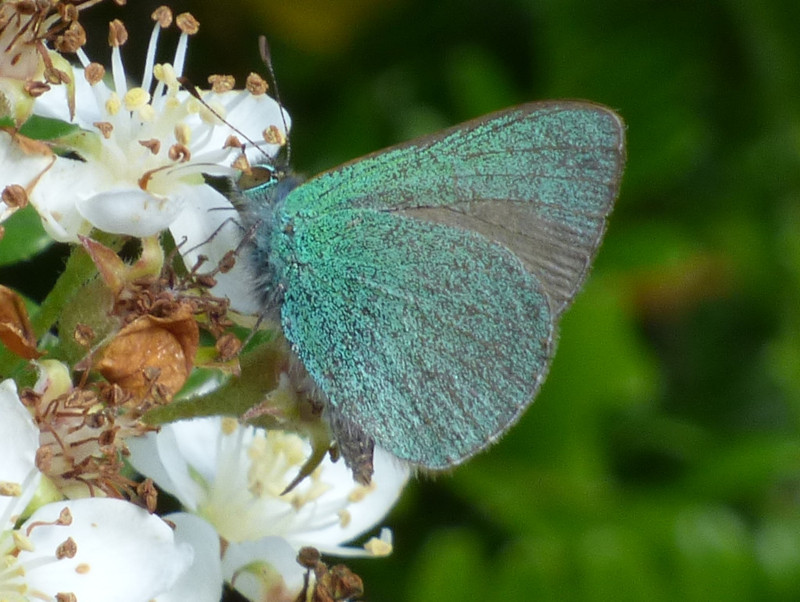
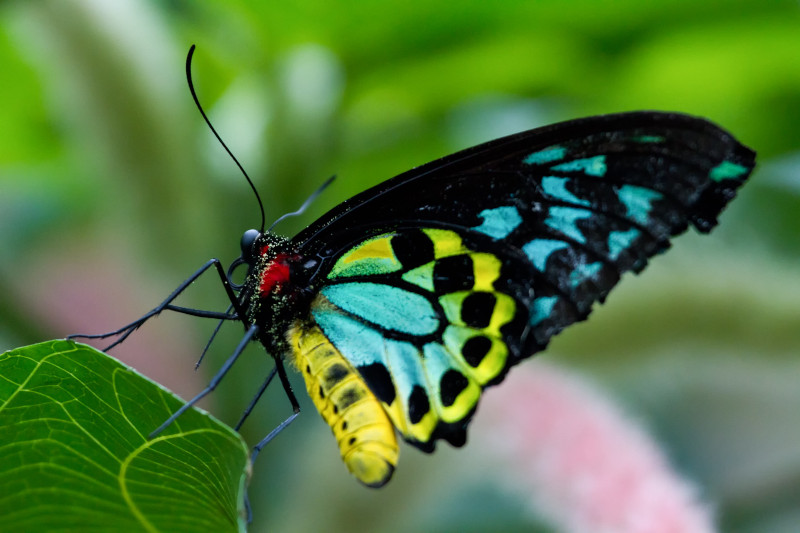
The stunning Spring Azure generally captivates and enthralls those individuals fortunate enough to encounter one of these marvels. It typically does so, though, due more to its mesmerizing beauty than impressive physical stature. That’s because it’s a comparatively small type of butterfly.
Regarding this part of its nature, it also follows a natural pattern quite common among most fauna, including its many relatives. That’s the fact that it displays a certain amount of the physiological characteristic of sexual dimorphism. In its case, this trait manifests in terms of its coloring.
The lovely creatures reach a mean body length equaling approximately 0.3 – 0.5 in (0.8 – 1.2 cm). Overall, individuals of both genders also attain an average wingspan measuring between 0.75 – 1.25 in (1.9 – 3.2 cm). Although exceptional individuals naturally occur, they rarely exceed this by much.
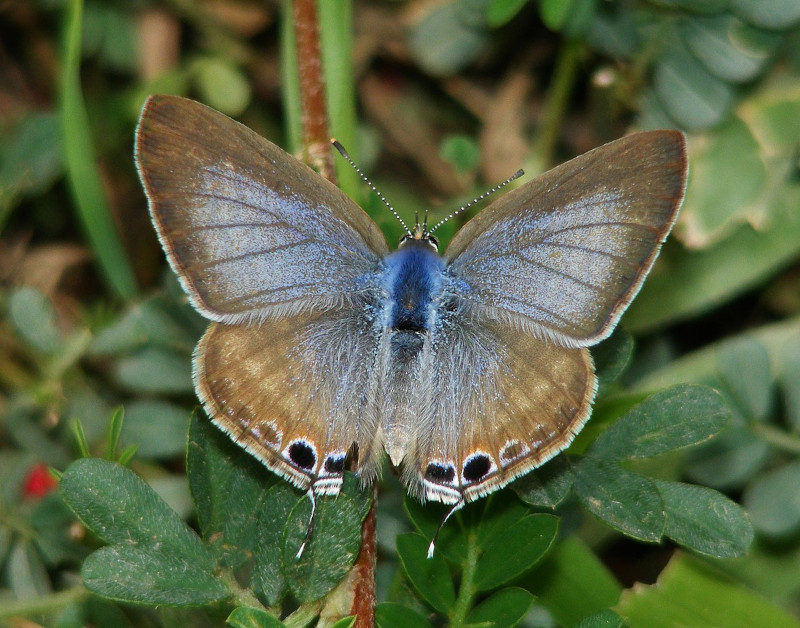
The body itself additionally develops a form similar to others of its kind. This evolved as relatively slender, and slightly blue-gray in color. It’s also covered in fine, short scales, providing it with a fuzzy appearance. The antennae evolved as black and white banded, with small clubs at the tips.
Without doubt, however, it’s the wings of the gorgeous Spring Azure that capture the most attention from its many admirers. This feature also forms the primary sex-based difference between males and females. The contrast, though, remains minimal, and easily overlooked by casual observers.
Among males of the species, the upper wing presents a very bright, uniform shade of blue. Yet, the underside displays a pale gray to whitish with fine black dots. Meanwhile, a dark margin frequently, though not always, appears on the upper wing. It’s also slightly smaller than the female.
Females, however, manifest a somewhat duller blue with dark borders, especially on the forewings. The underside of their wings evolved as similar, but sometimes slightly darker or more marked. And the margins on their upper wings, when present, at least, tend to be broader than in males.
- Kingdom: Animalia
- Phylum: Arthropoda
- Class: Insecta
- Order: Lepidoptera
- Family: Lycaenidae
- Genus: Celastrina
- Species: C. ladon
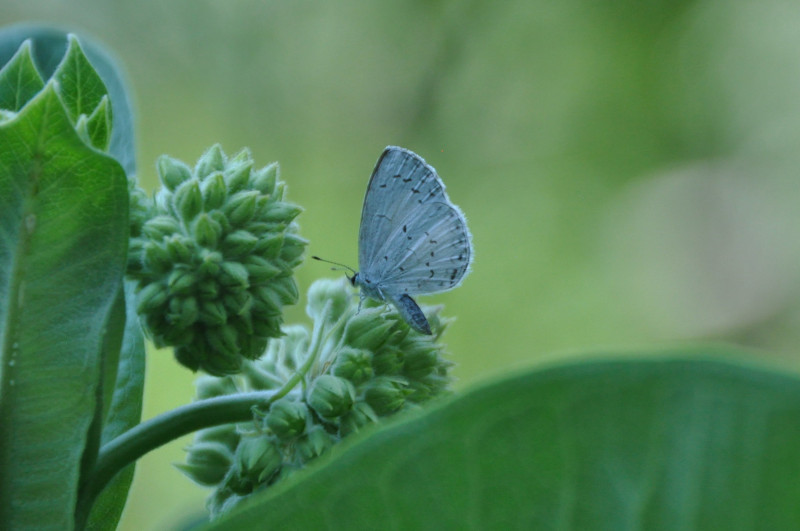
Spring Azure Distribution, Habitat, and Ecology
The fabulous Spring Azure evolved as indigenous to a moderately broad expanse of the surface of the earth. Just exactly where that zone of habitation lies likely won’t surprise anyone, though. That’s because the remarkable insect developed as native to a specific portion of North America.
Within the borders of the United States, it primarily appears throughout the eastern and central portion of the country. In the northern part of the nation, that range extends from both the state of New England and the Great Lakes region, south to northern Florida, and west to the Great Plains.
It’s also common in the southern sections of Canada. There, the marvel remains especially prevalent in and around southern Ontario, Quebec, and parts of Manitoba and the Maritimes. Though it’s rarely spotted there, the southern part of its range extends into northern Mexico.
Much like many Lepidoptera, this work of Nature displays decidedly clear and strong preferences regarding its choice of habitat. Although the butterfly occupies a variety of habitats, it shows a strong preference for environments that support the flowering shrubs and trees its larvae feed on.
Its most common type of environment consists of combinations of deciduous woodlands and forest edges. The invertebrate prefers openings, trails, and sunny edges in or near mixed hardwood regions. It’s also frequently seen in riparian areas, such as along streams, rivers, and wetlands.
Other regions away from populated areas that it favors include open, sunny areas with scattered shrubs and early-flowering plants. Yet, it doesn’t shy away from man’s presence, either. It sometimes visits ornamental flowering shrubs, especially early in the spring, in human-altered landscapes.
The ecology of the breathtaking, and aptly-named, Spring Azure developed as shaped by its role in multiple facets of Nature. These include early spring ecosystems, its relationships with host plants and ants, and its various interactions with other Celastrina species within its native regions.
In its larval stage, it feeds as a herbivore. These principally, though not exclusively, consume flower buds and young fruits of woody plants and shrubs. Typical hosts consist of Dogwood, New Jersey Tea, Spirea, Viburnum, and Cherry. The adults, however, only feed on nectar, aiding in pollination.
Intriguingly, it displays the same mutualistic relationship with ants as other members of its Family. Larvae have nectary organs that secrete sugary substances. This sweet serves to rewards ants, which in turn protect the larvae from the numerous predators and parasitoids that threaten them.
Across the majority of its range, this wonder of evolution produces only a single generation per year. Adults emerge early in the Spring, thus the principal common name. This usually occurs between March and May, depending on latitude. Females lay their eggs on host plant flower buds.

Species Sharing Its Range
Check out our other articles on 5 Awesome Australian Lepidoptera, Mountain Hare, Onyx River, Lobster Claw Heliconia, Tiger Shark, Hellbender Salamander, Epirus Dancing Grasshopper