
We hope that each of you, our readers, will greatly enjoy and fully appreciate this article we present about these 4 Captivating Colorado Birds. It was certainly our sincere pleasure to gather the various information for you. May it provide you all with both education and increased awareness.
Certainly, these few species listed herein represent only a very small portion of the similar species found in this special region. It’s our belief, though, that they collectively serve as excellent examples of the members of this Class. Check out some of our other articles for similar marvels.
Long Eared Owl
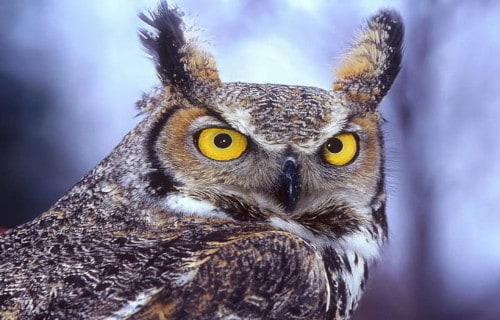
Long Eared Owl Facts
- Leading off this article about these 4 Captivating Colorado Birds we present you with the beautiful avian rightly known as the Long Eared Owl.
- Perhaps most notably, the descriptive term you just read serves as one of the common names for a truly majestic type of raptor. The remarkable animal does, however, also possess several other general names. These are used in different parts of its widespread range.
- These alternate general names include several highly descriptive terms. Some even qualify as highly distinctive. They include such appellations as the cat owl, the lesser horned owl, and the northern long-eared owl. These monikers reflect both its appearance and its habitat range.
- In the scientific community, though, it’s perhaps better known by its technical designation. Thankfully, that’s a significantly simpler one for the layperson to pronounce than many related names. That’s because the stunning avian holds the simple formal tag of Asio otus.
- This gorgeous creature additionally shares a great portion of its native range with another, closely related avian. That’s the visually quite similar species ironically, yet appropriately, known as the short-eared owl. The two animals can most easily be distinguished while at rest.
- That’s because, at that time, the ear tufts of the Long Eared Owl become clearly visible to the observer. This constitutes the most easily recognizable physical difference between the two species. The eyes of the two different creatures additionally display different colors.
- A total of four recognized subspecies of this remarkable avian currently exist around the world. But, this product of Nature and evolution has a decided advantage over many of them. Unlike some of them, this wonderful bird appears to have a sizable and stable population.
- Due to this pleasant situation, the IUCN presently lists the wonder as a Species of Least Concern. This ranking appears on its Red List. It nonetheless must be considered to be facing at least a few threats to its existence. These perils include habitat loss and climate change.
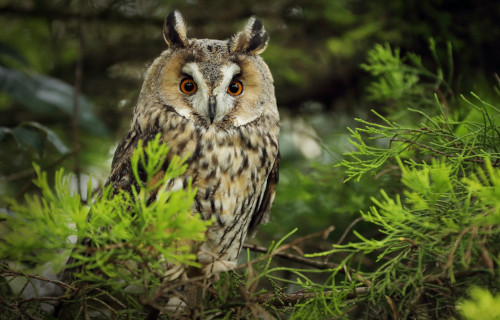
CCL: https://bit.ly/3xCgRxu
Long Eared Owl Physical Description
The mesmerizing Long Eared Owl instantly captivate those individuals fortunate enough to encounter one of these marvels. Yet, the animal usually does so due more to its striking appearance than impressive dimensions. That’s true since it only ranks as a medium-to-large variety of owl.
In that regard, though, the captivating bird follows a well-established pattern typical of its kind. That’s the fact that it displays a certain degree of the physiological characteristic of sexual dimorphism. In its case, this evolutionary trait manifests itself in terms of pure physical size.
Overall, members of the species attain a respectable body size. Mature specimens average approximately 16 in (40 cm) in total length. Wingspan, meanwhile, reaches a mean measurement of roughly 39 in (1 m). Adult weight varies significantly, but generally averages around 15.3 oz (435 g).
As a general principle, females of this astonishing species typically achieve greater measurements in all of these categories than their male counterparts. Exceptional specimens do occasionally occur, however. When these do appear, it’s regardless of gender, and they rarely exceed the norm by much.
The body of each sex also develops as slimmer and more elongated than most owls. Long, prominent tufts develop on the side of the head. The bird has a distinctive orange to buff-colored face with a dark outline. It also has large round eyes, that typically show a yellow to orange in color.
The plumage of the amazingly evolved Long Eared Owl usually receives the most attention from those who see it, however. In both sexes, the bird shows a mottled brown, gray, and buff with streaks and speckles. However, the underside’s streaked with dark brown on a pale background.
Here too, though, the biological wonder presents gender-based differences. The overall patterns remain the same, but vary in the intensity of the colors. Females tend to be darker and more heavily marked than males. Their stomach also often has a more pronounced reddish-brown or buff tone.
- Kingdom: Animalia
- Phylum: Chordata
- Class: Aves
- Order: Strigiformes
- Family: Strigidae
- Genus: Asio
- Species: A. otus
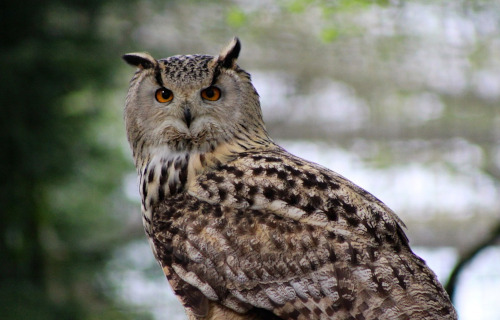
Long Eared Owl Distribution, Habitat, and Ecology
Much like many related species, the breathtaking Long Eared Owl evolved as partially migratory in nature. However, to the surprise of many people, this beautiful avian inhabits a relatively broad swathe of the earth’s surface. That’s due to the fact that it appears on several different continents.
More precisely, however, the marvel appears on a total of three separate one’s. These broader locations consist of the continents of Asia, Europe, and North America. Like many birds, the fascinating animal commonly moves southward within its native range during the winter months.
Nature provided this visually distinctive creature with an extremely strong natural advantage over many competing birds. That’s the fact that the avian developed as a highly adaptable species with a decided preference for an impressively wide variety of both woodland and semi-open habitats.
It does display its greatest preference, though, for a select few types of ecosystems. These favorites include regions comprising dense woodlands, coniferous forests, and mixed forests, allowing for roosting and nesting. Yet it’s also often found near grasslands, meadows, farmland, or wetlands.
It prefers to roost in thickets, dense trees, and even sometimes shrubs. The animal frequently does so in evergreen trees, such as pines and spruces. It doesn’t build its own nest, but reuses old nests of other birds, like crows, magpies, or hawks. It also sometimes roosts in the cavities of trees.
The Long-eared Owl plays a crucial role in its ecosystem as a nocturnal predator that helps regulate small mammal populations. This prey especially includes voles, mice, shrews, and young rabbits. It also occasionally eats small birds, bats, reptiles, and large insects when other prey’s unavailable.
Breeding season generally occurs between March to July, depending on the exact location. Following mating, the females lay 3 – 10 eggs, with 4 – 6 being the most common. These appear white, oval, and about 1.6 in (4 cm) in size. Incubation generally requires between 26 – 28 days.
Bald Eagle
Bald Eagle Facts
- Next up in this compilation of 4 Captivating Colorado Birds comes the majestic bird possessed and ethereal beauty, the stunning Bald Eagle.
- The surprisingly short term serves as the common name for an incredibly majestic bird that technically classifies as a sea eagle. This winged wonder does have several alternate titles, though. Those include White-Headed Eagle, Sea Eagle, Fish Eagle, and American Eagle.
- Within the world of science, however, it’s probably better known by its technical designation. Unfortunately, that’s a difficult one for the layperson to pronounce. That’s because this marvel of Nature and evolution bears the formal appellation of Haliaeetus leucocephalus.
- The magnificent bird received that tongue-twisting epithet due to the efforts of Carl Linnaeus himself. That highly esteemed Swedish zoologist recorded the first official recognition of it as a separate and distincts species. He accomplished that scientifically noteworthy deed in 1766.
- By either name, however, this animal stands out among its relatives. It currently remains the only known variety of sea eagle native to its particular portion of the world. Modern science also currently recognizes two known subspecies of this incredible bird still in existence.
- Somewhat ironically, despite its now extremely famous name, the breathtaking animal isn’t actually bald at all. This misconception occurs because the generally applied moniker derives from an older term. That original designation actually means white-headed when translated.
- Most fortunately, the stunning Bald Eagle appears to be maintaining a population base that’s both sufficient and stable. That pleasant condition also appears to hold true throughout the entirety of its natural range. This fortunate situation was not always the case, however.
- In the past, the breathtaking raptor nearly became extinct, before humans in its native range implemented protective measures. Thankfully, though, the gorgeous avian now holds the status of Least Concern with the IUCN. However, it still faces the threat of climate change.

CCL: https://bit.ly/1p2b8Ke
Bald Eagle Physical Description
The majestic Bald Eagle never fails to capture the attention and imagination of those individuals fortunate enough to view one, especially in the wild. That enchantment occurs due to several reasons. This biological marvel posseses amazing qualities of both beauty and physical dimensions.
In terms of the latter, the creature follows a natural pattern common among its numerous relations across the globe. That’s the fact that it displays a certain degree of the physiological characteristic of sexual dimorphism. In its particular case, however, this trait presents itself as a matter of size.
Females of the mesmerizing species attain overall measurements that equal roughly 25% larger than their male counterparts. Their wingspan sometimes reaches up to an impressive 8 ft (2.4 m). They also weigh more than the males, typically massing somewhere between 10 – 15 lb (4.5 – 6.8 kg).
The smaller males simply don’t quite compare to the females in size. For them, a typical wingspan equals approximately 6 – 7 ft (1.8 – 2.1 m). These also weigh significantly less than the opposite gender. In their case, 6 – 10 lb (2.7 – 4.5 kg) remains normal. Exceptional specimens do occur.
It’s the eye-catching plumage of the animal that generally captures the most attention, however. In this, at least, the sexes present the same general appearance to the observer. Obviously, the most striking sections of the body in terms of color consist of the head and neck, being pure white.
Meanwhile, the majority of the rest of the bird shows a covering of dark brown to blackish feathers. These cover the entirety of the body and wings. Its fan-shaped tail contrasts with this perfectly. This appendage displays the same dazzling white hue as the neck and head of the awesome bird.
Other individual physical features of the deceptively-named Bald Eagle also merit mention, as well. The beak of this intriguing raptor develops as large, hooked, and bright yellow in its coloring. That of the female usually develops as notably larger and deeper in shape than that of the male.
Further augmenting the gender-based differences between the two sexes are the talons. These and the legs of both present as yellow and completely featherless. The talons evolved as black in hue, curved, and quite strong. Yet, those of the female develop as larger and stronger than males.
- Kingdom: Animalia
- Phylum: Chordata
- Class: Aves
- Order: Accipitriformes
- Family: Accipitridae
- Genus: Haliaetus
- Species: H. leucocephalus

Bald Eagle Distribution, Habitat, and Ecology
The breathtaking and inspiring Bald Eagle evolved as indigenous to a comparatively broad swathe of the surface of the earth. In fact the full extent of that expansive zone of habitation might surprise some people, though. The avian inhabits most of the beautiful continent of North America.
The majority of its population appears within the borders of the continental United States. It also lives in most of the country of Canada. To the north, it even inhabits temperate portions of Alaska. Southward, however, its known native territory only extends into northern portions of Mexico.
Fortunately, this highly evolved avian possesses a decided advantage over many of its competitors. It quickly proved itself to be highly adaptable to a variety of habitat types. Due to this advantageaous trait, it can, and often does, live in bayous, deciduous forests, and even the Sonoran Desert.
The beautiful animal additionally holds yet another character trait that sets it apart from its kin. It generally prefers to build its large nests in the tops of the tallest trees near a body of water. In fact, the amazing avian holds the distinction of building the largest nest of any bird in its range.
In point of fact, these constructions actually hold a place in the record books. Its works of creation constitute the largest arboreal nests of any known animal. These sometimes measure up to 13 ft (4 m) deep, 8.2 ft (2.5 m) wide. Amazingly, each occasionally masses up to 2,000 lb (907 kg).
Much like related species found around the world, the fabulous Bald Eagle evolved to feed entirely as a carnivore. It also feeds opportunistically, consuming a wide variety of prey. The majority of the prey of most individuals, though, remains comprised of numerous types of locally available fish.
The awesome bird remains fascinating for yet one more distinguishing reason. Individuals of this species also typically mate for life. When the offspring eventually arrive, both parents care for the young, unlike some birds. In the wild, this marvelous creature has an average lifespan of 20 years.
Snowy Owl
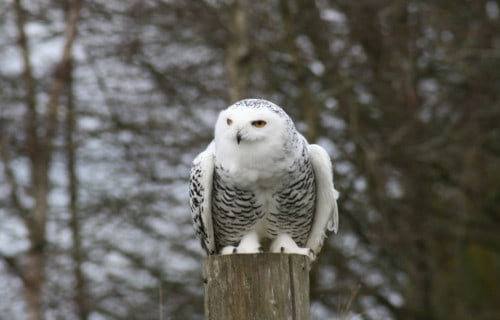
Snowy Owl Facts
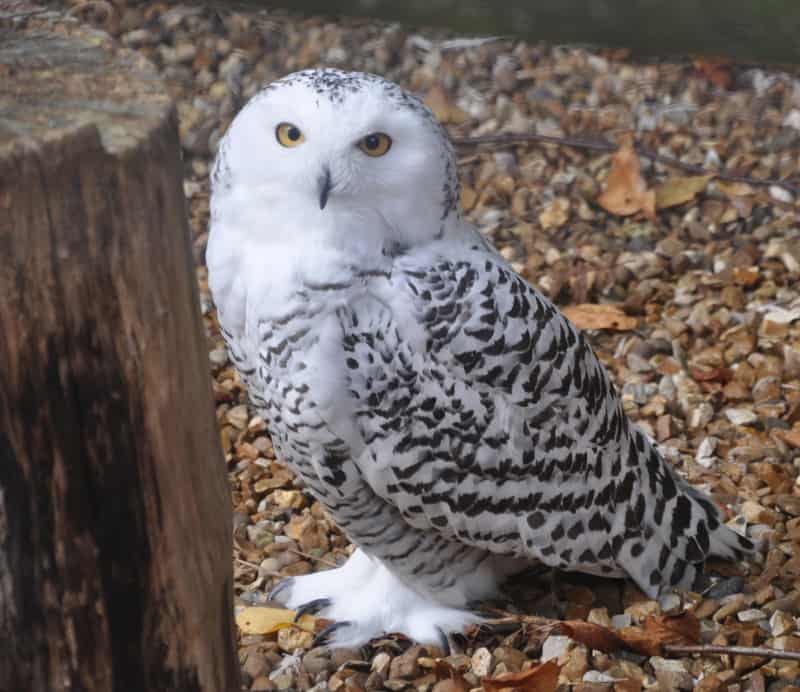
- The next species chosen for inclusion in this gathering of these 4 Captivating Colorado Birds bears the fitting title of Snowy Owl.
- This breathtaking winged wonder most frequently goes by the fully descriptive common name we’ve used herein across much of its range. Yet, the stunning animal does have a few other general titles. These include the short terms white owl, Arctic owl, and polar owl.
- Within the scientific community, however, it’s likely more often referred to by its technical moniker. That tag, though, like many such, remains somewhat difficult for the layperson to pronounce. That’s because the bird bears the formal epithet Bubo scandiacus.
- This magnificent product of evolution received that designation due to the efforts of Carl Linnaeus. The esteemed Swedish biologist recorded the first recognition of the avian as a separate and distinct species. He managed that scientifically noteworthy feat in 1758.
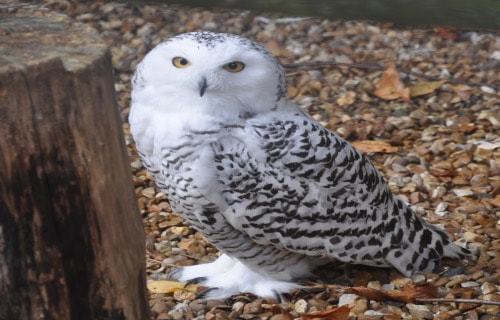
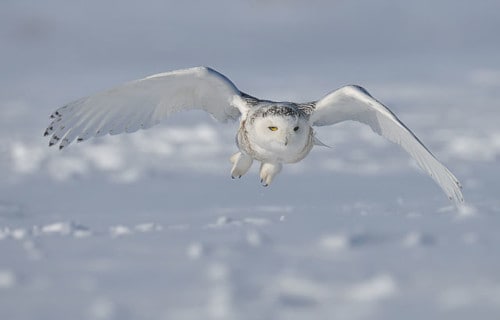
- This marvel distinguishes itself from its cousins in several ways. Among them stands the fact that it’s the only owl with primarily white plumage. Also separating it from the rest of the pack, so to speak, comes the fact that, unlike other owls, it’s often active during the day.
- Unfortunately, the population base of the marvelous Snowy Owl appears to be diminishing. This sad state further seems to exist across the entirety of its native range. The IUCN therefore presently lists the remarkable bird as Vulnerable on its Red List of Threatened Species.
- Lamentably, this wonder of the winged world now faces multiple threats to its continued existence. Like all species on earth today, most of these stem from the actions of mankind. They include, among others, the related perils of habitat loss and ongoing climate change.
CCL: http://bit.ly/2xQPH8p
Snowy Owl Physical Description
The stunning Snowy Owl truly unquestionably forms a sight to behold, and one that rarely fails to captivate those lucky enough to do so. Yet, the animal does not impress due to its sheer beauty alone. That’s true since the avian also boasts some highly respectable physical dimensions.
In this regard, as well as in appearance, the creature follows an evolutionary pattern common to many birds. That’s manifested in the fact that it displays a certain degree of the physiological characteristic of sexual dimorphism. In this case, females attain a greater average size than males.
The overall difference, however, remains relatively minor. As a general principle, this beautiful bird grows to become one of the largest of all known owls, with fully mature specimens having a wingspan of 4.2 – 4.8 ft (1.3 – 1.5 m). An average body length equals roughly 20 – 27 in (50 -68 cm).
Like other owl species, this amazing creature evolved a facial disc, which represents a roughly circular arrangement of feathers around its equally unique eyes. This helps to funnel sound towards the ears, aiding in its exceptional hearing. It also has bright yellow eyes, creating a striking image.
The intriguing bird also possesses an extremely strong, hooked beak designed for tearing prey. Nature additionally provided the animal with powerful talons for catching and holding that. Its feathers developed as extremely dense, and even its feet have a protective covering of feathers.
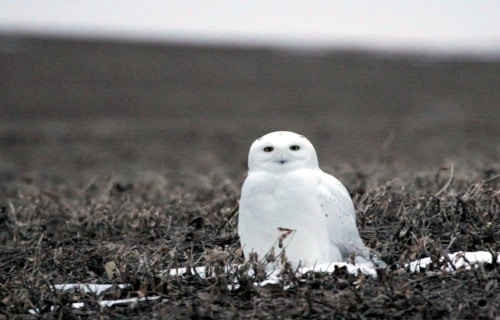
Yet, it’s the coloring of the aptly-named Snowy Owl that so captivates the viewer. The bird evolved principally white plumage that helps the species blend in perfectly with its particular habitat. Adult males also tend to be slightly whiter than females and juveniles, with less mottling or barring.
Despite its predominantly white color, though, this wonder of Nature often also presents a few dark markings. These sometimes include spots and bars of black or brown on the wings, back, and occasionally on the faces. The full extent of these markings typically varies between individuals.
- Kingdom: Animalia
- Phylum: Chordata
- Class: Aves
- Order: Strigiformes
- Family: Strigidae
- Genus: Bubo
- Species: B. scandiacus
CCL: http://bit.ly/2xQPH8p
Snowy Owl Distribution, Habitat, and Ecology
The truly beautiful Snowy Owl generally nests within the Arctic tundra of the northernmost stretches of Alaska and Canada, in North America, and also Eurasia. Most also winter south throughout Canada and northern Eurasia, with a presence occurring further south in some years.
Most of the stunning winged marvels like open areas like coastal dunes and prairies that appear somewhat similar to tundra. The animals have been reported as far south as the American states of Texas, Georgia, the American Gulf states, southernmost Russia, and northern China.
This particular owl remains an extraordinarily powerful animal for its size. It primarily preys on lemmings and other small rodents for food during the breeding season. However, at times of low prey density, or during the nesting period, it sometimes switches to favoring juvenile ptarmigan.
The incredible birds also evolved as primarily opportunistic hunters, like their many kindred. Typical prey for this powerful species varies considerably, especially in the winter. It therefore feeds on a comparatively wide variety of fairly small mammals such as meadow voles and deer mice.
But, the Snowy Owl occasionally veers from this pattern. The powerful raptor sometimes takes advantage of larger prey as well. Some of the larger mammal prey includes hares, muskrats, marmots, squirrels, rabbits, raccoons, prairie dogs, rats, moles, and even smaller birds.
Being flexible in its habits, the owl will also take fish from the surface of lakes. Each bird must capture roughly 7 -12 mice per day to meet its food requirement and can eat more than 1,600 lemmings per year. Like many other birds, the bird swallows its prey entirely whole.
CCL: http://bit.ly/2REt4fw
Snowy Owl Behavior and Tactics
Though Snowy Owls have natural few predators, the adults still remain watchful at all times. Clearly, the mature individuals have been blessed by Nature for self-protection. This is true since each comes equipped to defend against any kind of threat towards them or their offspring.
During the nesting season, the impressive owls regularly defend the nests against any and all potential threats. These dangers include such predators as arctic foxes, corvids, and swift-flying jaegers. Other threats, however, include dogs, gray wolves and some avian predators.
The males of the remarkably adapted avian species faithfully and habitually defend the nest at all times. Consequently, these often act much like human sentries. This they accomplish by standing guard nearby, while the female incubates the vulnerable eggs and broods the young.
Yet, the females of the awesome Snowy Owl also readily attack approaching predators without fail. This defense often occurs with great ferocity. This the animals accomplish by dive-bombing their opponents and engaging in distraction displays to draw the predator away from a nest.
Greater Sage Grouse

Photo: Bureau of land Management CCL: https://bit.ly/1ryPA8o
Greater Sage Grouse Facts
- Closing out this compendium of 4 Captivating Colorado Birds comes the only primarily ground-dwelling species among them, the Greater Sage Grouse.
- This intriguing product of Nature and evolution is most often referred to by this descriptive, if somewhat lengthy, common name. The remarkable animal does have one other generally accepted title, though. That’s the notably far simpler term of the sagehen.
- Among scientific professionals, however, the creature holds a vastly different moniker. Though many such names pose difficulties for the layperson to pronounce, this one truly stands out. That’s because it holds the difficult technical title of Centrocercus urophasianus.
- The avian received that tongue-twisting term due to the efforts of the French ornithologist, Charles Lucien Jules Laurent Bonaparte. He accomplished the first recognition of the fascinating bird as a separate and distinct species. That feat occurred in the year 1827.
- It’s especially notable due to the fact that it consititutes the largest of its relatives on the entire continent on which it appears. Currently, researchers also acknowledge the existence of two sub-species of the impressive creature. Several others remain under consideration.
- Sadly, the population numbers of the Greater Sage Grouse continue to decline. That lamentable trend also seems to hold true throughout the entirety of its known range. The IUCN therefore presently lists it as Near Threatened on its Red List of Threatened Species.
- For the moment, habitat loss poses the most immediate ongoing threat to the continued existence of the impressive species. Other human-related dangers it faces include active hunting of the bird. Like all forms of life, though, it also faces the dangers of climate change.

Photo: Bureau of Land Management
CCL: https://bit.ly/3hSTkBP
Greater Sage Grouse Physical Description
The preferred term of Greater Sage Grouse fits this winged masterpiece of Nature and evolution perfectly. Among its kind, it’s a veritable giant. The bird’s thus quite distinctive for multiple reasons, since it’s both the largest of its kind in its range, and also rather visually unique, as well.
Like many extant species on earth today, though, including birds, it displays a certain amount of the physiological characteristic of sexual dimorphism. In the specific case of this interesting animal, that natural trait manifests itself in terms of both pure size and general outward appearance.
Males attain significantly greater measurements than their female counterparts. In fact, these actually average roughly twice their mean size. The males average about 6 lbs (2.7 kg), while females only reach a mean weight of around 3 lbs (1.4 kg), though exceptional individuals occur.
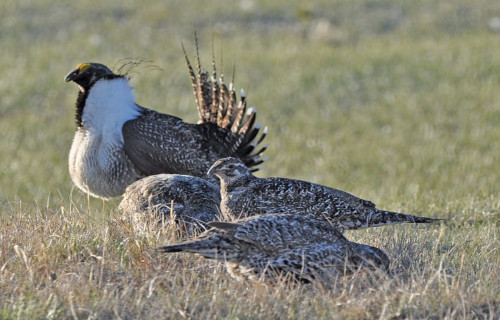
Visually, the difference between the sexes developed as quite pronounced as well. The males of the animal usually present as grayish on the the upper body. Meanwhile, the breast and throat displays a much darker shade. Two yelllow sacs, capable of inflation, also appear on the neck of the male.
In addition to being so notably smaller, the female of the Greater Sage Grouse also displays a dramatically less colorful pattern. She most frequently presents a predominantly mottled gray-brown background on most of the body. Yet, the throat and stomach do show varying brown hues.
The two genders nevertheless still share at least some basic characteristics. In both sexes, the tails grow relatively long and sharply pointed. Intriguingly, the legs also possess a covering of feathers. This unique evolutionary trait extends all the way to the toes of the remarkable creature.
- Kingdom: Animalia
- Phylum: Chordata
- Class: Aves
- Order: Galliformes
- Family: Phasianidae
- Genus: Centrocercus
- Species: C. urophasianus
Greater Sage Grouse Distribution, Habitat, and Ecology
The fabulous Greater Sage Grouse evolved as native a moderately broad swathe of the surface of the globe. That precise location perfectly supports its needs. That’s true since the beautiful bird developed as endemic to a certain portion of what’s now the continent of North America.
Within that great zone of habitation, the majority of its numbers make their home inside the region comprising the western United States. A small part of its range does extend to southern parts of the nation of Canada, however. This includes the provinces of Saskatchewan and Alberta.
The large bird also displays specific preferences for its choice of habitat, too. The nature of that is reflected in the very name the avian bears. The specifically evolved avian lives almost exclusively in regions of sagebrush ecosystems, with the presence of some grasses and juniper trees.
By their very nature, these regions also mandate the existence of certain local environmental conditions. These, also, the bird requires to meet its needs. Those typically include a more arid climate than other areas. Higher altitudes additionally generally play a determining role this, as well.
The Greater Sage Grouse further possesses an extremely specific diet. This wonder consumes various species of sagebrush almost exclusively. Its habitat type therefore serves multiple purposes. Individuals also eat small quantities of herbaceous leaves from other plants, and insects.
It, in turn, faces its own share of natural predators. These generally include such even larger animals as bobcats, coyotes, badgers, and eagles, among others. Typically making its nests within the same region of sagebrush it feeds on, this sometimes provides a certain degree of protection.
4 Captivating Colorado Birds
We sincerely hope that each of you thoroughly enjoyed reading, and hopefully learning from, this article we’ve written for you about these 4 Captivating Colorado Birds. It’s also our hope that doing so has left you with either a new or renewed appreciation for such amazing wonders of Nature.
Unfortunately, however, many of their numerous kindred located around the world now find themselves facing strong threats to their continued existence as a species. Many of those dangers, in fact, stem from the actions of mankind. We must do all we can to protect and preserve them all.
Check out our other articles on 5 Terrific Texas Mammals, Earth’s Many Stunning Waterfalls, 5 Stunning Pacific Ocean Sharks, Wonderful Wild Cats of the World, 5 Amazing Fungi of Asia


Leave a Reply