

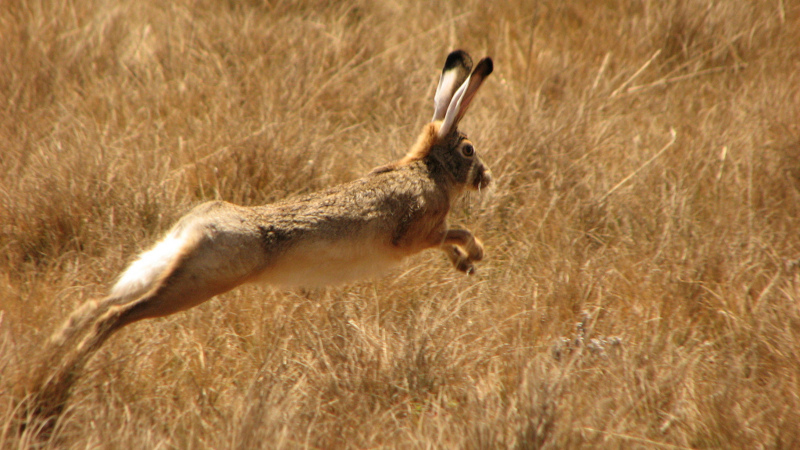
Ethiopian Highland Hare Facts
- The highly informative term of Ethiopian Highland Hare serves as the most frequently used name for this remarkable wonder of Nature. For the moment, the small mammal holds only one other generally accepted common name. That’s the markedly shorter title of Starck’s hare.
- Within the scientific community, however, it’s perhaps much better known by its technical designation. Thankfully, that’s a much simpler one for the layperson to pronounce. That’s true since this marvel of Nature and evolution currently holds the official moniker of Lepus starcki.
- It received that particular epithet due to the efforts of Francis Petter. That respected French zoologist accomplished the first recorded formal recognition of the creature as a separate and distinct species. The researcher achieved that scientifically noteworthy deed in the year 1963.
- Fortunately, the gorgeous Ethiopian Highland Hare appears to still be maintaining a relatively stable and sufficient population base. This pleasant state also seems to hold true across the entirety of its known range. Accordingly, the IUCN now lists it as Least Concern on its Red List.
- The amazing hare nevertheless should still be considered as facing multiple potential threats to its continued existence as a species. Like all forms of life on earth today, most of these dangers stem from the actions of mankind. They include the perils of habitat loss and climate change.
Related Articles
Ethiopian Highland Hare Physical Description
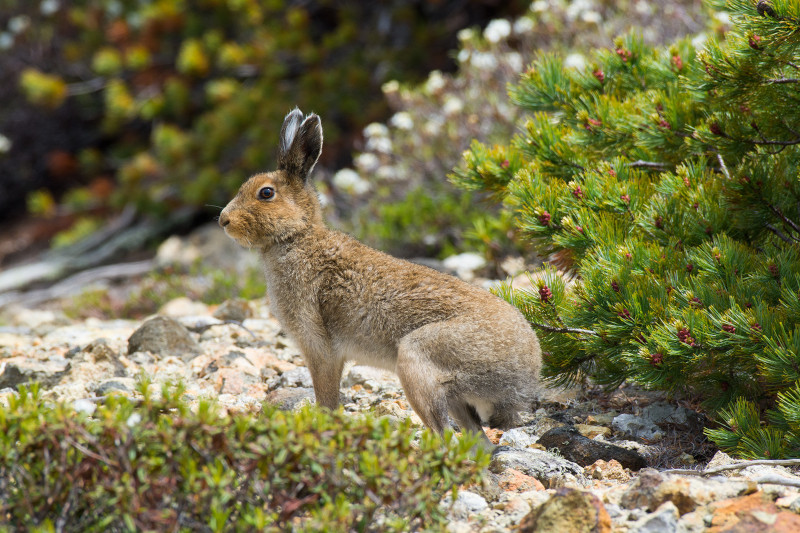
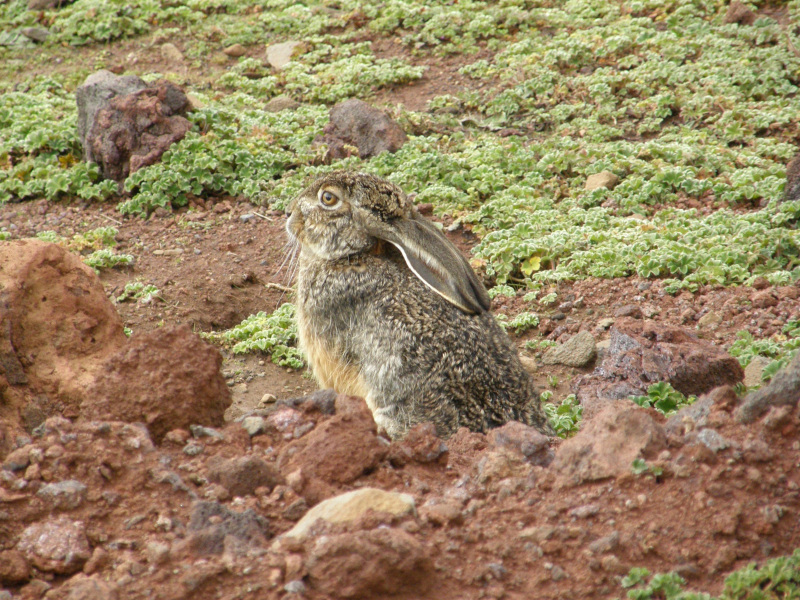
The fabulous Ethiopian Highland Hare almost always captures the interest and attention of those individuals fortunate enough to encounter one. This wonder of Nature usually does so, however, due more to its visual appeal than size. That’s because it’s a roughly medium-sized hare.
The mammal also follows a pattern of development similar to its many relatives around the world. That’s the fact that it displays a certain degree of the physiological characteristic of sexual dimorphism. In its specific case, though, that natural trait manifests itself solely in terms of size.
This holds true due to the fact that, again like its countless kindred, females of the intriguing species attain a greater average physical size than that of their male counterparts. However, as a general principle, this difference remains very slight, thus leaving the sexes almost identical visually.
Overall, this lovely creature reaches a mean body length that ranges from 22 – 26 in (55 – 65 cm). The tail evolved as fluffy in nature, and short, averaging 3 – 5 in (8 – 12 cm) long. Weights also vary markedly between individuals, regardless of gender. This ranges between 5.5 – 10 lb (2.5 – 4.5 kg).
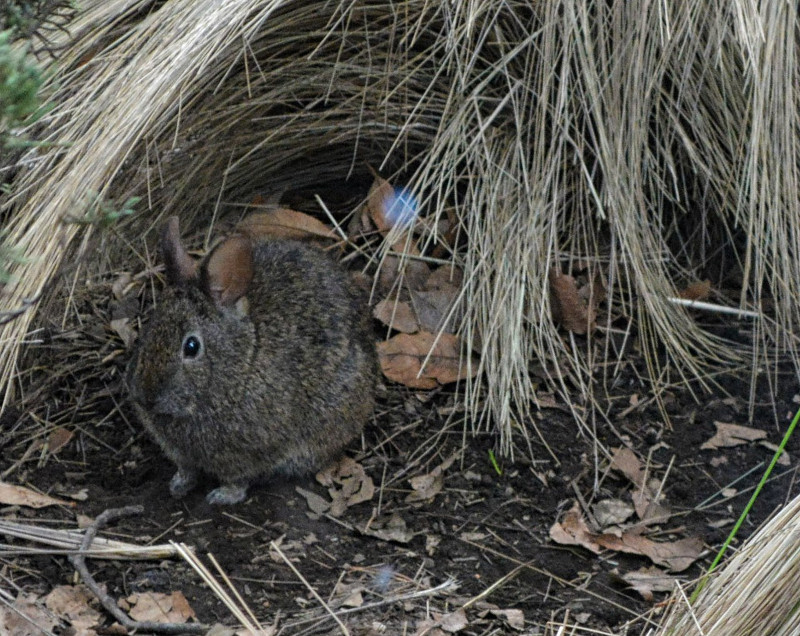
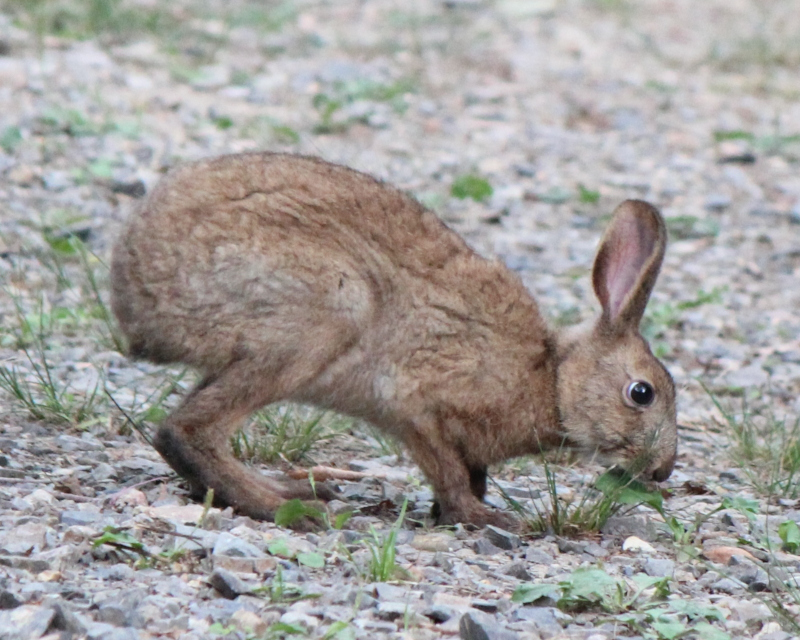
It’s the coat itself of the captivating Ethiopian Highland Hare, however, that generally garners the most attention among its observers. This aspect of its nature consists of relatively dense, woolly fur. The under parts present an off-white color, occasionally appearing somewhat tinged with a buff hue.
Meanwhile, the upper portions of the body display a notably different pattern of coloration. In most examples, this manifests as a brown to grayish brown shade, with a grizzled appearance due to black-tipped hairs. Its flanks appear lighter, presenting a blending of the other two patterns.
The rest of the body also merits notice. Its head develops as broad, with a slightly convex profile. The ears grow long, reaching 4 – 6 in (10 – 15 cm), with black tips. Its tail displays black above and white below. Typical of its kind, the hind legs grow longer than the front, with a covering of thick fur.
- Kingdom: Animalia
- Phylum: Chordata
- Class: Mammalia
- Order: Lagomorpha
- Family: Leporidae
- Genus: Lepus
- Species: L. starcki
Ethiopian Highland Hare Distribution, Habitat, and Ecology
Lamentably, the gorgeous Ethiopian Highland hare evolved as indigenous to only a highly restricted portion of the surface of the earth. Precisely where that limited zone of habitation lies probably isn’t going to surprise anyone. That’s true since the animal’s name itself clearly indicates this setting.
It developed as native only to a portion of the nation of Ethiopia, on the continent of Africa. Even there, though, it lives in only a few very select areas. These sections of the country consist of just certain smaller regions of two locations, with those being the central and northern highland plateau.
Yet, even within this already severely narrowed habitat range, most sightings of this beautiful mammal occurred in one of only four regions. Those areas in which it mainly lives include the Bale Mountains, the Arsi Mountains, and a few very specific regions of both Shewa and Wollo.
Given where it lives, this marvel of evolution understandably displays decidedly clear and quite strong preferences regarding its choice of habitat. Altitude, of course, represents the first among these. It’s primarily found at heights ranging from 8,200 – 14, 400 ft (2,500 – 4,400 ) above sea level.
It also most frequently appears in one of three separate but related types of ecosystems. It’s found in areas of Afro-alpine grasslands and moorlands dominated by short grasses, herbs, and giant lobelias. Heathlands and shrublands are also commona favorites, often along with open plateaus.
The hare additionally presents the observer with obvious preferences for the presence of certain types of plants. In general, it seeks out areas of low vegetation, for grazing and predator detection. It typically avoids regions of dense forests, though the wonder sometimes uses edges or clearings.
Again following the sme evolutionary patterns as its relatives, the Ethiopian Highland Hare evolved as herbivorous in nature. Given the nature of its ecosystems, however, its dietary choices remain limited. Its choices are limited to the tussock grasses, sedges, and alpine herbs that dominate here.
The previously grasses compose the bulk of its diet, as they’re the most common among its options. It also manages to find a certain amount of various herbs and forbs to feed on where it lives. In places where these others remain scarce, it eats shrubs and young shoots, and occasionally crops.
In general, individuals live mainly solitary lives, though it’s sometimes seen foraging in loose groups where food’s abundant. It’s crepuscular in nature, being mostly active at dawn and dusk. Breeding patterns aren’t well-studied, but like other hares, females likely raise several litters annually.
Though it evolved to utilize its surrounding environment, along with its natural camouflage, to protect itself, it nevertheless has its share of predators. At the top of this list stands the Ethiopian Wolf. Other principal dangers come from eagles sharing its region, and possibly jackals and servals.

Species Sharing Its Range
Check out our other articles on 5 Lively North American Lizards, Northern Raccoon, Alexander Island, Cucumber Tree, Little Auk, Kentucky Cave Shrimp, Goldentail moray, Chinese Alligator