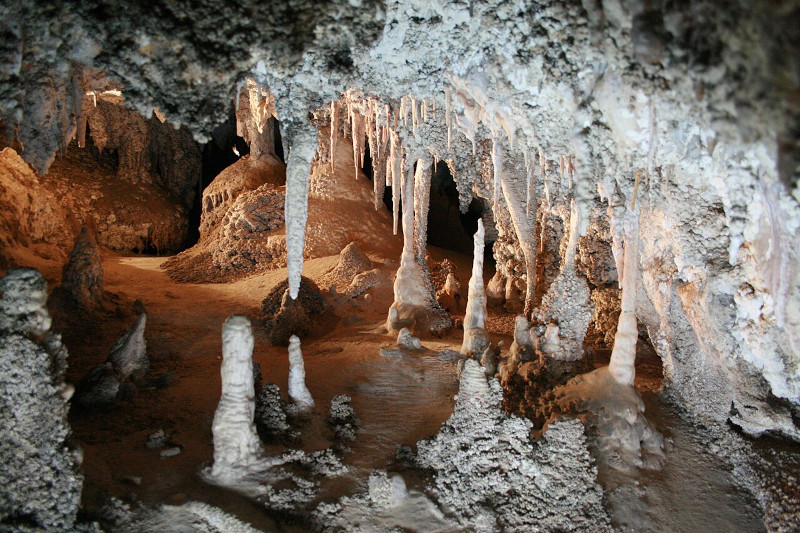
Jenolan Caves Facts
- The relatively simple term of Jenolan Caves currently serves as the most often employed name for this breathtaking geological formation. We use the word currently, however, because this stunning product of time and natural processes also held others throughout human history.
- The title Binoomea Caves represents the oldest of these, being a translation of the one the local Indigenous Peoples long used for it. Early European explorers also once knew it as the Fish River Caves. Due to a story from local folklore, it also once held the tag McKeown’s Caves.
- Archaeological evidence indicates that the native inhabitants of its region, the Gundungurra people, knew of its existence for thousands of years prior to the arrival of outside explorers. The first recorded discovery of it by a European settler, James Whalan, occurred in 1838.
- In modern times, its astounding beauty led to the Jenolan Caves forming an integral part of the Jenolan Karst Conservation Reserve. Realizing the importance of protecting this natural marvel, the government of the nation within whose borders its lies created this in 2000.
- Providing even greater protection against the many depredations of man, it also now forms a UNESCO World Heritage Site. The entire region in which it formed, in fact, now represents a section of the landscape that’s been given the name the Greater Blue Mountains Area.
Related Articles
Jenolan Caves Physical Description
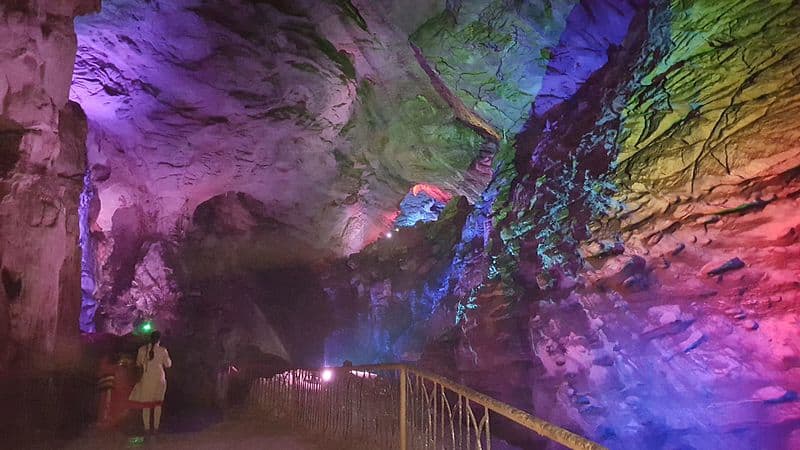
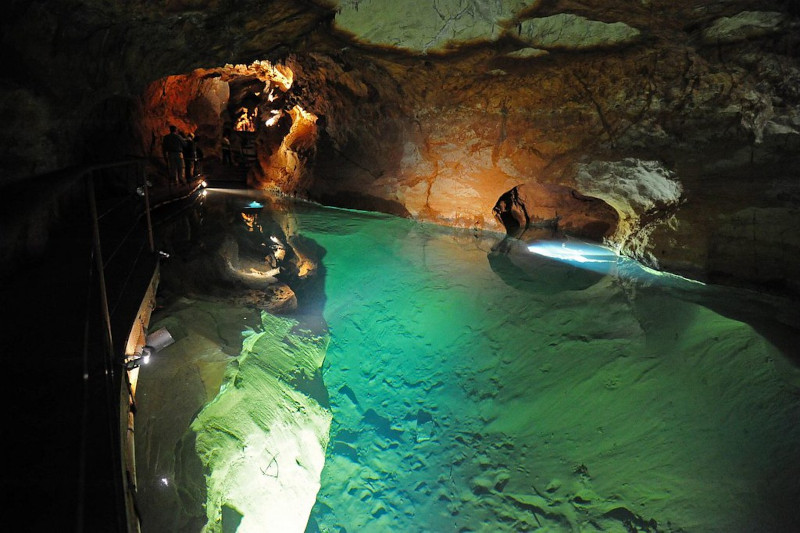
The mesmerizing Jenolan Caves capture the attention of those fortunate enough to visit the site almost instantly. Obviously, its sheer beauty ranks high among the reasons for this enthrallment. Yet, it’s certainly not the only one. The location boasts an array of natural features to amaze visitors.
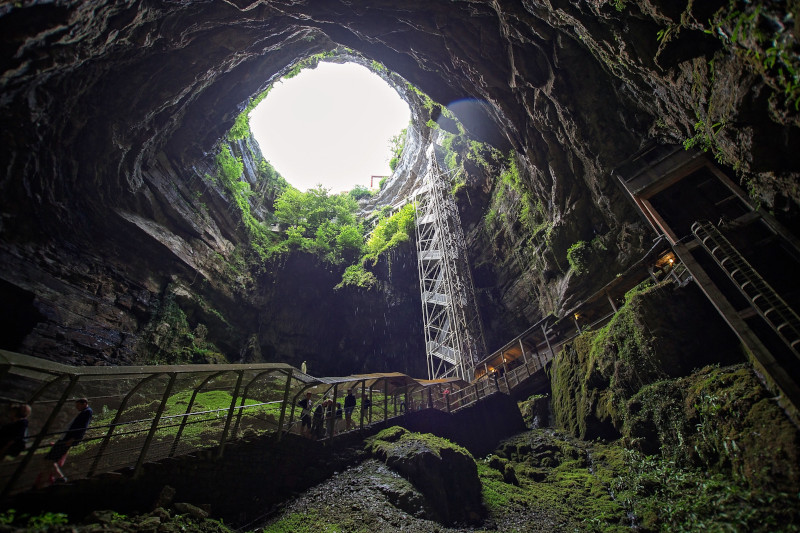
It constitutes not merely a single cave but an entire system, known as a karst system. The entire area actually serves as a classic karst landscape. In that respect, the region remains characterized by multiple sinkholes, underground rivers, and an extremely extensive network of tunnels and caverns.
In fact, to date, geologists know of more than 300 separate and distinct caves within the network. The public has access to only a few, however. The cave system extends for over 25 mi (40 km). The vast, interconnected network also attains depths of up to 656 ft (200 m) below the surface.
Not all of its many wonders have a basis in geology, though. That’s true since it also contains water-based marvels. A comparatively large underground river, named the River Styx as well as other subterranean waterways, flow through the caves, contributing to ongoing erosion and formation.
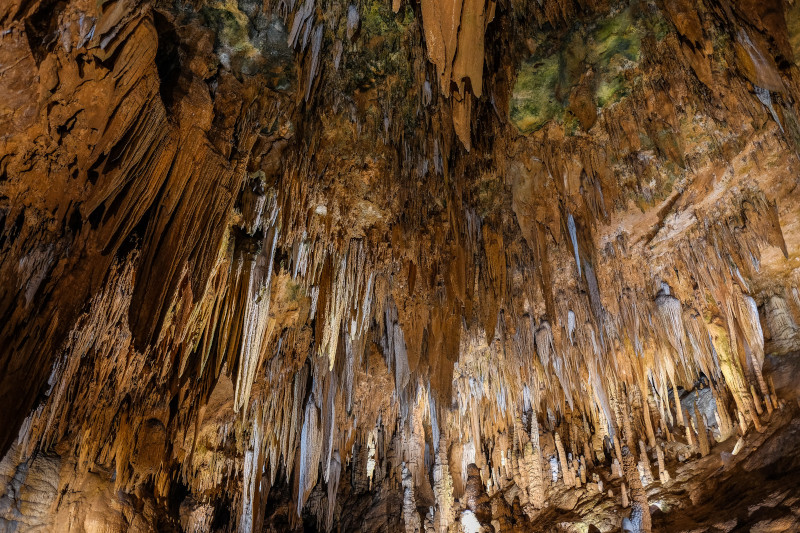
Its best known features, however, doubtless consist of the mind-blowing number of beautiful individual caves found here. Many bear individual names. Lucas Cave, for example, features an area referred to as the “Cathedral,” a vast chamber renowned for its acoustics, often used for concerts.
Another of the astonishing number of sites situated inside the Jenolan Caves holds the tag Chifley Cave. This location remains known for its stunning stalactites and stalagmites. Meanwhile, Imperial Cave serves as home to numerous impressive crystal formations and underground rivers.
Another, the Orient Cave, contains some of the most ornate and colorful formations, including delicate twisted crystal formations, named helictites. Another location, referred to as Ribbon Cave, features thin, ribbon-like flowstone formations that strongly resemble cascading curtains.

Jenolan Caves Location, Formation, and Ecology
The magnificent Jenolan Caves formed in a region of the globe already well known for its abundance of geological marvels. The placement of that formation therefore won’t surprise many readers. This remarkable system developed in a region of what’s now the continent of Australia.
That exact setting, however, qualifies as remote. Nature created the feature within the confines of the Blue Mountains region of New South Wales. More precisely, this places it approximately 109 mi (175 km) west of Sydney. The small town of Oberon, 18.6 mi (30 km) away, is the nearest habitation.
Its formation stretches back in time an extraordinary 430 – 400 million years! At that time, natural processes deposited vast amounts of limestone in a shallow marine environment. Over time, tectonic forces lifted and folded the limestone, making it susceptible to erosion and cave formation.
The formation of the caves themselves, though, occurred in several stages. Rainwater absorbed carbon dioxide from the atmosphere and soil, forming weak carbonic acid. This acidic water seeped into cracks in the limestone, dissolving the rock and slowly expanding into tunnels and caverns.
Over a span of time equaling many millions of years, as underground chambers grew, some ceilings collapsed, creating new openings and shaping the cave system. Flowing underground rivers, such as the aforementioned River Styx, further subsequently eroded and reshaped the passages.
The hypnotic site of the Jenolan Caves and the surrounding Jenolan Karst Conservation Reserve support a unique and diverse ecosystem, both inside the caves and in the surrounding forests. The ecology also includes rare cave-dwelling species, rich surface wildlife, and important water systems.
Despite the dark, humid, and nutrient-limited environment, the caves themselves support a variety of specialized organisms. These include the Eastern Bent-wing Bat, a key species. Others include the Large-eared Pied Bat, Glow-worms, Blind Cave Beetles, Springtails, Crayfish and Amphipods.
The area surrounding the caves also teems with life. This consists of eucalyptus forest, woodlands, and montane vegetation, providing a habitat for many native species. These include the Swamp Wallaby, Brush-tailed Possums, Sugar Gliders, the Platypus, and a wide variety of avian species.
Features Sharing Its Region
Check out our other articles on 6 Stunning North American Bees, Red-legged Pademelon, Macquarie Island, Fall Phlox, Black and scarlet Cicada, Oceanic whitetip shark, Weka, Black Caiman

Leave a Reply