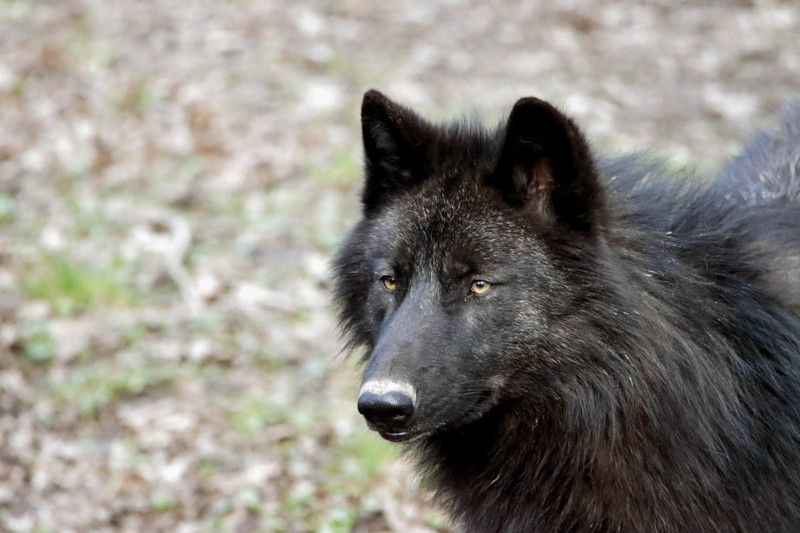
Alexander Archipelago Wolf Facts
- This magnificent creation of Nature and evolution most frequently goes by the informative common name of Alexander Archipelago Wolf. The amazing wild canine does have a few other general titles by which its known, though. These include Archipelago Wolf and Island Wolf.
- Within the scientific community, however, the animal’s much better known by its technical designation. Thankfully, that name’s a relatively simple term for the layperson to pronounce, at least compared to others. The mammal bears the formal epithet Canis lupus ligoni.
- It received that particular designation due to the efforts of Edward Alphonso Goldman. The respected American biologist and taxonomist recorded the first official recognition of it as a separate and distinct species. He accomplished that scientifically noteworthy deed in 1937.
- This beautiful creature represents an isolated subspecies of the Gray Wolf. Research currently suggests that the original ancestors of this marvel arrived in its current region between 7,000 – 8,000 years ago. That timeframe coincides with the end of a local glaciation period.
- It’s considered probably by experts that the original population arrived in their current region following migrating prey. However, as the glacial ice melted, these found themselves cut off from the mainland. Over time, isolation led to genetic divergence from the parent species.
- Lamentably, the marvelous Alexander Archipelago Wolf now finds itself in a precarious position. It has a very small population, with estimates placing this somewhere between 750 – 1,100 individuals. The IUCN therefore presently lists the canine as Vulnerable on its Red List.
- It faces numerous potential threats to its continued existence as a species, especially given its scant numbers. Like all forms of life on earth today, most of these stem from the actions of mankind. Those perils include habitat loss and the ongoing effects of climate change.
Related Articles
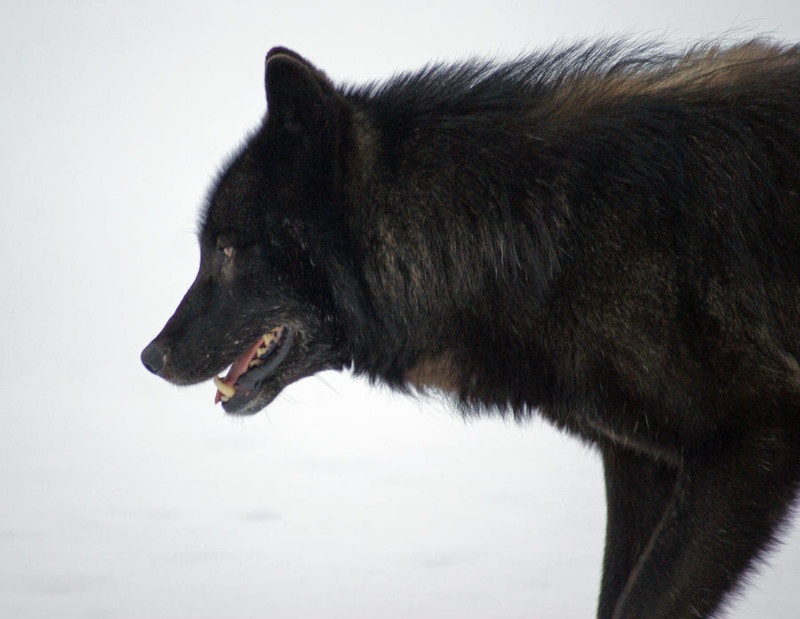
Alexander Archipelago Wolf Physical Description
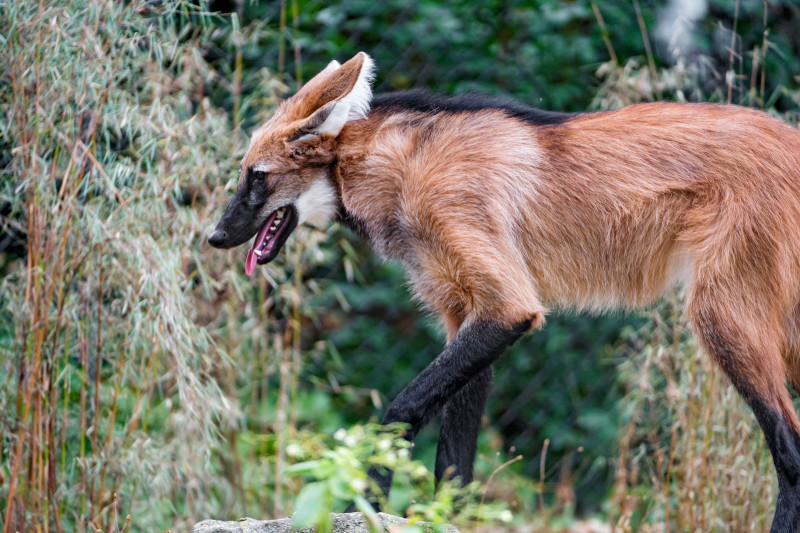
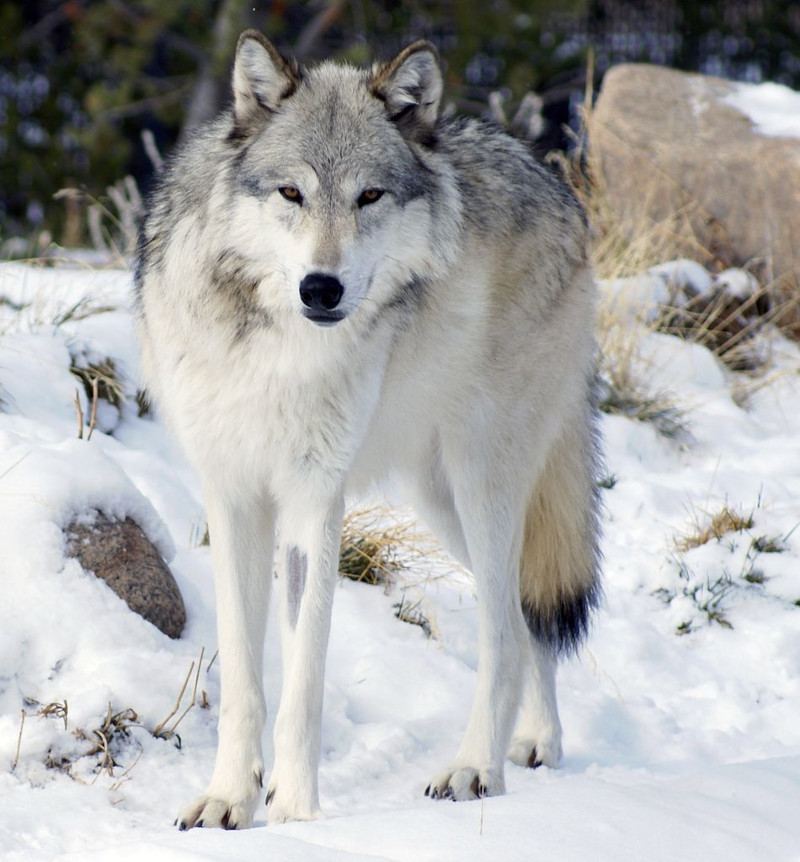
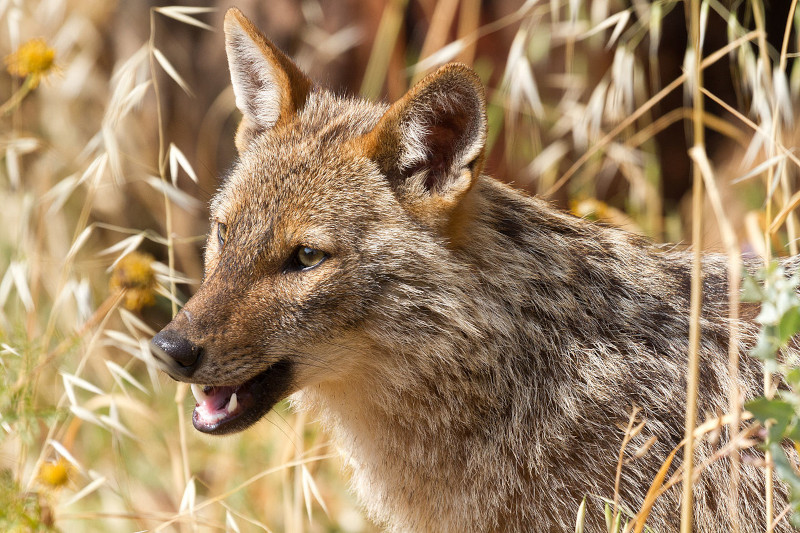
The fabulous Alexander Archipelago Wolf immediately captivates those individuals fortunate enough to encounter one of these majestic creatures. Sadly, due to the combination of both the remote location of its territory and the nature of it, comparatively few people ever have that chance.
Among those select few, though, that reaction typically occurs due more to the appearance of the biological wonder than its physical stature. The carnivore posesses several unique physical traits that distinguish it from other gray wolf subspecies. Among those stands its sheer size.
It evolved to be smaller than those relatives. The animal does, though, follow patterns common to those same kindred. That’s true since it displays a certain amount of the physiological characteristic of sexual dimorphism. This aspect manifests itself with males being slightly larger than females.
Both genders develop the same general dimensions in terms of length and height. Mature individuals of both sexes stand between 24 – 33 in (61 – 84 cm) at the shoulder, on average. A mean nose to tail body length for either also generally ranges from between 3 – 4.5 ft (91 – 137 cm).
Though individuals exceptions do occur, as a general principle, males reach the upper limits of both ranges, with females doing the opposite. This also holds true for mass. Overall, the species ranges in weight from roughly 30 – 50 lbs (14 – 23 kg), with males usually being the heavier of the two.
Males have a more muscular build, particularly in the neck and shoulders. Females typically have a slimmer body than their counterparts. Males tend to have a broader skull and a slightly longer muzzle compared to females. The females have a more narrow and refined facial structure.
Unquestionably, however, it’s the distinctive coloring of the Alexander Archipelago Wolf that garners the most attention. Its fur’s darker than others, often appearing black or dark gray with lighter silver or brownish highlights. Some individuals have a mix of gray, brown, and black fur.
Still more features distinguish it. Its legs evolved as shorter than its kindred, relative to size. Its bushy tail also developed as proportionately shorter than its parent species. In fact, the proportions of the entire body ranks as somewhat more compact than others, aiding in conserving body heat.
- Kingdom: Animalia
- Phylum: Chordata
- Class: Mammalia
- Order: Carnivora
- Family: Canidae
- Genus: Canis
- Species: C. lupus
- Subspecies: C. l. lugoni
Alexander Archipelago Wolf Distribution, Habitat, and Ecology
Regrettably, the stunning Alexander Archipelago Wolf developed as native to only a very tiny portion of the surface of the earth. The precise location of that zone of habitation’s clearly indicated by its very name, though. As implied, the remarkable canine inhabits the Alexander Archipelago.
That numerically impressive formation itself comprises a chain of slightly more than 1,100 islands of various sizes. The vast majority of them, however, measure quite small. The entire grouping of these bodies lies off the southeastern coast of Alaska, a non-contiguous part of the United States.
Pleasantly, about 80% of its population appears within the confines of what’s now the Tongass National Forest, a protected area. Some of the principal islands it lives on include Prince of Wales Island, Baranof, Kuiu, and Kupreanof. A few specimens occasionally appear on the mainland.
Unlike many of its relatives around the globe, it displays extremely precise and restricting preferences regarding its choice of habitat. The mesmerizing mammal prefers dense coastal rainforests, old-growth forests, and areas located near streams and rivers where prey’s abundant.
The animal also displays favoritism for certain altitude ranges as well. Even within the above-mentioned regions, it mainly resides at lower altitudes due to the precise environmental conditions such areas contain. Those include the presence of moist, moss-covered terrain and thick vegetation.
Like all wolves, the Alexander Archipelago Wolf is entirely carnivorous. Within the admittedly severely limited zones it inhabits, it undeniably represents the apex predator. As the top ranked of such in these regions, the carnivore plays the natural role of a regulator of prey population.
It displays a strong preference for Sitka black-tailed deer, primarily hunting and feeding on these. Yet, it nevertheless preys on other animals as opportunities present themselves. These include beavers, small mammals, birds, and even fish. It also occasionally scavenges marine carcasses.
The wolf usually lives in small packs, numbering 2 – 7 individuals. Such groupings generally consist of a breeding pair, their offspring, and sometimes other related individuals. Cooperative hunting helps take down larger prey, like deer, while individuals frequently hunt smaller prey alone.
Species Sharing Its Range

Check out our other articles on 5 Thrilling Animals of Thailand, Red-legged Pademelon, Amazon River, Balsam Fir, Little Auk, Black and scarlet Cicada, Spotted Seahorse, Alligator Snapping Turtle










Leave a Reply