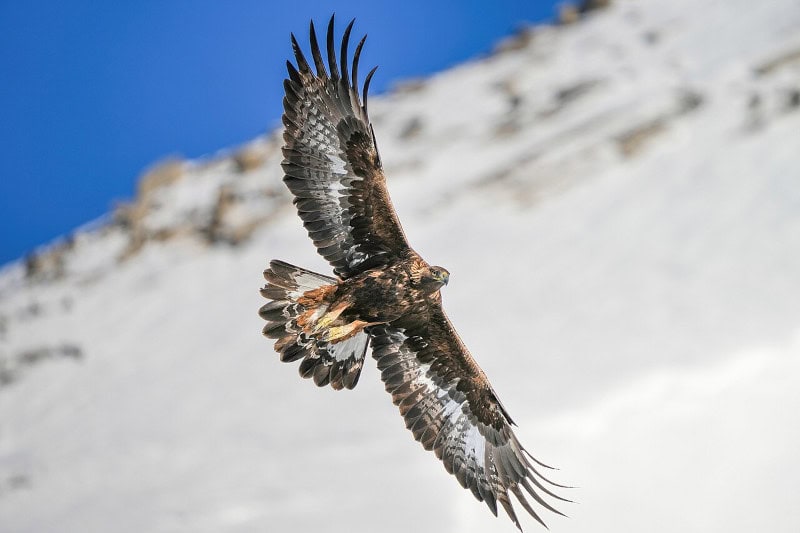
Golden Eagle Facts
- This stunning winged wonder most frequently goes by the descriptive common name of the Golden Eagle across most its territory. Yet, it does have a few other alternate titles by which it’s known. These include the terms War eagle, King of birds, Brown eagle, and Mountain eagle.
- Inside of the scientific community, however, it’s possibly much better known by its entirely technical designation. Fortunately, the avain holds a tag relatively simple for the layperson to pronounce. That’s because the amazing raptor also bears the formal name Aquila chrysaetos.
- This breathtaking marvel of Nature received that specific epithet due to the efforts of Carl Linnaeus himself. That eminent researcher accomplished the first official recognition of it as a separate and distinct species. He achieved that scientifically noteworthy deed in the year 1758.
- Along with its sheer beauty, this majestic creature holds a certain distinction among scientists and nature lovers alike. That’s true given the fact that it has the broadest native range of any known species of eagle. It also forms one of the most widely employed bird in falconry.
- Thankfully, the population base of the remarkable Golden Eagle appears to continue to be both stable and sufficient. That pleasant state also seems to hold true throughout the entirety of its range. Appropriately, the IUCN thus currently shows it as Least Concern on its Red List.
- The marvelous avian nevertheless shouls still be considered as facing numerous potential threats to its continued existence as a species. It this, it faces the same dangers as all forms of life on earth today. Most of those stem from the actions of man, and include climate change.
Related Articles
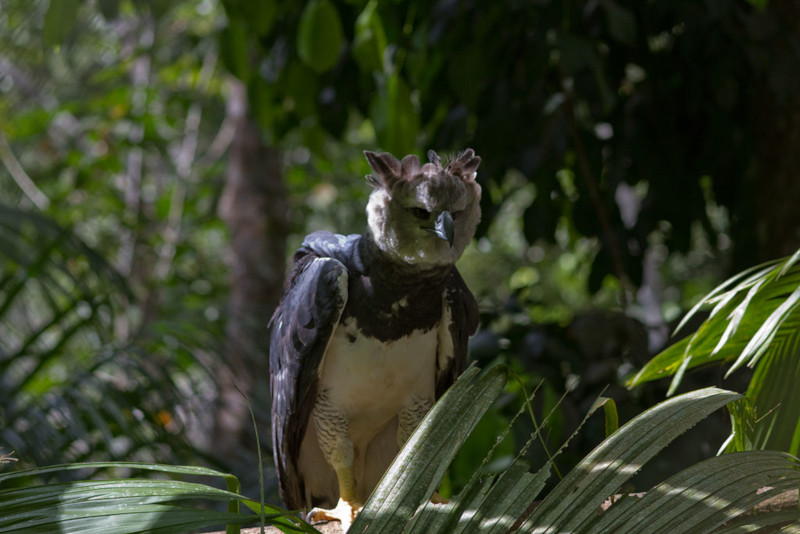
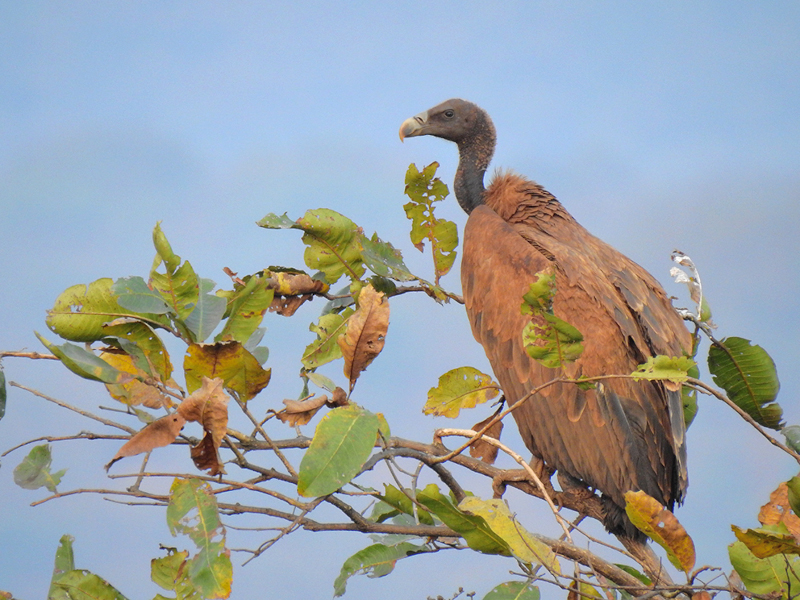

Golden Eagle Physical Description
The magnificent Golden Eagle virtually never fails to capture the immediate attention and appreciation of those individuals fortunate enough to encounter one. Unlike some of its relatives, though, it does so due to more than just its beauty. This avian also ranks as comparatively large.
In terms of its physical appearance, however, it also follows a well-established pattern typical among its kindred. That’s true since it displays a certain degree of the physiological characteristic of sexual dimorphism. In its case, however, this mainly manifests in regards to its size alone.
In general, the body length for this raptor varies markedly, ranging from approximately 26 – 40 in (66 – 102 cm). Wingspans also fluctuate notably, from about 5.9 – 7.7 ft (1.8 – 2.34 m). Body masses display the same degree of variation, as well. Bulkiness of the body even differs between individuals.
Typically, these physical differences represent the way in which the animal presents the gender-based difference. Females of this amazing species achieve larger average measurements in all the categories. This tendency remains typical of the known varieties of raptors throughout the world.
Females reach weights that run from 10 – 15 lbs (4.5 – 7 kg). Males, however, only average between 6.6 – 10 lbs (3 – 4.5 kg). Females, meanwhile, have broader wings and slightly larger bodies. The males of the species, though, develop as slimmer in build, and with proportionally narrower wings.
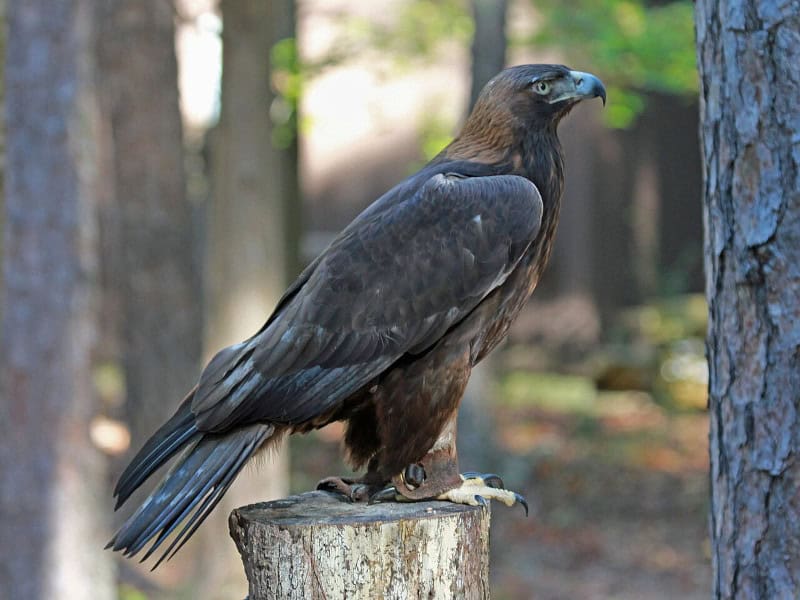
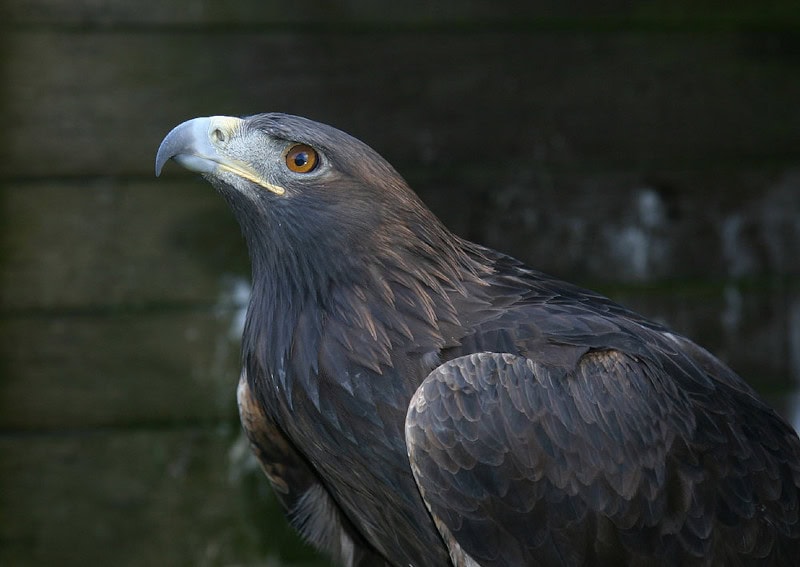
Otherwise, the two sexes of the Golden Eagle present the same basic appearance to the viewer. Adults seem dark brown overall, appearing almost black at a distance. Yet, it also manifests a highly distinctive combination of golden to tawny feathers evolved on the back of the head and nape.
Other parts of the body compliment this pattern well. Its underparts appear dark brown, often with lighter mottling. The tail, however, develops as long, usually being brown with faint grayish bands. The gorgeous wings of the powerful bird develop as very broad, with slightly upturned tips in flight.
This marvel of evolution also boasts a very strong, hooked bill that’s dark at the tip, fading to a lighter yellowish base. The awesome bird also has large, piercing eyes that show dark brown to amber. Contrasting this sharply, a bright yellow patch of skin appears at the base of the bill.
- Kingdom: Animalia
- Phylum: Chordata
- Class: Aves
- Order: Accipitriformes
- Family: Accipitridae
- Genus: Aquila
- Species: A. chrysaetos
Golden Eagle Distribution, Habitat, and Ecology
The mesmerizing Golden Eagle evolved as indigenous to an extrmely broad swathe of the surface of the earth. The full extent of that massive zone of habitation, however, might surprise many of you. That’s because this stunning avian evolved as native to most of the Northern Hemisphere.
In North America, it’s found throughout western and northern regions. It’s especially common in Alaska, western Canada, and the western United States, but less common in the eastern areas. In North Africa, meanwhile, the animal lives in the Atlas Mountains and other suitable upland habitats.
In Europe, it evolved as common across the northern, central, and southern sections. Strong populations live in Scotland, the Alps, the Pyrenees, Scandinavia, and the east. Also present in Asia, it has a broad range from the Middle East and Caucasus across Russia, Mongolia, China, and Japan.
In keeping with the patterns typical of its relatives, it displays extremely strong preferences regarding its choice of habitat. These wonders of Nature and evolution thrive best in open, rugged landscapes where they can soar freely and hunt effectively, so they only reside in these areas.
This includes such settings as the cliffs, crags, and rocky outcrops omnipresent in mountains and highlands. Grasslands, shrublands, and tundra also appear preferable. Across parts of its range, it lives in steppes and deserts. It also often makes its home in edges of forests and alpine meadows.
Given its nature, the magnificent Golden Eagle evolved entirely as a carnivore. It also represents an apex predator in all regions it inhabits. Due to that nature, it constitutes as important ecosystem stabilizer. Its activities help balance prey populations and indirectly shape vegetation dynamics.
The bird mainly hunts medium-sized prey, including such fare as hares, rabbits, ground squirrels, marmots, and prairie dogs. Yet, it also feeds on deer fawns, mountain goat kids, lambs, and even reptiles, fish, and insects when other prey is scarce. Scavenging of carrion also sometimes occurs.
Pairs often mate for life, maintaining territories year-round. These remain quite large, occasionally reaching 77 sq mi (200 sq km) in size. Nests often reach 6.6 ft (2 m) across, and places in difficult to reach locations. Breeding occurs in late winter to spring, with a typicl clutch numbering 1 – 3 eggs.
Species Sharing Its Range


Check out our other articles on 5 Amazing African Herbaceous Plants, Mountain Hare, Amazon River, Cucumber Tree, Spotted Eagle Ray, Blue Baboon Tarantula, Keeled slug-eating Snake










Leave a Reply