

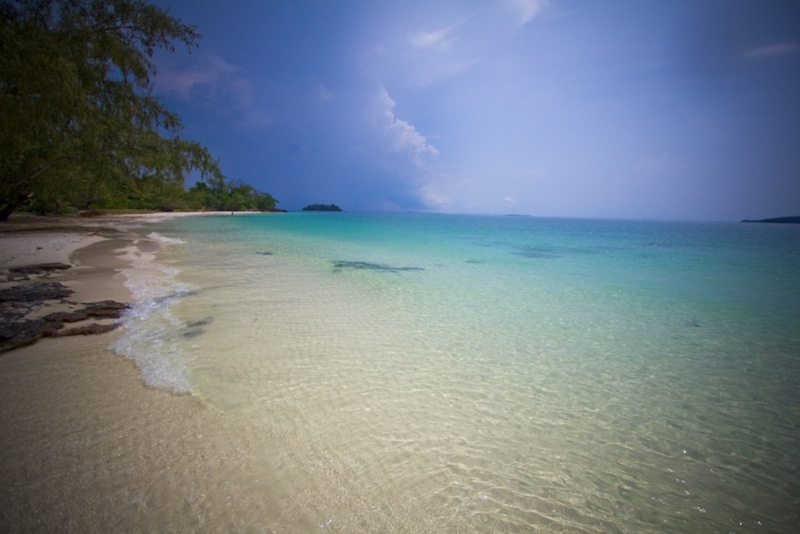
Koh Rong Facts
- The deceptively simple term of Koh Rong serves as the most frequently employed title for this remarkable creation of geological processes. It does have a few other monikers that it’s known by, however. These include Kaôh Rŏng, Koh Rong Island, and even simply Ko Rong.
- Regardless of which of these appellations, or still others, one chooses to use, it remains a site worthy of note for multiple reasons. Among these stands the fact that it ranks as the second-largest island of the nation of which it’s a part. It’s also a stunningly beautiful natural location.
- While there’s no direct archaeological evidence from the site itself, nearby coastal and island areas in the region were either inhabited or used seasonally during the 9th-15th century. It’s likely the early seafaring Khmer or Cham communities knew of and used it as a stopover point.
- Precise records do not exist concerning the exact period when European exploreres discovered it. It’s known, though, that French explorers knew of it during their colonial period. Local oral histories indicate the presence on the site of fishing communities for perhaps 100 – 200 years.
- Due to its extreme beauty, Koh Rong now understandably forms a popular tourist destination in its region. Thankfully, though, this marvel now holds a special status that aids in preserving its natural state. In 2018, it became the center of the Koh Rong Marine National Park.
- Although this status does help in preserving its pristine state to a degree, the formation still faces numerous threats to that status. Despite restrictions, the tourism inevitably brings at least some pollution. Like many islands, it’s also now dealing with the hazards of climate change.
Related Articles

Koh Rong Physical Description
The captivating Koh Rong almost instantly mesmerizes those individuals fortunate enough to venture to this pristine setting. Yet, unlike many other islands on earth, it does so for multiple reasons. That’s because this wonder of Nature contains a vast array of highly diverse landscapes.
It remains only a moderate-sized landmass, compared to many other islands around the globe. Roughly rectangular in overall shape, it measures about 9.3 mi (15 km) in length. Its width, though, varies greatly over that extent. This ranges from as narrow as 0.62 km to as wide as 5.6 mi (9 km).
These measurements provide the breathtaking geological formation with a respectable, if not startling, total area. That volume of land equals approximately 30.1 sq mi (78 sq km). Yet Nature remained undaunted, packing an incredible variety of wonders into this relatively small space.
Both the central and western sections of the gorgeous island possess the highest average elevations of the magnificent setting. Here, the visitor encounters a primarily hilly landscape, comprise of gentle mountains. Even the highest of these only reaches an elevation of around 1,037 ft (316m).
Most of the rest of the surface of this heavenly location possesses a covering of forests and jungles. Much of this, in fact, remains quite dense. The greatest concentration of this appears in the inland areas. It’s largely formed of countless palm trees, mangroves, and various types of hardwoods.
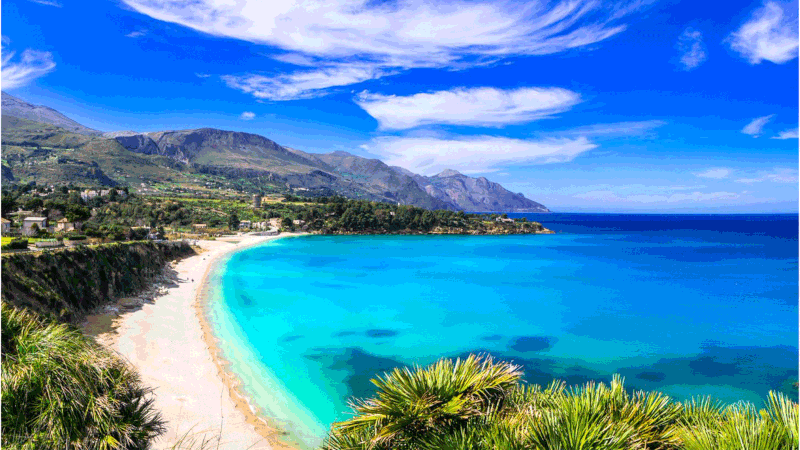
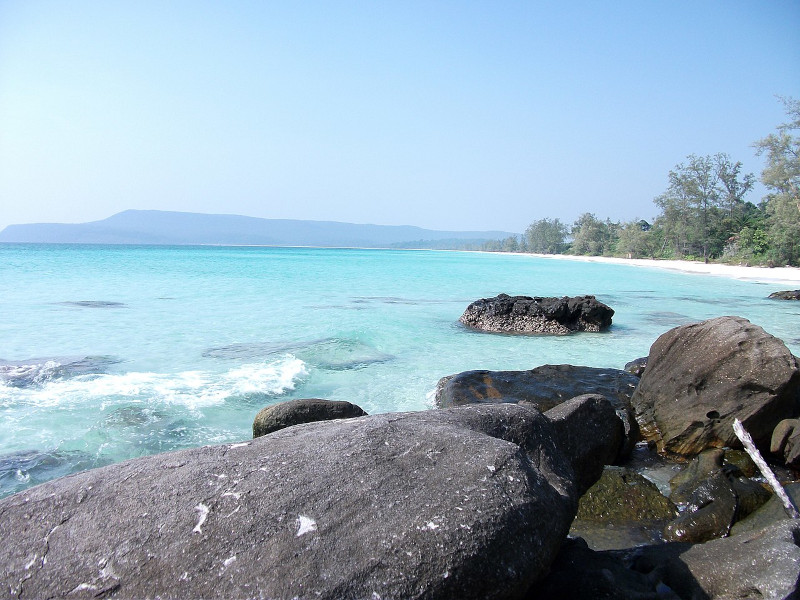
Doubtless, however, it’s the otherworldy beauty and sheer number of its beaches that most appeal to the visitor to Koh Rong. Of the 29.2 mi (47 km) of coastline, nearly all of it’s formed of beaches! Mainly formed of white sand, many of these stretch for between 0.62 – 4.3 mi (1 – 7 km) in length.
Still other natural features bless this haven of Nature, however. In those areas not containing beaches, rocky headlands and cliffs appear. Mangrove-lined inlets and small bays also abound. And inland, despite the island’s size, freshwater streams and estuaries flow from the hills to the coast.
Koh Rong Location, Formation, and Ecology
The undeniably charming Koh Rong formed in a region of the surface of the earth already well known for its abundance of geological wonders. Exactly where that setting lies therefore likely won’t surprise many people. Natural processes created this remarkable feature in the area comprising Asia.
More precisely, it’s situated in the always magical Gulf of Thailand. Its geographical coordinates place the island just off the southwestern coast of the nation of Cambodia. Inside of the national borders of that country, it sits about 15.5 mi (25 km) west of the main port city of Sihanoukville.
The formation of this astounding beauty occurred as the result of extremely long-term geological and environmental processes typical of Southeast Asia’s coastal regions. It’s a continental island, and once formed part of the mainland, but became separated over time due to rising sea levels.
Cambodia isn’t in a highly active tectonic zone, so its formation remained more influenced by erosion, sedimentation, and sea-level changes rather than volcanic or earthquake activity. It’s primarily made of sedimentary rock, like sandstone and shale, similar to nearby coastal formations.
These rocks eroded over time to form beaches, cliffs, and hills. Still other factors augmented this process, however. During the last Ice Age global sea levels were much lower. As glaciers melted, sea levels rose, cutting higher ground, likely between 5,000 -7,000 years ago, forming the site.
Over thousands of years, other processes created the thriving ecosystem now present. Inexorably, the island became covered in its current tropical forest. Its wondrous coastal waters additionally developed coral reefs and marine ecosystems, especially in calmer southern and eastern areas.
The various ecosystems of the glorious Koh Rong support a diverse range of species. The terrestrial environment hosts many beautiful flowers, water dragons, monkeys, and hornbills. The mineral-rich soils contribute to the growth of unique flora, such as Casuarina trees and specialized orchids.
Yet, its surrounding marine regions also host an abundance of life. A multitude of different forms of life thrive in its coves, bays, and the surrounding Gulf of Thailand. That throng includes seahorses, at least three different confirmed sea turtles, and various fish species abound around its shores.
Features Sharing Its Region
Check out our other articles on 5 Wonderful North American Wild Canines, Mountain Hare, Melnik Earth Pyramids, Achiote Tree, Black and scarlet Cicada, Spotted Eagle Ray, Mugger Crocodile