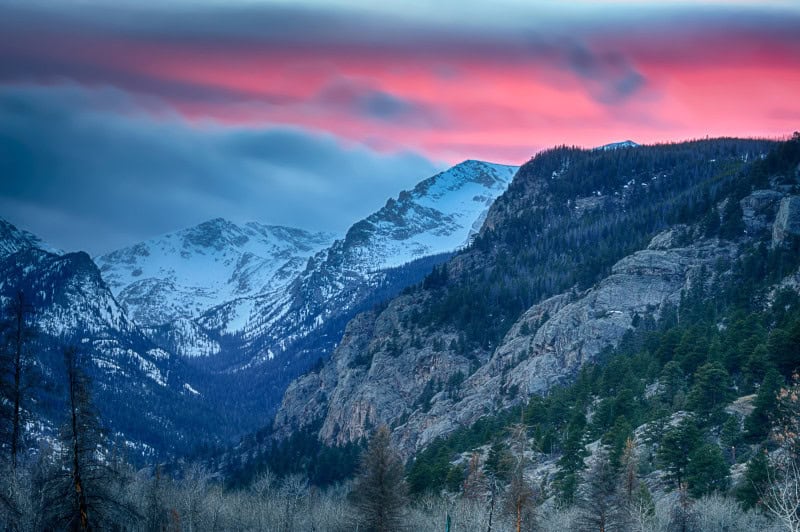
Rocky Mountains Facts
- The fitting name of the Rocky Mountains represents the most often used english language title for these amazing works of Nature. They also hold other, if less well-known, terms by which they’re known. These include The Rockies and Backbone of the Continent, among others.
- Yet, these majestic peaks also bore other monikers long before their discovery by outside explorers. In the languages of various groups of Indigenous Peoples of the area, these included such appellations as Mó’ȯhtávo’ome with the Cheyenne and Nisnáánánis for the Arapaho.
- Ancient humans inhabited this stunning range for countless ages prior to their notice by others. Archaeological evidence indicates that the Clovis and Folsom cultures appeared here between 14,000 – 12,000 years ago. That placed them there even before the end of the last ice age.
- In modern times, though, the first recorded descriptions of their grandeur due to the efforts of early Spanish explorers. Juan de Oñate made the first definitive spotting of them, in 1598. It’s possible, however, that Francisco Vázquez de Coronado saw them earlier, in 1540 – 1541.
- Thankfully, the beauty and historical significance of the Rocky Mountains led to their receiving certain protections by the governments of the nations in which they appear. This comes in the form of the formation of numerous National Parks, National Forests, and Wilderness Areas.
- Nevertheless, these mind-boggling features still faces multiple threats to their pristine state. Those consist of a mix of environmental, ecological, and human-driven dangers. These include glacier loss, snowpack decline, wildfires, shifts in ecosystems, and habitat fragmentation.
Related Articles
Rocky Mountains Physical Description
The aptly-named Rocky Mountains virtually never fail to capture the immediate attention and interest of individuals fortunate enough to visit them. The range does so, though, for more than one reason. That’s true since the formation boasts not just raw beauty, but also multiple features.
In total length, this true marvel of geology stretches for an incredible total of approximately 3,000 mi (4,800 km). Given their presence, location, and size, they also form the backbone of the continent on which they reside. Yet, it must be pointed out that they’re comprised of several chains.
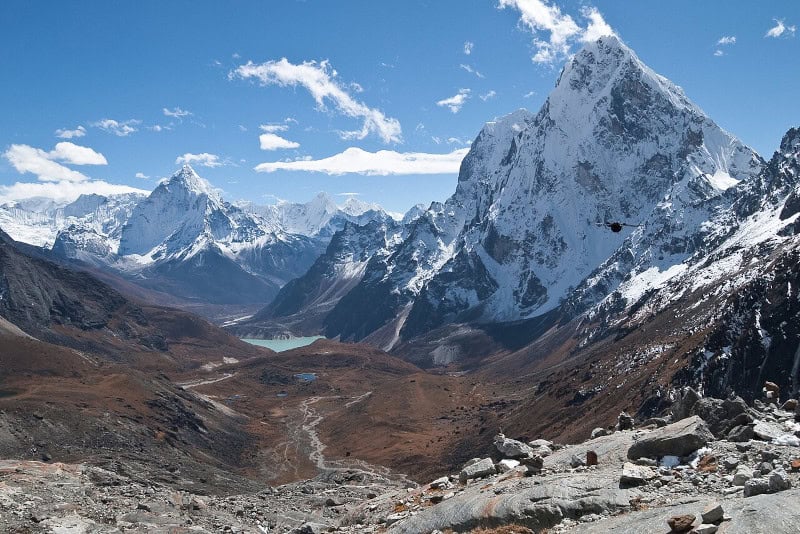
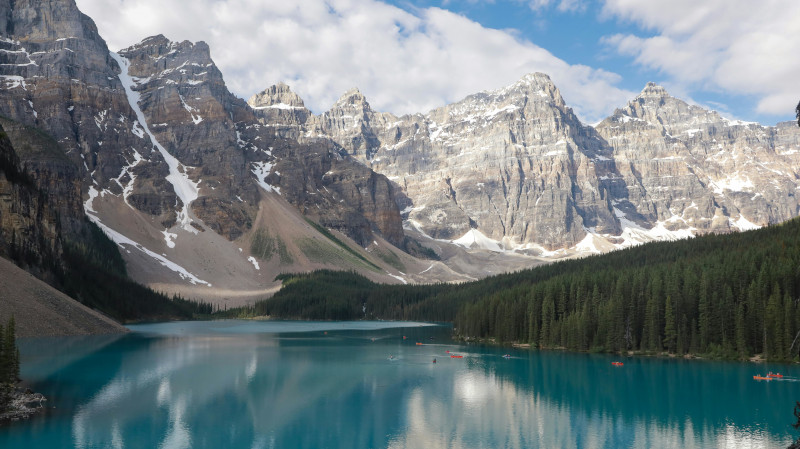
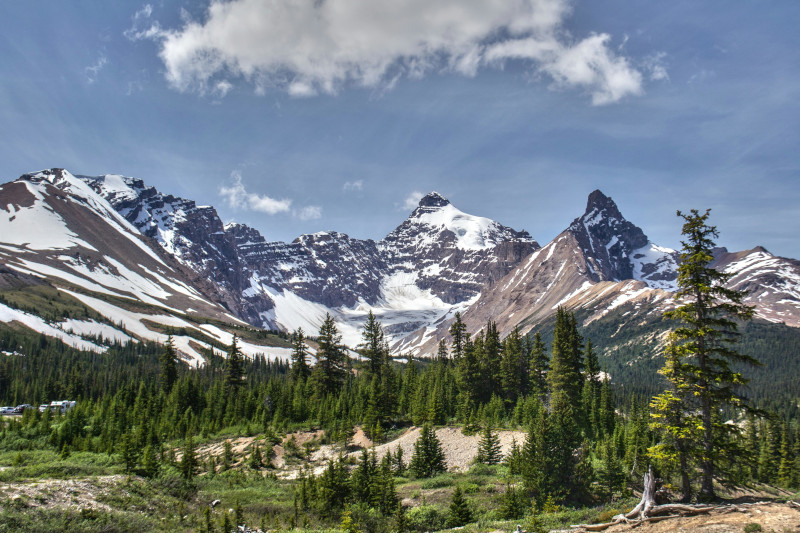
The Canadian Rockies remains largely characterized by the presence of a vast number of rugged, jagged peaks. Often being steep and pointed, many of these bear a regular cap of snow. Some of these exceed 11,500 ft (3,500 m) in height. Valleys also appear, with U-shaped forms and steep cliffs.
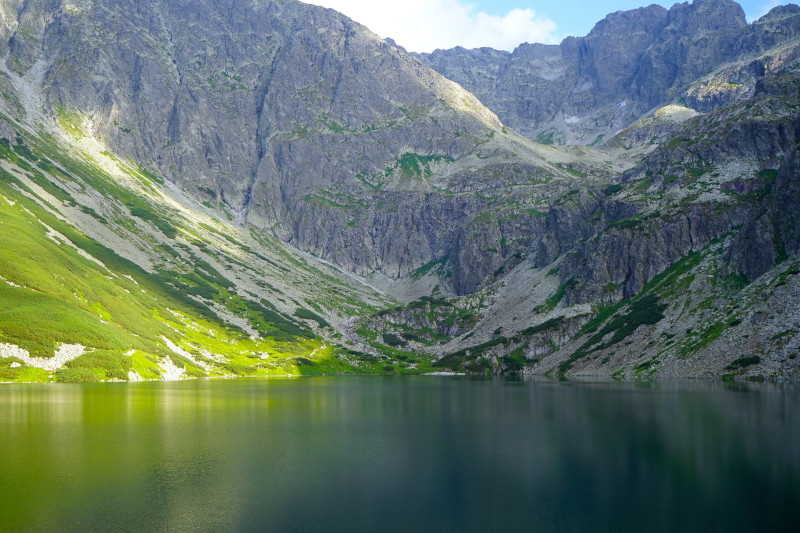
Numerous glaciers and ice fields also dot the region. Glacial erosion created multiple cirques, moraines, and glacial lakes, often with brilliant turquoise waters. Countless pristine lakes also reside in this range, along with several major rivers whose origins stem from the glaciers on their heights.
Meanwhile, the Northern Rockies have an impressive number of individual mountains as well. These, however, generally tend to be lower than those of the Canadian part. Altitudes here range from 6,500 – 10,000 ft (2,000 – 3,000 m). These also usually have less jagged, more rounded peaks.
Though some of the valleys present display the U-shaped form typical of the Northern Rockies, the majority possess a more V-shaped structure. Glacial activity also appears here, though to a lesser extent. Small glacial lakes do exist, often high in the mountains, typically being fewer and smaller.
The Central Rockies possess their own distinct nature. This part of the grouping largely consists of notably high, extremely rugged summits and broad ridges. Many of these separate features exceed 13,000 ft (4,000 m) in height. That tallest of these, Mount Elbert, stands 14,400 ft (4,401 m).
Here, the valleys usually form broad intermontane basins, The terrain remains mainly quite steep, though often less so than the Canadian section. With the glaciers gone, cirques, moraines, glacial valleys, and alpine lakes nonetheless still appear. Many major rivers also have their beginnings here.
The final component of the awesome Rocky Mountains bears the name Southern Rockies. Here, the peaks generally rank as lower than other sections. Most of these range from around 10,000 – 14,000 ft (3,000 – 4,300 m) in height, with a mix of rugged peaks, broad ridges, and volcanic formations.
Its valleys tend to be wide intermontane basins, with several high plateaus and river valleys. Most peaks also tend to be more rounded than other areas of the greater range. Glacial remnants include the same cirques, small alpine lakes, and moraines. Snowfields still persist in the highest regions.
Rocky Mountains Location, Formation, and Ecology
The mesmerizing Rocky Mountains formed in a part of the world already extremely well known for its remarkable abundance of natural beauty. Exactly where they reside therefore probably won’t come as a surprise to many people who learn of it. They appear on the continent of North America.
There, geological forces of Nature created them in the approximate western portion of the continent. Within that greater landmass, though, their great length actually stretches through two separate countries. They lie within the national borders of both the United States and Canada.
In Canada, this wonder of geology falls within the confines of the two provinces of Alberta and British Columbia. Within the boundaries of the United States, however, it passes through a total of six states. Its length passes through Montana, Idaho, Wyoming, Colorado, Utah, and New Mexico.
This wonder formed through a combination of tectonic activity, uplift, and erosion over a vast span of time. The majority of it formed during the Laramide Orogeny, roughly 70–40 million years ago. This affected a broad area of western North America, far inland from the plate boundary.
Tectonic forces also helped with their formation. That occurred due to the subduction of the Farallon Plate beneath the North American Plate. Instead of forming typical coastal mountains, this created uplift far inland. Between 2.6 million to 11,700 years ago, glacial activity further modified it.
Throughout the entirety of this time, however, other factors inexorably molded it, too. Flowing rivers, wind, and frost also shaped the range into the rugged peaks, high ridges, and intermontane basins we see today. Even today, it continues to uplift, though erosion gradually wears it down.
Due to its length and range of altitudes, the Rocky Mountains understandably hosts several distinct biomes. The foothills extend from 3,000 – 6,000 ft (900 – 1,800 m). Here, grasslands, shrubs, and ponderosa pine dominates. Wildlife present includes deer, coyotes, pronghorn, and rabbits.
At heights from 6,000 – 9,000 ft (1,800 – 2,700 m), though, montane forests rule, dominated by Douglas fir, ponderosa pine, and lodgepole pine. Meadows with wildflowers also appear. Local fauna abounds, including such creatures as lynx, snowshoe hare, wolverine, and owls, just to name a few.
Then the Alpine zone manifests a clear change in this pattern of verdure. This area largely consists of harsh, treeless tundra. Most vegetation consists of only low shrubs, grasses, mosses, and lichens. Here, species such as mountain goats, pikas, marmots, and ptarmigan form the large majority.
Features Sharing Its region
Check out our other articles on 5 Amazing African Herbaceous Plants, Northern Raccoon, Lake Maracaibo, Rila Primrose, Fire Salamander, Spotted Seahorse, Aphrodite Fritillary, Inland Taipan










Leave a Reply