

Scoresby Sound Facts
- This hauntingly beautiful creation of natural forces most often goes by the simple common name of the Scoresby Sound. Yet, it also has a few other titles by which it’s occasionally known. These options include the terms Scoresbysund and Scoresby Sund, among others.
- Still other epithets for this marvel of geology exist, representing its moniker in other languages. Those consist of the alternate listings of Kangertittivaq and Kangertittivaq Scoresbysund. Both of these, however, serve as the local name for this wonder in the Greenlandic tongue.
- Local Indigenous Peoples populations long knew of the existence of this marvel, of course. William Scoresby Jr, though, became the first known outsider to discover the amazing feature. He accomplished this notable deed in 1822, during his explorations of the surrounding area.
- Today, the protected status of stunning Scoresby Sound remains complicated. It’s not entirely a fully protected area like a national park or a marine reserve under one law in the region it sits in. Nonetheless, regulations and zones that afford some protections do currently exist.
- This breathtaking geological marvel faces multiple potential threats to its pristine state. Most of these stem, either directly or indirectly, from human activities. These dangers include such factors as ecosystem disruption, noise pollution, human disturbance, and climate change.
Related Articles
Scoresby Sound Physical Description
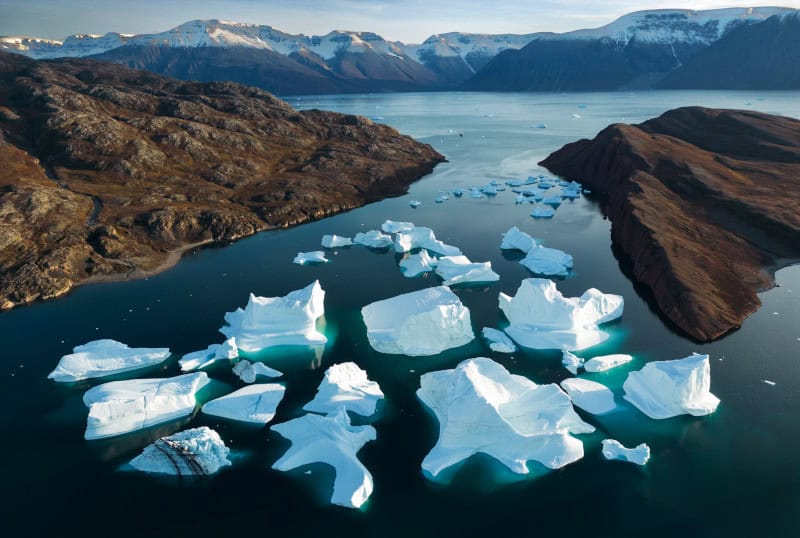
The mesmerizing Scoresby Sound instantly captures the interest and amazement of those individuals fortunate enough to visit the site. Unlike some natural wonders around the world, though, this one combines beauty with yet another aspect. That’s because it’s also quite extensive.
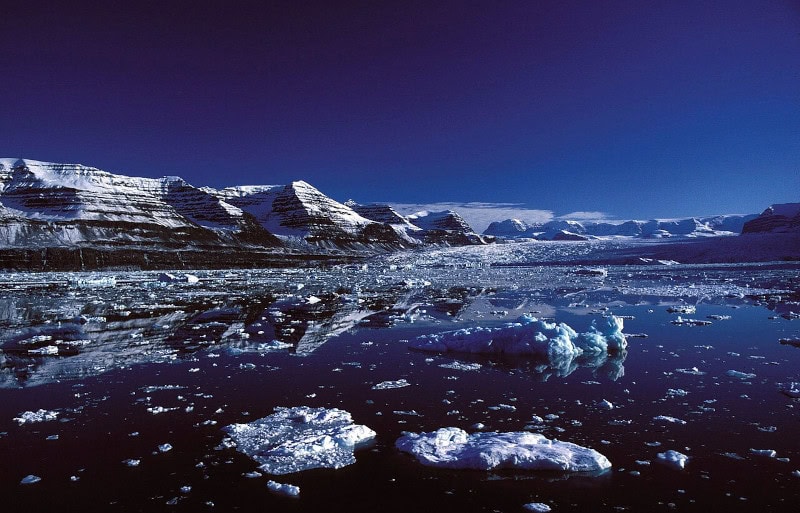
In fact, this remarkable product of time and natural processes ranks as the largest fjord system on earth. Its length stands out as the first, and perhaps greatest, of these. From the mouth into the deepest inland branch, this captivating setting stretches a mind-blowing total of 220 mi (350 km)!
Its wonders don’t end there, however. The aforementioned mouth measures an incredible 18 mi (29 km) in width. Inland, it also widens further into a vast basin. The depth also stands out, averaging between 1,312 – 1,969 ft (400 – 600 m), and reaching an amazing 4,593 ft (1,400 m) in locations.
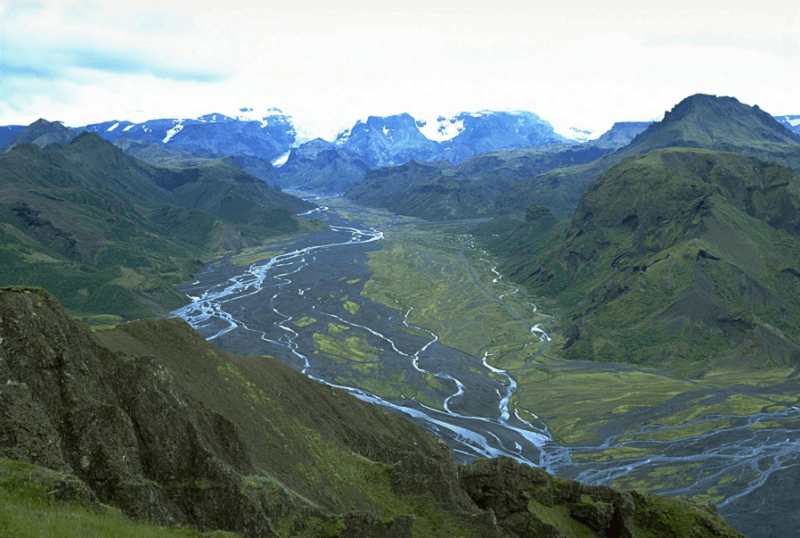
But the impressiveness of this natural marvel continue, represented by still other factors. Much of its length remains bordered by high mountains and steep cliffs, some reaching 6,600 ft (2,000 m). The full extent of it additionally contains such features as dramatic glacial valleys and side fjords.
For most visitors, however, the most astounding aspects of Scoresby Sound are the numerous glaciers present. These dominate the landscape, often calving into the fjord. The inner basin also holds many islands. Milne Island, the largest, ranks as one of the largest islands in a fjord on earth.
One more astonishing sight also awaits the observer. Countless large chunks of sea ice cover the fjord during the winter. These, though, usually breaks up in late summer, which locally occurs between the months of August to September. Glacial icebergs also float throughout the system.
Scoresby Sound Location, Formation, and Ecology
Nature created the magnificent Scoresby Sound in a region of the globe already filled with countless natural wonders, though few people imagine it to be so. The area of the surface of the earth in which it formed therefore will probably come as a surprise to many of the people who learn of it.
Natural processes additionally created this vast system of fjords as part of the magical setting known as Greenland. This visually stunning, as well as massive, represents the largest island on the entire planet. There, this remarkable formation sits on the approximate eastern coast of the landmass.
During the last Ice Age, massive glaciers advanced across the eastern portion of the island. These carved deep valleys into the bedrock, widening and steepening them. When the glaciers retreated, between 10,000–12,000 years ago, the sea flooded these valleys, creating today’s fjord system.
Tectonic activities also played a role in its formation, since it sits on the East Greenland Rift System. The bedrock in the area includes basalt from volcanic activity about 55 million years ago, during the North Atlantic Igneous Province. Uplift created the prevalent steep mountains and cliffs.
But the creation of this majestic creation of time and natural forces required still one more step in the formative process. That occurred when the glacial covering disappeared. As the glaciers melted, the land rose after being freed from the weight of ice, further altering the local landscape.
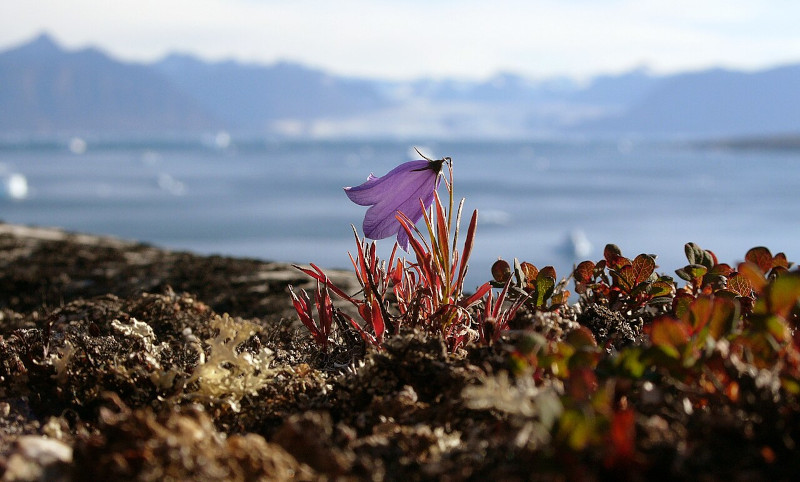
Despite its specific geographic location and the seemingly frigid climate, the fabulous feature nevertheless hosts a thriving ecosystem. This formed as uniquely Arctic in nature, being strongly shaped by its cold climate, seasonal ice cover, and mix of marine and terrestrial habitats.
Scoresby Sound is frozen much of the year, with sea ice breaking up in late summer. This short ice-free period supports bursts of biological activity. The melt season fuels phytoplankton blooms, which feed copepods and krill. These creatures form a key component within the fjord’s food web.
Fish, including Arctic char, Greenland halibut, and polar cod thrive in the cold waters. Marine mammals also appear in number. These include seals and whales, such as narwhals, bowhead whales, and occasionally humpback and minke whales. Polar bears also use the sea ice for hunting.
Many seabirds also thrive here, making their nests along the cliffs. Those include little auks, kittiwakes, fulmars, Arctic terns, and guillemots. Land animals mainly consist of musk oxen and arctic foxes. Vegetation, though, consists of mosses, lichens, sedges, dwarf birch, and Arctic willow.

Features Sharing Its Region
Check out our other articles on Earth’s 7 Mightiest Rivers, Mountain Hare, Kangaroo Island, Socotra Dragon Tree, Hellbender Salamander, South African Mantis, Keeled slug-eating Snake