Puck’s Glen Facts
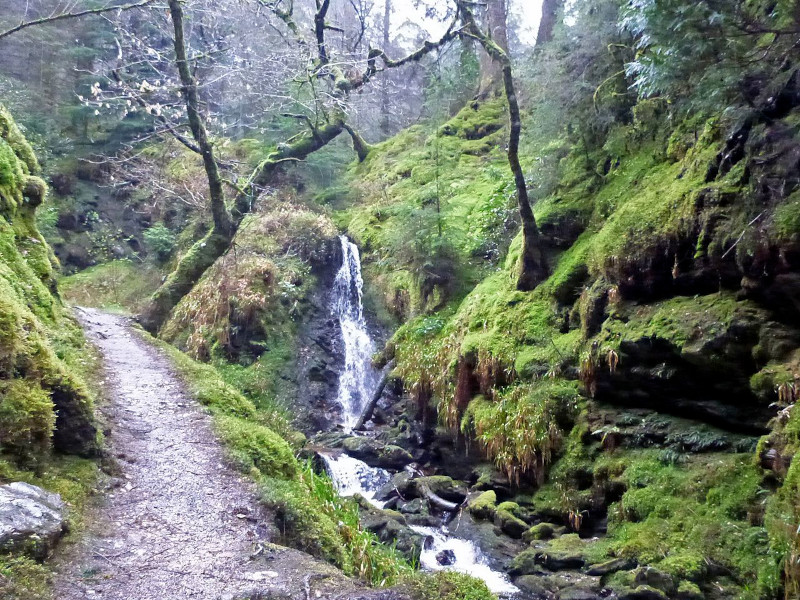
- This delightfully charming woodland setting most frequently goes by the deceptively simple title of Puck’s Glen. Yet, it’s also been known by several other names throughout the years. These alternate terms included Benmore Glen, Fairy Glen, and Eas Mòr, among many others.
- This marvel of geology and Nature wasn’t exactly discovered in the sense of an explorer finding an unknown place. It’s a natural feature that’s existed for many millenia. It therefore remains likely that the earliest inhabitants of its region knew of its presence long before the modern era.
- The creation of time and natural forces did, however, first achieve broader notice beginning in the 19th century. At that time, the Younger family, who owned the nearby Benmore Estate, which later became the Benmore Botanic Garden, developed and popularized the wonder.
- Thankfully, the captivating Puck’s Glen now enjoys a certain amount of protection from the depredations of man. As part of the similarly-named Benmore Forest, owned and operated by the government agency responsible for national forests and land, it’s well maintained.
- Nonetheless, the remarkable beauty of this location still faces several environmental and human pressures that threaten its long-term health and character. These threats include erosion and path degradation by human visitors, as well as storm damage and climate change.
Related Articles
Puck’s Glen Physical Description
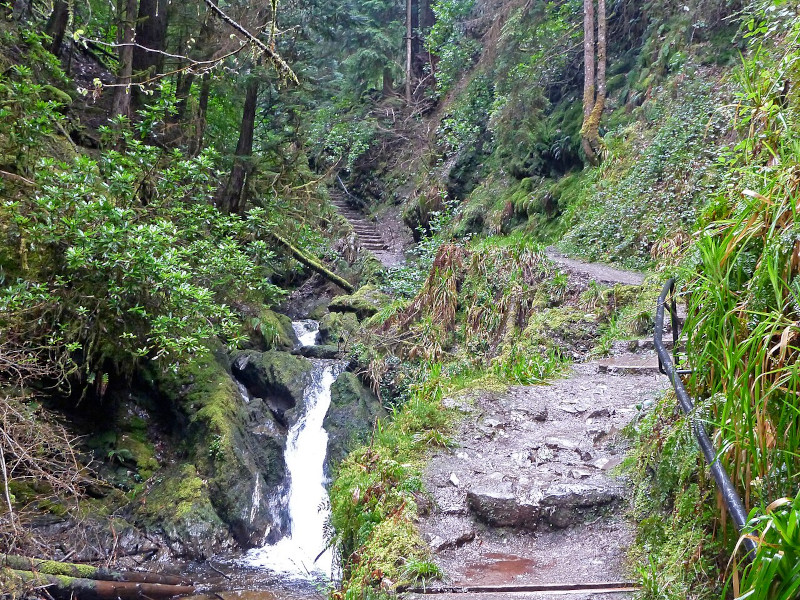
The otherwordly beauty of the stunning Puck’s Glen rarely if ever fails to immediately capture the interest and imagination of those fortunate enough to visit it. Yet, it does so due more to that undisputed visual appeal than physical measurements. In that respect, it’s not a large feature.
In terms of total length, this enchanting ravine stretches for approximately 0.8 mi (1.3 km). After walking through it, though, many individuals report that it seemed much longer. This impression occurs partly because of the many steep climbs and twisting nature of the paths present within it.
Across its length, its depth naturally varies. In general, however, this ranges from between 32.8 – 65.6 ft (10 – 20 m). The width also differs in various places, understandably. In most places, this ranges from roughly 6 – 20 ft (2 – 6 m). But, its narrowest site’s only 3 ft (1 m) and the widest 40 ft (12 m).
Despite its relatively diminutive nature, though, it hosts many individually spectacular marvels. A small stream known as the Eas Mòr Burn flows through the gorge before joining the River Eachaig. This flow created multiple separately beautiful works of Nature to draw the eye of the lucky visitor.
Among those eye-catching marvels one finds sharply vertical rock walls, as well as naturally formed rock basins. This creation of time and geological processes also holds a peaceful, gently sloping nature. Over the course of its short length, this marvelous glen drops approximately 328 ft (100 m).
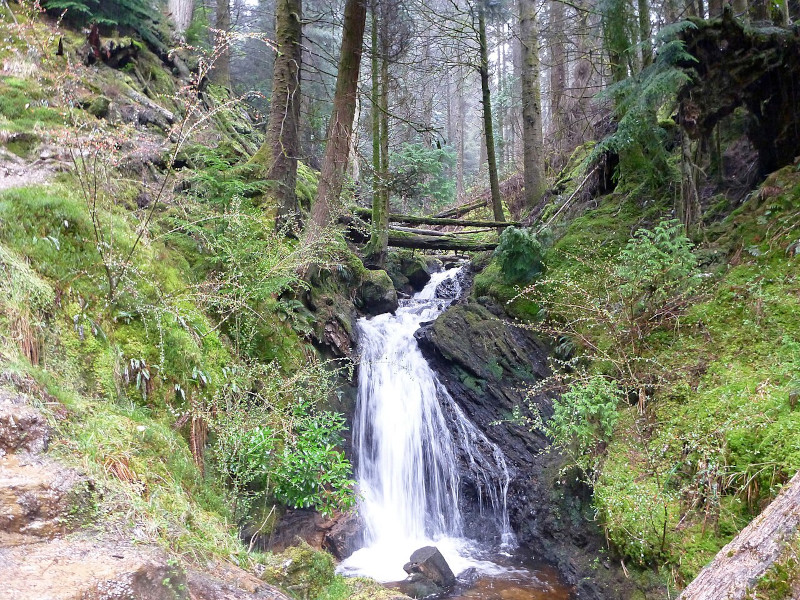
The constant, steady flow of gentle waters running through the small glen also creates other sights to behold as well. These gifts of Nature include small yet lovely waterfalls. At the bottom of these plunges still other features appear. Those consist of such wonders as potholes and plunge pools.
Puck’s Glen Location, Formation, and Ecology
The ethereal beauty of Puck’s Glen formed in a region of the world’s surface already well known for its abundance of natural splendor. Precisely where this amazing setting lies therefore likely won’t surprise many people. That’s true since the glen represents part of the continent of Europe.
Within that greater area, however, it holds a unique position. Nature created it within the confines of what now bears the title of Scotland. This itself occupies the most northerly section of the island known as Great Britain. There, it sits on the Cowal Peninsula in the western section of the country.
The formation of this breathtaking masterpiece is a truly fascinating story for the curious. It involved multiple factors working cooperatively over the course of tens of thousands of years. These forces primarily consisted of its geological foundation, glacial shaping, and post-glacial erosion.
The underlying bedrock consists mainly of Dalradian metamorphic rocks. These are ancient mica schists and quartzites formed over 500 million years ago during the Precambrian to early Paleozoic eras. Being hard, folded, and fractured, they resist erosion overall, except in cracks and joints.
Then, during the last Ice Age, ending about 12,000 years ago, the Cowal Peninsula was covered by thick ice sheets. These glaciers scoured the valleys, including the nearby River Eachaig and Loch Eck troughs. When the ice melted, though, meltwater torrents rushed down from the higher ground.
After the glaciers retreated, a small burn, the Eas Mòr Burn, continued to flow through the channel. Over thousands of years, this deepened and polished the gorge through several processes. Those forces included hydraulic action, abrasion, and the plunge pool formation under the waterfalls.
The ecology of Puck’s Glen represents one of its most remarkable and scientifically significant aspects. Because of its highly unique microclimate, ancient woodland setting, and high biodiversity, it’s often described as a miniature example of Scotland’s temperate rainforest ecosystem.
It constitutes a humid gorge woodland, with its dominant characteristics being shade, moisture, and shelter from wind. The location also boasts comparatively high humidity levels, low light levels, and stable cool temperatures. This creates a stable environment for very specific types of lifeforms.
Flora present largely consists of mosses, liverworts, and ferns. A mixture of both native and non-native conifers and broadleaf trees also thrive here, planted during the Victorian era. Most consist of such species as Douglas fir, Western hemlock, Sitka spruce, Japanese larch, and Scots pine.
Though not large or open, the glen also supports a rich range of small woodland wildlife. Birds found here include Grey wagtail, robin, wren, blackbird, and treecreeper. Although somewhat less common, tawny owls and buzzards sometimes appear within the confines of the small ravine.
Mammals, meanwhile, include the Eurasian Red Squirrel, living in the trees. Roe deer, pine martens, and bats also frequent the location. Invertebrates especially abound here. The moist, shaded rocks support slugs, snails, and woodlice, while the stream hosts both mayfly and caddisfly larvae.
Features Sharing Its Region
Check out our other articles on 5 Magnificent Mammals of Oregon, Ethiopian Wolf, South Georgia Island, Basket Stinkhorn, Southern Stingray, Lightbulb Sea Squirt, Earless Monitor Lizard










Leave a Reply