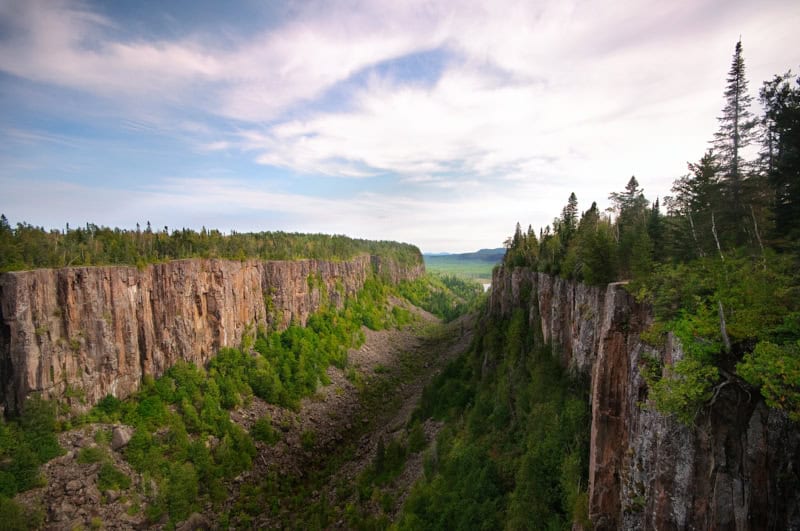
Ouimet Canyon Facts
- This breathtaking creation of time and geological processes most often goes by the surprisingly simple term of Ouimet Canyon. The marvel does have other titles by which it’s known, though. Those include Ontario’s Mini Grand Canyon and The Grand Canyon of the North.
- This feature stands out in the minds of many geologists due to an intriguing dichotomy surrounding its nature. That’s partly because the canyon itself’s relatively quite young. The intrigue, however, arises from the fact that rocks found there are among the oldest on earth.
- Local Indigenous Peoples populations knew of this remarkable creation of Nature long before European explorers entered the region. Archaeological evidence indicates that first entered the region somewhere between 10,000 – 9,000 years ago, following the retreat of glaciers.
- No known official records exist detailing exactly when outside explorers first encountered this stunning natural wonder. However, settlers and railway workers likely form the first outsiders to spot it. That occurred when they first entered the area, beginning in the early 1900’s.
- Fortunately, the amazing Ouiment Canyon now enjoys a certain amount of protection from the depredations of man. That’s true since it currently forms a central component of the aptly-named Ouimet Canyon Provincial Park. Officials formally established that in the year 1972.
- The captivating site nevertheless faces multiple potential threats to its current state. A number of rare arctic-alpine plants exist here that normally only grow far north. Even small amounts of trampling by visitors could destroy plant colonies that took Nature centuries to establish.
Related Articles
Ouimet Canyon Physical Description
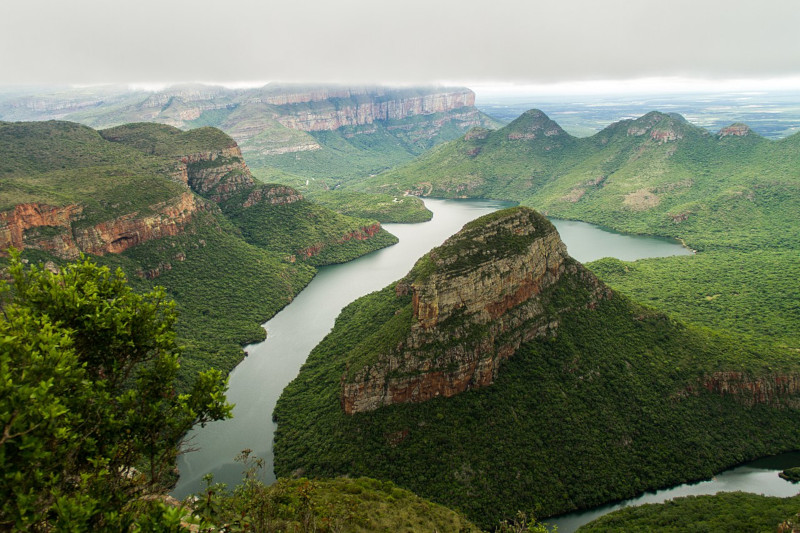
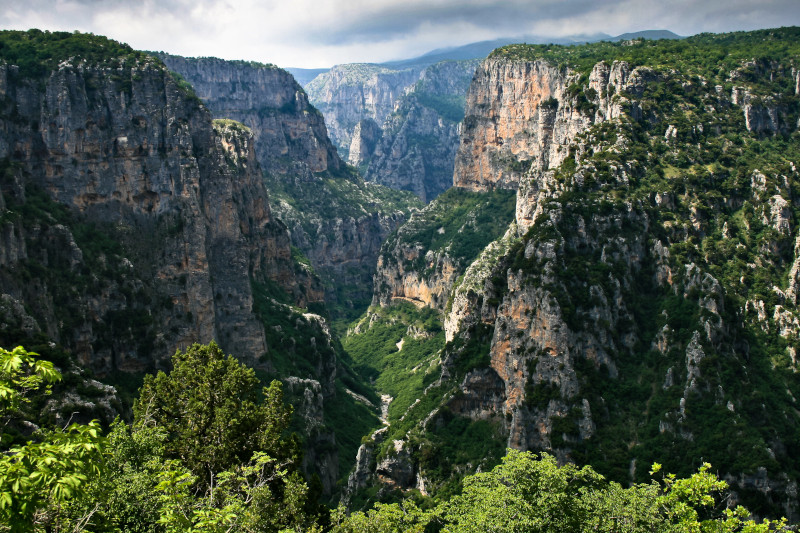
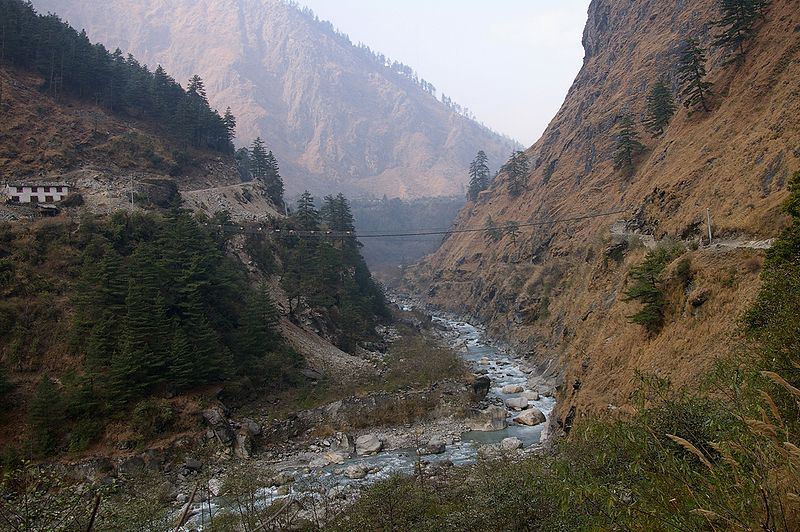
The mesmerizing Ouimet Canyon typically captures the interest and attention of all those fortunate enough to visit this beautiful setting. Unlike some similar features found throughout the world, though, it doesn’t so due to mind-boggling size. That’s because it’s not an extremely large gorge.
It nonetheless manages to pack an inordinate amount of beauty and natural appeal into a smaller package. In this respect, it achieves the same result as other locations across the globe that stand out despite not being overly large, such as Socotra and Pearl Shoal Waterfall, among others.
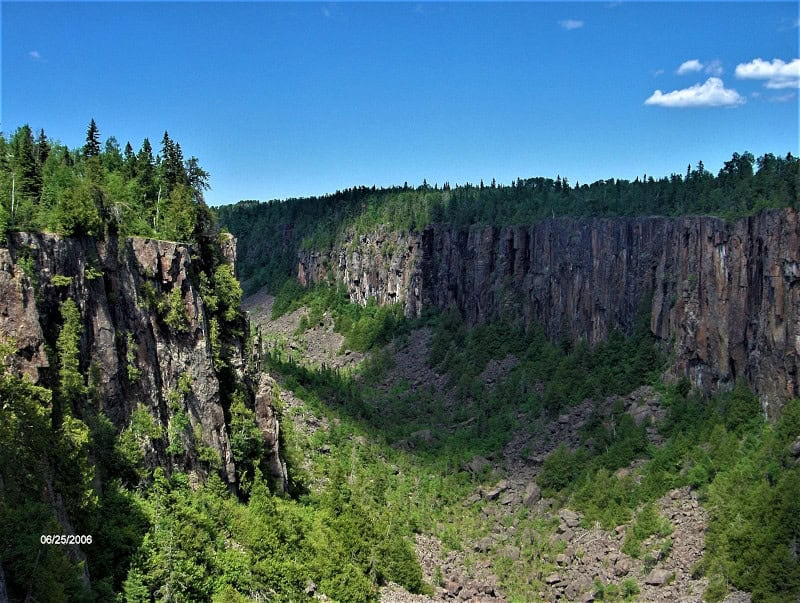
In length, it extends for approximately 1.2 mi (2 km) in a roughly north to south direction. Its width varies somewhat, of course, reaching a maximum measurement of 490 ft (150 m). Meanwhile, its depth likewise varies, with the deepest section of this geological marvel plunging 330 ft (100 m).
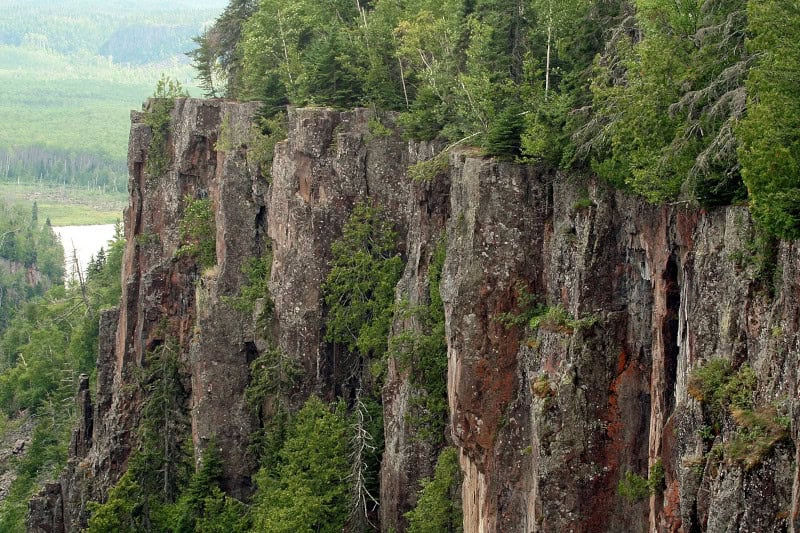
The mind-blowing beauty of Ouimet Canyon also derives partly from aspects of its nature other than physical dimensions. The surrounding walls are formed of nearly vertical cliffs. Distinctively, the canyon floor also remains characterized by the presence of large boulders scattered throughout.
Other stone-based features await to amaze the visitor. These include striking formations, including prominent rock columns, such as one named the Indian Head. The canyon’s walls also exhibit vertical jointing patterns that create a column-like appearance, adding to its dramatic landscape.
Ouimet Canyon Location, Formation, and Ecology
The hypnotic Ouimet Canyon formed in a region of the surface of the earth that’s already extremely well known for its abundance of similar wonders. Its general location therefore likely won’t come as a surprise to many of our readers. Nature created it as part of the continent of North America.
Within that greater overall area, though, it lies within the national borders of the country of Canada. There, it sits within the confines of the province of Ontario, in the approximate southeastern section. More precisely, however, inside that division of the country, it lies in the northwestern part.
The formation of this fabulous chasm actually occurred due to a very unique two-step process. It’s actually carved into a section of what science knows as Precambrian Shield rock. This underlying base in which it sits formed over a period that lasted between an astounding 1 – 2.7 billion years!
This base itself’s composed of countless layers, which only serves to add to its distinctiveness. The vast majority of these, though, remain formed of one of two specific types of stone. These particular forms of rock bear the technical monikers of either diabase stone or igneous formations.
The second step in its formative process did not occur until much later, in relatively recent times. That’s true since this part of its creation took place during the last Ice Age. That places the duration of this step in its formation in a period of time running from about 12,000 – 10,000 years ago.
Glacial meltwater and ice movement carved deep fissures into the bedrock. Retreating glaciers caused erosion of soft layers, leaving the steep cliffs and U-shaped canyon profile seen today. After these receded, freeze-thaw cycles, wind, and water erosion continued to widen cracks and cliffs.
The highly fascinating Ouimet Canyon hosts a highly remarkable ecosystem within its confines. It contains unique microclimate due to its depth and orientation. Ice and snow typically persist year-round in sheltered crevices, creating a tundra-like environment within a southern latitude.
Due to these factors, only very specific types of flora appear here. These mainly consist of various Arctic-alpine species. Among these, visitors find Arctic mosses and lichens and Alpine buttercups. Certain sedges and small flowering plants adapted to cold also manage to make a home here.
While large mammals mainly use the forest that formed around the canyon, smaller species nonetheless do live within the canyon ecosystem itself. Insects adapted to cooler temperatures live here. A few amphibians and reptiles, along with birds, such as ravens and peregrine falcons also do.
Features Sharing Its Region
Check out our other articles on Earth’s 7 Mightiest Rivers, New Zealand Sea Lion, Alexander Island, Southern Darwin’s Frog, Silky Afgekia, Tiger Shark, Baltimore Checkerspot, Chinese Alligator










Leave a Reply