Australian Hornet Facts
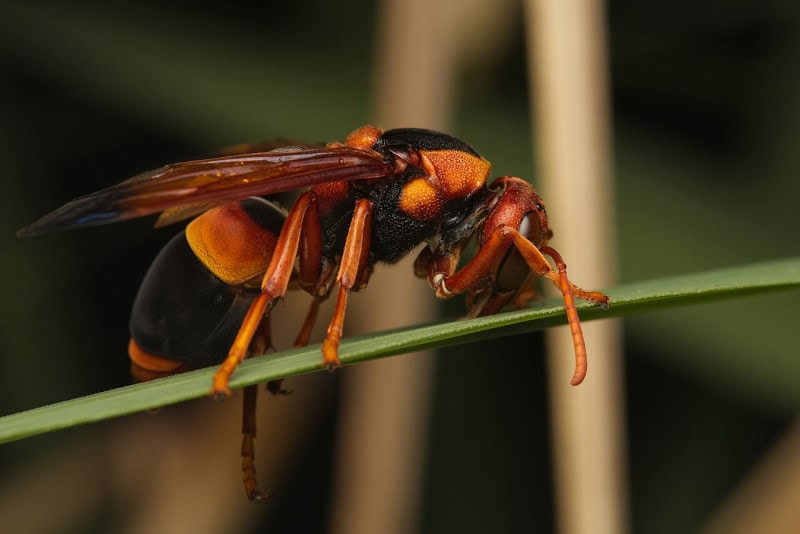
- This dazzling invertebrate most often goes by the simultaneously informative yet deceptive common name of the Australian Hornet. It does have a few other general titles by which it’s known, though. Those monikers include potter wasp, mason wasp, and yellow potter wasp.
- Inside of the scientific community, however, it’s perhaps much better known by its entirely technical designation. Thankfully, that’s a comparatively simple one for the layperson to pronounce, at least as such tags go. That’s because it holds the offical tag of Abispa ephippium.
- This impressive insect received that epithet due to the efforts of Johan Christian Fabricius. That highly respected Danish zoologist accomplished the first formal acknowledgement of it as a separate and distinct species. He achieved that scientifically noteworthy deed in 1775.
- This visually stunning creature represents one of those instances in which the colloquial term remains rather misleading. That’s true since, despite the primary common name, it isn’t a hornet at all. Instead, it’s a particularly large potter wasp classified in the subfamily Eumeninae.
- Fortunately, the beautiful Australian Hornet appears to be maintaining a population base that’s both stable and sufficient. This enviable situation also seems to hold true across the entirety of its established territory. Accordingly, the IUCN does not have a listing for it at this time.
- The Arthropod should nevertheless still be considered as facing multiple potential threats to its continued existence as a species. In this, it shares the same dangers as all forms of life on earth today. Most of these perils stem from the actions of man, and include climate change.
Related Articles
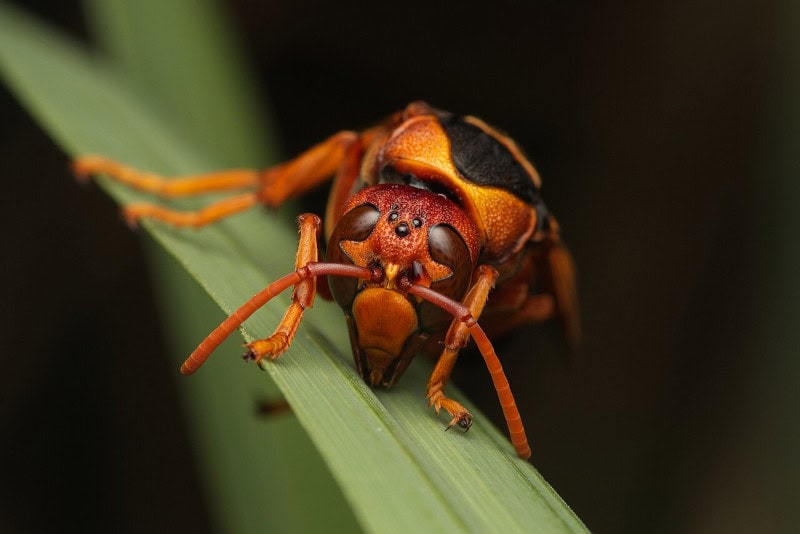
Australian Hornet Physical Description
The captivating Australian Hornet rarely fails to capture the immediate attention and interest of those individuals who manage to encounter one. Unlike some of its relatives around the world, though, it doesn’t do so due to its beauty alone. It’s also a comparatively large species of wasp.
In terms of its physical description, however, it also follows a pattern of development shared by many fauna, including those kindred. That’s displayed by the fact that it manifests a certain degree of the physiological characteristic of sexual dimorphism. In its case, this appears in many ways.
Overall, examples of this wonder of Nature and evolution achieve an average body length that ranges between 1 – 1.2 in (2.5 – 3 cm). Females of the species, though, tend to be both longer and bulkier in form. The males, however, usually remain slightly shorter and slimmer in general shape.
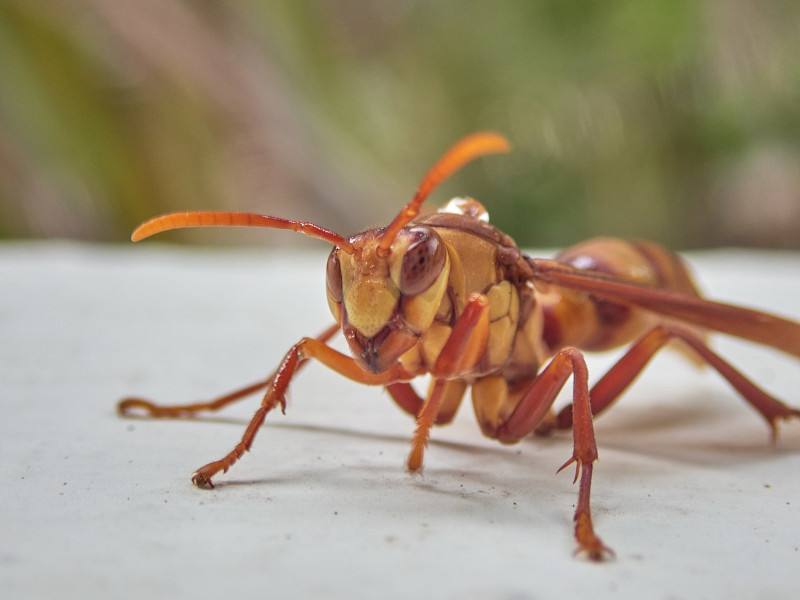
Its head evolved to be large and to possess a rounded design, as well as relatively powerful mandibles. The antennae develop as long, segmented, and slightly curved. In still another gender-based difference, those of the males remain somewhat longer and more curved than the females.
Like many of those countless kindred located around the world, in this invertebrate, the stinger forms another manner in which the sexes differ. Females possess a fully functional one, actually a modified ovipositor. The smaller males, meanwhile, lack this versatile appendage completely.
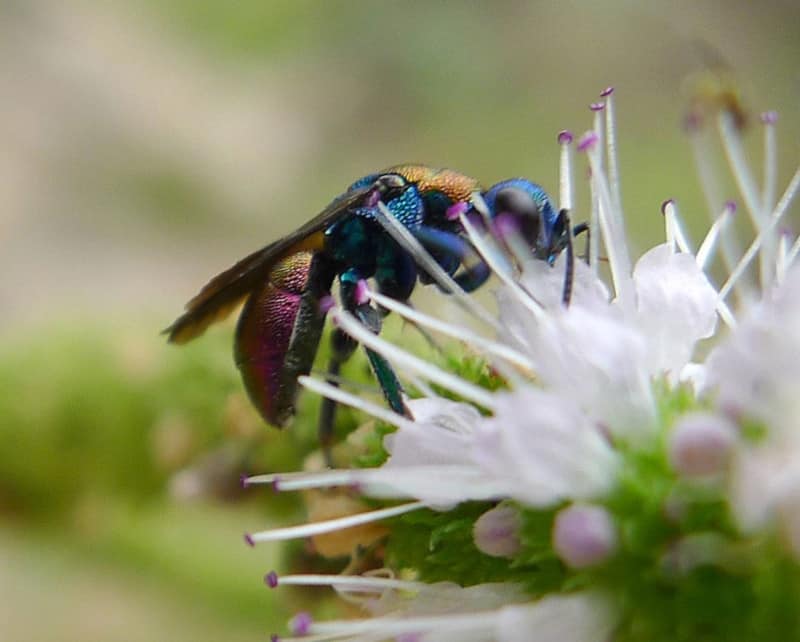
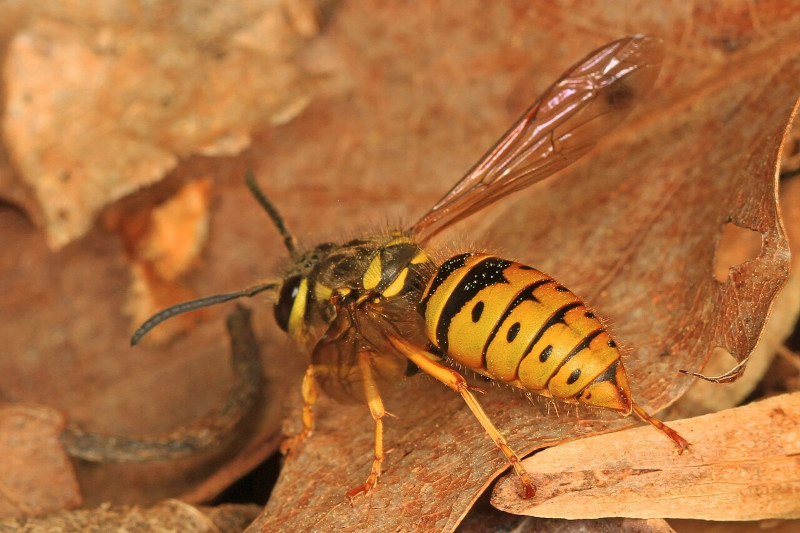
Yet, it’s doubtless the color scheme of the awesome Australian Hornet that typically garners the most attention from the majority of its observers. The body of the marvel evolved as predominatly black in color. A broad bright yellow band also appears across the first abdominal segment.
Additional yellow markings also show on both the thorax and head of the large wasp. The legs themselves further display the same pattern of black with some yellow sections. The wings show smoky brown to translucent, as well as being long enough to fold neatly along the back when at rest.
- Kingdom: Animalia
- Phylum: Arthropoda
- Class: Insecta
- Order: Hymenoptera
- Family: Vespidae
- Genus: Abispa
- Species: A. ephippium
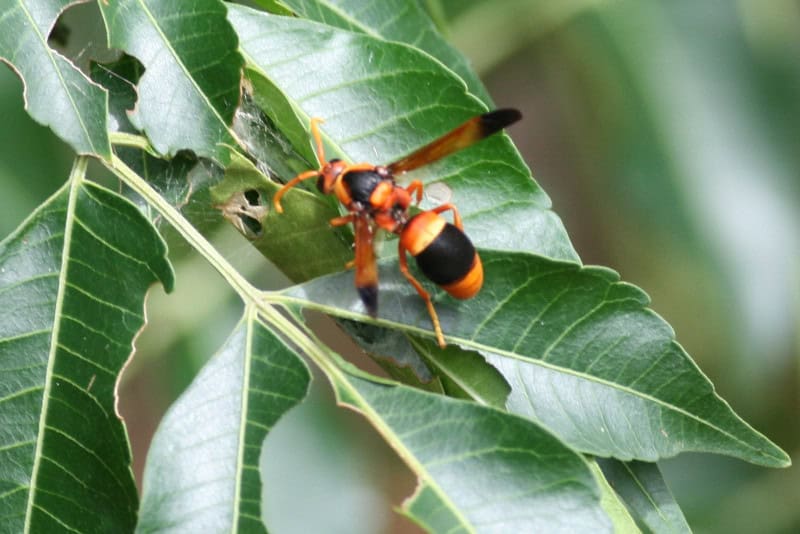
Australian Hornet Distribution, Habitat, and Ecology
The mesmerizing Australian Hornet evolved as indigenous to a moderately broad expans of the surface of the earth. Precisely where that native zone of habitation lies, though, probably won’t surprise anyone. That’s true given the fact that it shares its range with a great abundance of marvels.
As the principal common name clearly indicates, it developed as endemic to the amazing continent of Australia. Within those boundaries, it lives across most of the mainland, especially in the warmer regions. It’s conspicuously absent from Tasmania, however, due to its cooler environment.
Much like many species in the animal world, it displays a moderate degree of flexibility regarding its choice of habitat. It therefore resides within a reasonably wide variety of differing ecosystems. In fact, exactly where some of these appear might come as a slight surprise to some people.
The amazing Arthropod apparently favors settings such as fully open woodlands and forests. In these locations, the insect frequently makes its home in places like on the trunks of various trees, without preference for species, and even sometimes builds its home on exposed rock ledges.
Yet, again like many of its kin, it’s not shy about living within urban areas. In these environments, the intrepid insect constructs its nests in places such as fences, gardens, sheds. Apparently being undaunted by human activities, it also builds these both on the verandas and under eaves of houses.
The Australian Hornet evolved a dual dietary pattern. The adults do not hunt for themselves, but do so only to provision the nest for the larvae. Instead, the mature adults mainly eat flower nectar for energy, occasionally feeding on sugary excretions from aphids or other sap-sucking insects.
The larvae of this wonder of evolution, though, feed exclusively as carnivores. They do so by consuming the paralyzed prey provided by the adults. This fare mostly includes butterflies and moths. Sometimes, however, other soft-bodied larvae or small insects are provided as a supplement.
It also lives a primarily solitary life, except for mating. Females remain solely responsible for their multi-celled mud nest construction and provisioning. Each cell contains one egg along with several paralyzed caterpillars. Males, though, patrol and their guard territories for mating opportunities.
In turn, the wasp itself faces threats from a multitude of predators. Various species of birds, spiders, and larger predatory insects attempt to take both adults and larvae. The nests themselves also often remain markedly vulnerable to parasitic wasps and flies that typically try to invade the mud cells.
Species Sharing Its Range
Check out our other articles on 7 Endemic Socotran Species, Northern Raccoon, Melnik Earth Pyramids, Sandbox Tree, Great Barracuda, Emperor Penguin, South African Mantis, Inland Taipan










Leave a Reply