Indian Echo Caverns Facts
- This mesmerizing creation of time and natural processes most frequently goes by the somewhat descriptive name of Indian Echo Caverns. It does, however, also have several other titles by which it’s sometimes known. These include Wilson Cave and Hummelstown Cave.
- Local groups of Indigenous Peoples knew of its existence prior to its discovery by outsiders. They potentially did so for a period of at least several centuries. Presently, no archaeological evidence exists to indicate a more precise timetable for their original discovery by man.
- It’s also unclear when European explorers or colonists first encountered it. General consensus among historians presumes the most likely candidates for this consisted of early French fur trappers. These likely became the first outsiders to view the site in the late 17th century.
- The first known recorded mentioning of the breathtaking site, however, occurred in the early 1700’s. Later, from 1802 – 1821, the site famously served as home to a local hermit. Eventually, this magnificent setting opened to the public as a tourist destination in the year 1929.
- Thankfully, the amazing Indian Echo Caverns does now enjoy a certain amount of protection from the depredations of man. It’s not a national park or a federally protected cave preserve, since it’s privately owned. Despite this, though, it’s legally protected by the local government.
- Nevertheless, this wonder of Nature still faces many potential threats to its pristine condition. Despite the best efforts of local officials, visitor traffic can still disturb the caverns. Runoff from surrounding farms, landfills, and gardens holds the potential to damage its ecosystem.
Related Articles

Indian Echo Caverns Physical Description
The Indian Echo Caverns never fail to immediately enthrall those individuals fortunate enough to visit the natural marvel. Yet, it does not typically do so due to particularly impressive dimenstions. Instead, this formation captivates its lucky visitors with its abundance of astounding features.
Currently, the formally surveyed length of this cave system only measures approximately 1,700 ft (520 m). But do not let that comparatively short span deceive you. That’s because this stunning location contains numerous individual structures possessed of mind-numbing beauty and splendor.
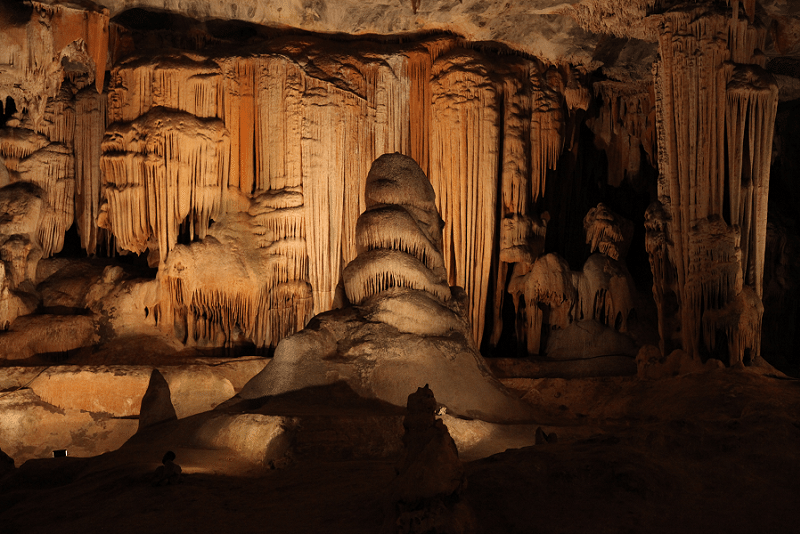
The cave system has two main passages, called the eastern passage and the northern passages, that intersect at a right angle. Where they meet, a large chamber formed over vast spans of time. Commonly known as the Indian Ballroom, this formation often receives the most visitor attention.
Another part of the gorgeous cave contains a large chamber, measuring roughly 80 ft (24 m) wide. That section also has a ceiling height determined to measure about 50 ft (15 m). This incredible construction of Nature sits roughly 250 ft (76 m) from the entrance to the amazing system of caves.
Indian Echo Caverns also contains more wonders to amaze the visitor. There’s a notable stalagmite called the Ear of Corn that measures 10 ft (3.1 m) long and 2 ft (0.6 m) in diameter. A passage, called the North Canyon, also exists. It’s about 300 ft (91 m) long, but only 3 ft (0.9 m) in some places.
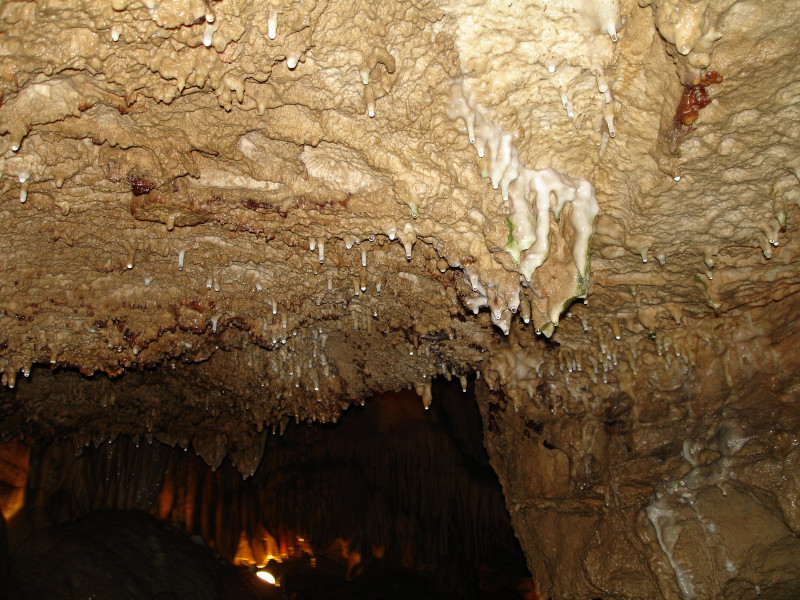
While there’s no active river flowing through it, water features do appear. Terraced mineral dams, called rimstone pools, exist on top of a flowstone mound in the main cavern. One passage contains small pools. A deep blue pool formed by magnesium-rich water, called Crystal Lake, also exists.
Indian Echo Caverns Location, Formation, and Ecology
The attention-grabbing Indian Echo Caverns formed in a region of the earth’s surface already well known for its abundance of natural wonders of all kinds. Precisely where this wondrous site formed thus likely won’t surprise many people. Nature created it as part of the continent of North America.
Within that greater landmass, though, it formed within the boundaries of what now constitues the United States. There, it sits in the upper northeastern portion of the country, in the state name Pennsylvania. More precisely, natural forces created it in the general south-central area of the state.
The formation of this cavernous system occurred over a span of millions of years. The caverns consist of what’s known to science as a mineral named Beekmantown limestone. That’s a type of sedimentary rock laid down over 440 million years ago during the Ordovician–Cambrian period.
Over time, rainwater absorbed carbon dioxide from the atmosphere and soil, forming weak carbonic acid. This seeped through cracks, slowly dissolving the rock. Fractures and joints expanded into larger passages and chambers. These linked up, forming the corridors and chambers seen today.
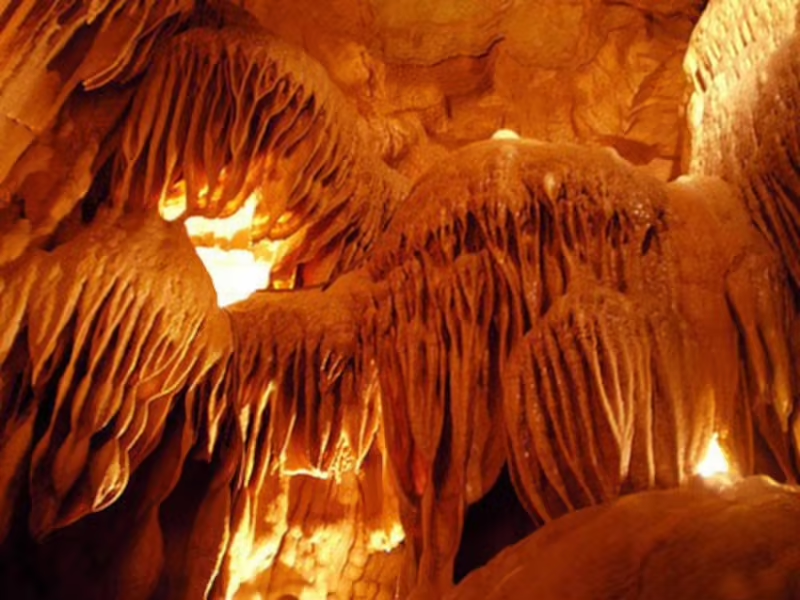
Eventually, stalactites and stalagmites formed from dripping water rich in calcium carbonate. Flowstone, rimstone pools, and dripstone cascades also developed over time. These appeared in locations where mineral-laden water flowed over surfaces and inexorably deposited layers of calcite.
Much like similar settings, the mesmerizing Indian Echo Caverns contains a unique ecosystem, both within and around the amazing cave. That includes both the surprisingly large number of organisms that live in the cave environment and the specific physical conditions that support them.
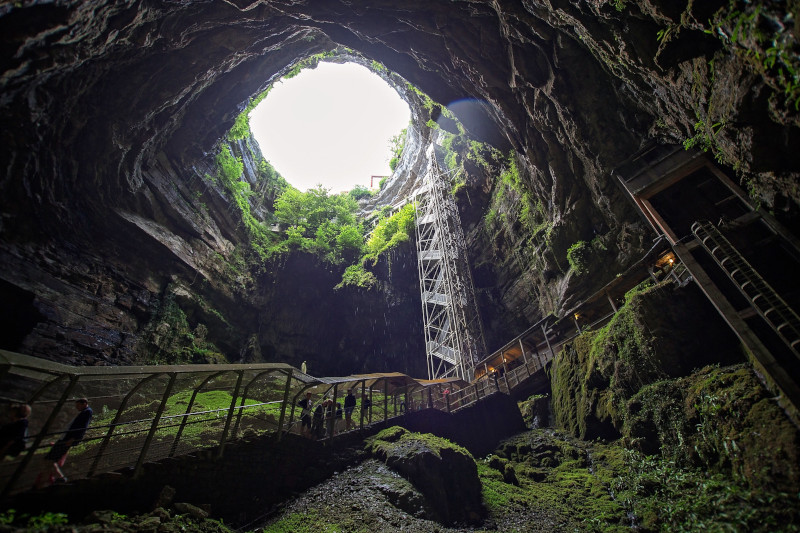
Given the local conditions, plant life remains sparce inside the caves, due to the darkness. Mosses, algae, and fungi, however, often occur near entrances where light and moisture allow growth. Surrounding area vegetation also naturally affects the cave hydrology and nutrient input via runoff.
Some species of bats also use the cave for roosting. Cave-adapted insects, spiders, and crustaceans called troglobites exist in the pools and moist cave floors. To the surprise of some, various species of small mammals, amphibians, and even the occasional reptile occasionally use cave entrances.
Features Sharing Its Region


Check out our other articles on 5 Arabian Sea Sharks and Rays, Ethiopian Wolf, Nile River, Lobster Claw Heliconia, Chinese Giant Salamander, Kakapo, Teddy Bear Bee, Kelled slug-eating Snake










Leave a Reply