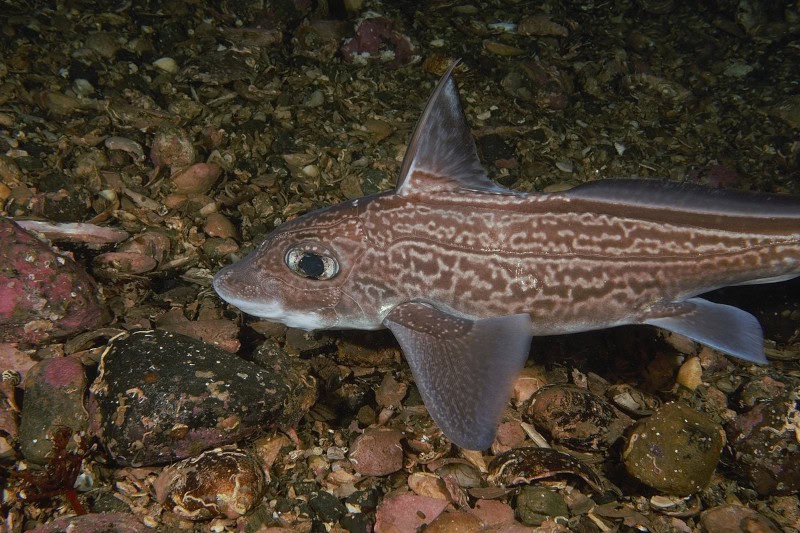
Rabbit Fish Facts
- This intriguing marine wonder most frequently goes by the often confusing common name of the Rabbit Fish across its range. The amazing creature does have a few other titles by which it’s known, though. Those options include Ghost Shark, Rat Fish, Sea Rabbit, just to name a few.
- Inside the halls of science, however, the animal’s perhaps much better known by its technical designation. Thankfully, that’s a comparatively simple term for the layperson to pronounce. That’s because the distinctive fish currently bears the official moniker of Chimaera monstrosa.
- It received that relatively easy honorific due to the efforts of Carl Linnaeus himself. That eminent Swedish researcher accomplished the first formal acknowledgement of it as a separate and distinct species. Incredibly, he achieved that scientifically noteworthy deed in 1758.
- The aforementioned confusion surrounding its main common name stems from a coincidental taxonomic occurrence. Later, in 1775, the Danish zoologist Johann Christian Fabricius applied the nearly identical appellation Rabbitfish to an entire genus of species unrelated to this one.
- Lamentably, the impressive Rabbit Fish now finds itself in a somewhat dire predicament. Due to its high levels of lipids, the species has gained interest in fisheries for its liver oils. With its numbers plummeting, the IUCN presently shows it as Vulnerable on its published Red List.
- In addition to this danger, it faces many other threats to its continued existence as a species. In this regard, it’s dealing with the same problems as all other forms of life on earth today. Most of these stem from the actions of mankind and include habitat loss and climate change.
Related Articles
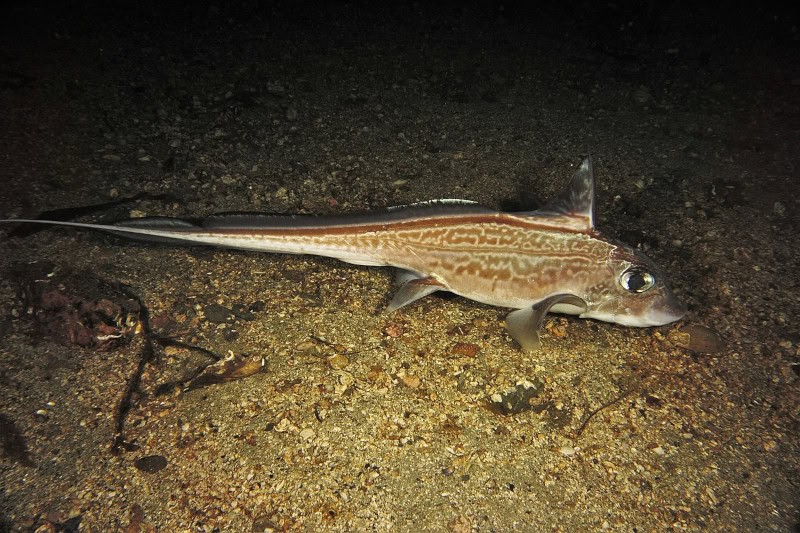
Rabbit Fish Physical Description
The captivating Rabbit Fish easily captures the attention and interest of those individuals fortunate enough to encounter one of them. Unlike some related species, though, it does not do so due to sheer size alone. That’s true since it also displays numerous distinctive physical attributes.
It also follows a pattern of development shared by many creatures across the world, including other fish. That’s the fact that it displays a certain degree of the physiological characteristic of sexual dimorphism. In its specific case, though, this evolutionary trait manifests in a great number of ways.
The first of these is a simple matter of dimensions. Overall, the species reaches an average total length equaling approximately 4.9 ft (1.5 m). Females, however, typically remain on the higher end of this range, while their male counterparts usually stay slightly smaller. Exceptions occur, but rarely.
The other gender-based differences revolve around several extraordinary reproductive aspects of their physiology. Males possess an incredible total of three separate physical structures that the females lack entirely. Though many fish follow this pattern, few do so to such an extreme degree.
Males have a pair of elongated reproductive organs known as claspers on the pelvic fins, used to transfer sperm into the female. They also possess a retractable, club-like structure on the forehead, armed with small hooks. The males employ this particular organ to grasp the female during mating.
Still one more anatomical feature separates the males from the females, though. That’s the existence of structures known as prepelvic tentacula. These constitute small grasping organs situated in front of the pelvic fins. It uses these as well to aid in clinging to the female during the reproductive act.
Otherwise, the sexes appear nearly identical. Each has a slender, elongated body tapering to a long, whip-like tail. The head’s large and bulky compared to the rest of the body. That also holds a blunt, rounded snout. Its eyes evolved as large and green, and the small mouth appears on the underside.
Yet, it’s possibly the fins of the intriguing Rabbit Fish that garner the most interest. It has a large, sail-like first dorsal fin with a sharp venomous spine at the front. Meanwhile, the second dorsal fin of this remarkable creature develops as long and low, extending along much of the entire back.
Still other such appendages also serve to distinguish this awesome fish from many of its other kin around the world. It also boasts broad, wing-like pectoral fins which it uses to swim in a flapping manner. The pelvic fins, though, are slightly smaller in nature, while it completely lacks an anal fin.
- Kingdom: Animalia
- Phylum: Chordata
- Class: Chondrichthyes
- Order: Chimaeriformes
- Family: Chimaeridae
- Genus: Chimaera
- Species: C. monstrosa
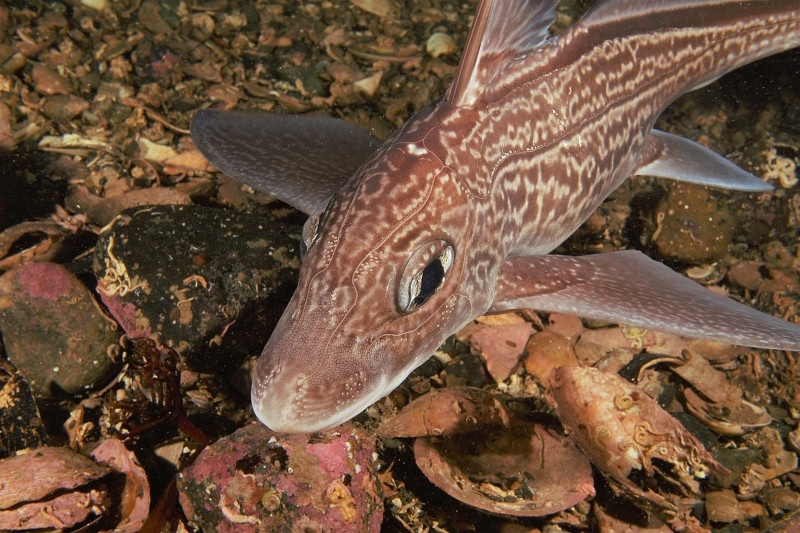
Rabbit Fish Distribution, Habitat, and Ecology
The tantalizing Rabbit Fish evolved as indigenous to a moderately broad portion of the marine regions of the globe. Exactly where that zone of habitation lies might surprise some of you, however. That’s true since the fish developed within the northeastern parts of the Atlantic and Mediterranean.
In the northeast Atlantic Ocean, it’s found from Iceland and Norway, including the Barents Sea, south of Lofoten. From there, its range extends southward along Europe, including the British Isles, Bay of Biscay, and the Iberian Peninsula. Then, it stretches northwest Africa, including near Madeira.
Meanwhile, this amazing product of Nature and evolutionary processes also makes its presence known throughout much of the western and central Mediterranean region. Though it’s also present within the confines of the eastern Mediterranean, such sightings remain very few in number.
This attention-grabbing fish displays decidedly strong and clear preferences regarding its choice of habitat. Sadly, though, this favoritism also serves to limit its possibilities for expansion and survival. While its territorial range remains moderately large, within that it only appears in very specific areas.
It’s only known to reside along the continental shelf and slope across that zone. The creature prefers to live either on or near the seabed. It’s mainly spotted at depths between 656 – 1,640 ft (200 – 500 m). Yet, it’s also present at depths as shallow as 131 ft (40 m) and deep as 5,381 ft (1,640 m).
Even in those sections of the seabed where it does reside, it still presents certain preferences for the nature of the sea floor. It prefers the presence of soft sediments such as mud, sandy mud, or fine sand. It’s also generally found in water below 53.6F (12°C), but above the very cold abyssal zones.
Given where it lives, it’s not surprising that the Rabbit Fish evolved as a benthic carnivore. Its diet mostly consists of four classes of prey. Those include crustaceans, such as crabs and shrimp, echinoderms, like sea urchins and brittle stars, mollusks, including cephalopods, and small fish.
Like others of its kind, it reproduces by laying eggs. Females deposit large, spindle-shaped egg cases on the seafloor. These often measure up to 6.7 in (17 cm) long. Embryos develop slowly inside these. Though its maximum lifespan hasn’t been determined, known specimens exceed 30 years of age.
Despite studies, its main predators still remain poorly documented. It’s believed by scientists, however, that larger sharks form the majority of these. Though in smaller numbers, it’s also felt that marine mammals also pose a threat to it. It’s also sometimes a victim of commercial fishing by catch.
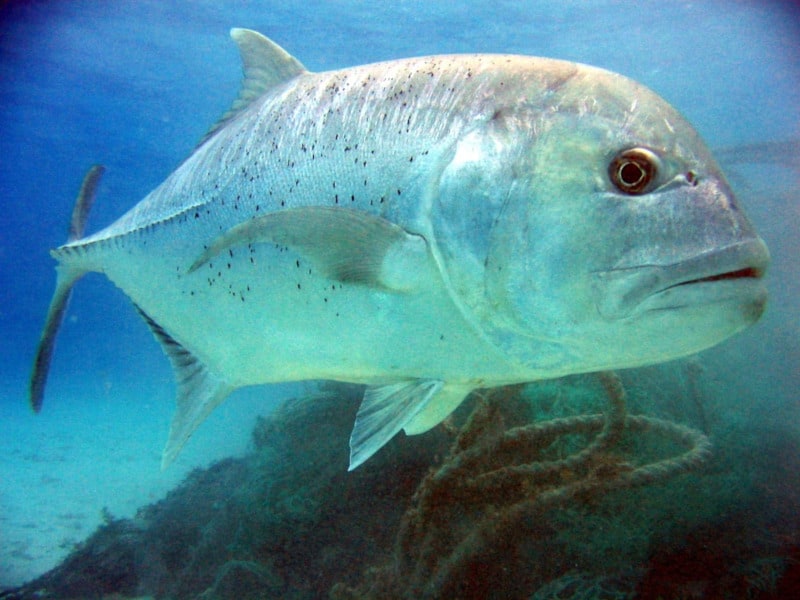
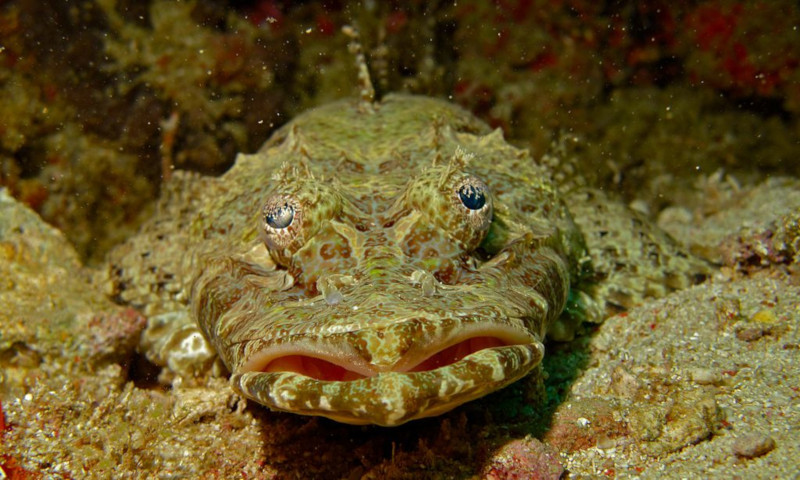
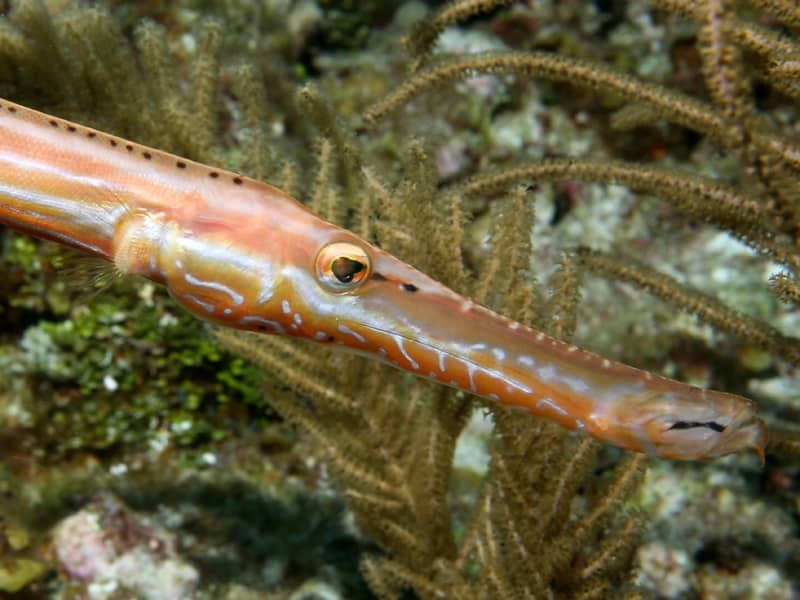
Species Sharing Its Range
Check out our other articles Earth’s 7 Mightiest Rivers, Northern Raccoon, Kangaroo Island, Basket Stinkhorn, Socotra Starling, Indian Bullfrog, South African Mantis, Keeled slug-eating Snake










Leave a Reply