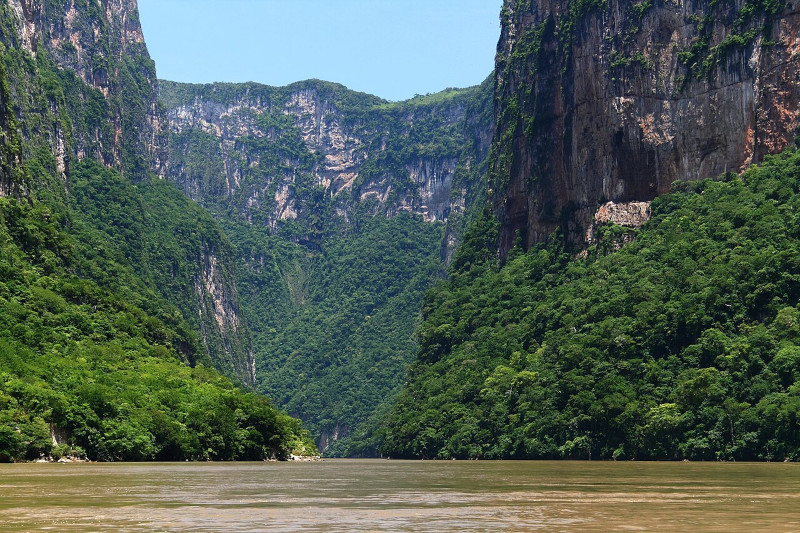
Sumidero Canyon Facts
- This mesmerizing creation of time and natural forces frequently goes by the deceptively simple title of Sumidero Canyon. This natural wonder actually possesses very few alternate names by which it’s sometimes known. Among those few however, lies the tag Cañón del Sumidero.
- This feature stands out in the minds of many scientists for an unusual set of circumstances. That’s because it sits at the intersection of active tectonics, karst geology, tropical river erosion, and deep canyon microclimates. This ranks as relatively rare in one compact system.
- Archaeological evidence indicates that Indigenous Peoples knew of the site as far back as 12,000 years ago. The first known permanent agricultural settlements appeared here around 2000 BCE. Historically, the Chiapa People formed the main population near the canyon.
- The first recorded sighting of this marvel by European explorers occurred in 1527. At that time, the Spanish conquistador Luis Marín attempted the earliest recorded outside expedition into the area. He failed to traverse it, however, due to the extreme nature of the local terrain.
- Thankfully, the breathtaking Sumidero Canyon now enjoys a degree of protection from the depredations of man. The aptley-named and federally protected Sumidero Canyon National Park now surrounds it. The government created that protected area on December 8, in 1980.
- Nonetheless, this impressive creation of Nature still faces multiple potential threats to the preservation of its pristine state. Most of these stem from the actions of mankind. Those dangers include agricultural runoff, plastic waste, household garbage, and urban expansion.
Related Articles


Sumidero Canyon Physical Description
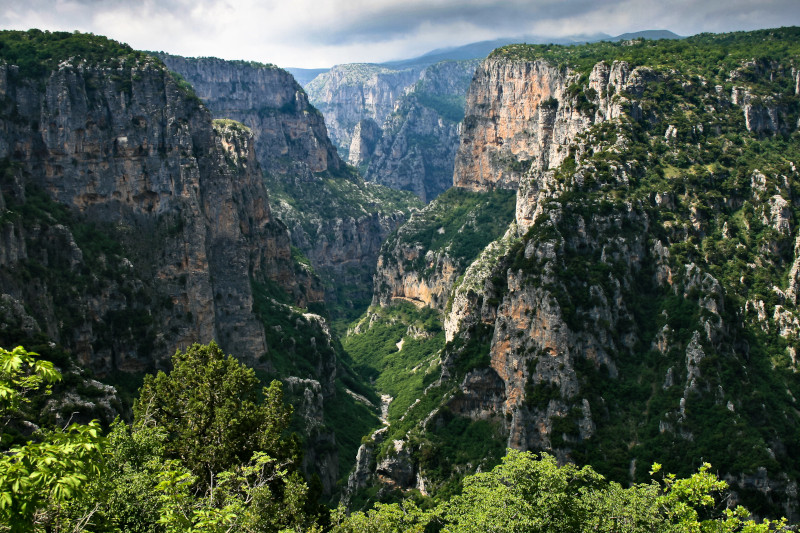
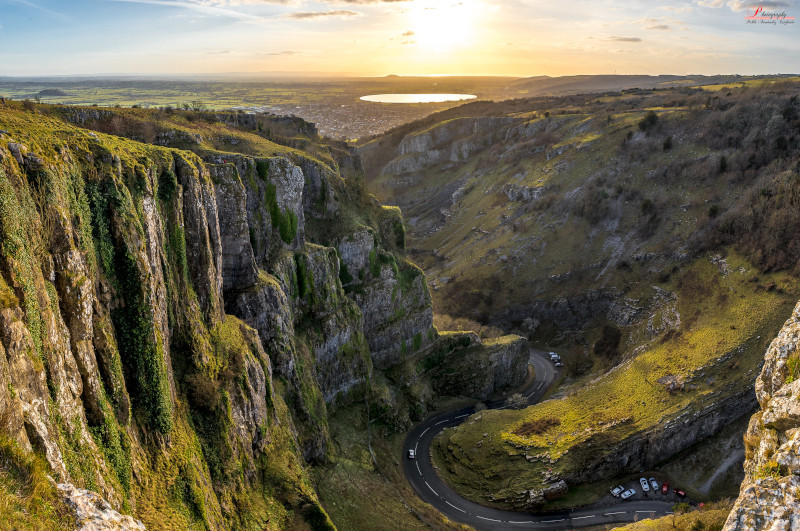
The fabulous Sumidero Canyon rarely, if ever, fails to immediately capture the attention and imagination of those fortunate enough to visit the feature. That holds true since it not only holds vast amounts of natural beauty, but also boasts some highly respectable dimensions and features.
This hypnotic geological marvel represents a a deep, narrow river-cut gorge carved into limestone bedrock. Interestingly, the definition of its boundaries differs, depending on the source. These vary from 8.1 – 13. mi ( 13 – 21 km). As general principle, its orientation runs from north to south.
It’s chiefly noted for its stunning, nearly vertical to sometimes overhanging cliffs. These reach upward to heights ranging from 3,300 – 4,300 ft (1,000 – 1,300 m) in numerous locations. These present as heavily fractured, jointed, and weathered, and also formed in vertical columns and ledges
Its confines also contain multiple individual features, remarkable in their own right. These include five waterfalls, three beaches, and two freshwater springs. The walls of the attention-grabbinig canyon additionally contain numerous small caves, rock formations and other notable features.
Several of the caves lining the walls of Sumidero Cnyon merit their own appreciation. Among those, Cueva de Colores, translating as “Cave of Colors” especially stands out. The name derives from the filtration of several minerals which bright form colors on the walls, especially shades of pink.
Another cave here also earns a high degree of attention. Named “The Cave of Silence” in english, it’s so named because of a lack of echo or any other kind of resonance in its interior. This occurs due to the highly irregular, rough, porous, and jagged nature of the walls themselves, which scatter sound.
Sumidero Canyon Location, Formation, and Ecology
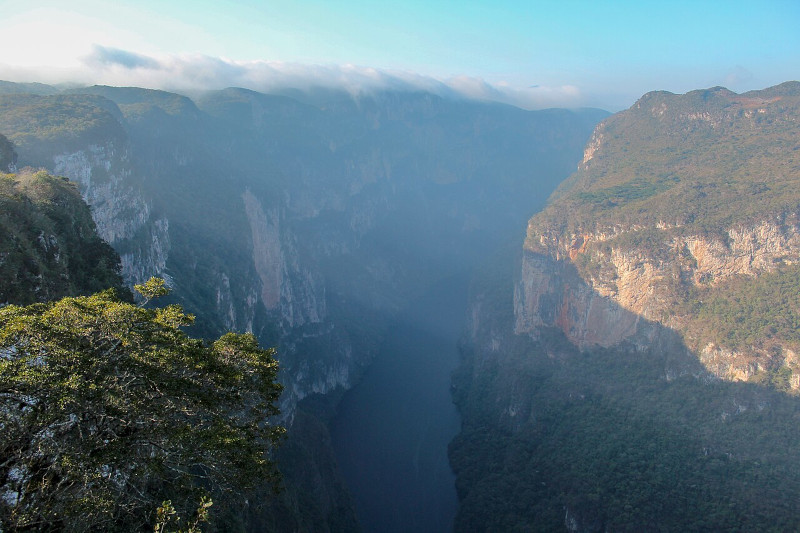
The beautiful Sumidero Canyon formed in a region of the globe already well known for its incredible abundance of natural marvels. For that reason, its location likely won’t come as much of a surprise to many of you. Nature created this wonder as part of the continent of North America.
Inside of that region, though, natural processes carved out this sensational site within the national boundaries of what’s now the country of Mexico. Within the borders of that nation, it lies north of the city of Chiapa de Corzo in the state of Chiapas. That areas itself resides in the southern section.
The origins of this masterpiece date back to the same time as another geological miracle, the Grand Canyon. Between roughly 200 million to 100 million years ago, shallow tropical seas covered the area it now sits in. Over time, shells, corals, and marine sediments accumulated and hardened.
Later, tectonic forces associated with three plates; North American, Caribbean, and Cocos, compressed and uplifted the area. This combination of forces created fault formation, fracturing of the local limestone deposits, and the uplift of what’s now named the Chiapas highlands.
After this, a river began cutting downward into the fractured limestone. That exploited faults and cracks, removed loose rock, and deepened the gorge over millions of years. Because uplift and erosion occurred together the river held its course and the canyon deepened instead of flattening.
Then, rainwater weathered the rock, underground drainage formed, and caves and fissures expanded. In a slow process known as karstification, the canyon formed through the combination of mechanical erosion and chemical dissolution. These processes continue to work even today.
This mesmeric chasm also supports a variety of different ecosystems. Much of the upper canyon comprises dry tropical forest sections. This supports drought-tolerant trees, thorn scrub, and seasonal deciduous vegetation. Common species include ceiba, pochote, acacias, and copal trees.
Closer to the river, riparian and humid zones form. Here, humidity rises sharply, vegetation becomes denser, and vines, palms, reeds, and moisture-loving plants appear. The vertical limestone walls also create isolated microhabitats. These support mosses, lichens, bromeliads, and many ferns.
Gorgeous Sumidero Canyon additionally hosts a vast quantity of karst cave ecosystems. Existing in all sizes, large numbers of crevices and caves regularly serve as home to species of bats, insects, specialized cave-adapted organisms, and microbial communities adapted to darkness and humidity.
A multitude of reptilian species also live here. The American Crocodile remains perhaps the most famous of them. The riverbanks and many sections of calmer waters often provide habitat for these. Other reptiles commonly found living here include countless iguanas, boas, and turtles.
Mammals present include Ocelots and armadillos, among others. The region’s also important for avian diversity. Herons, cormorants, hawks, vultures, kingfishers, toucans, and parrots all dwell here. The river itself contains a steady population of native fish, crustaceans, and aquatic invertebrates.
Features Sharing Its Region


Check out our other articles on 5 Magnificent Mammals of the Himalayas, Golden Eagle, Nile River, Bobcat, Rabbit Fish, Long-nosed horned frog, Calypso Orchid, Cow Killer, Mugger Crocodile










Leave a Reply